
Best Functional Fitness Program for Firefighters to Improve On-Shift Performance
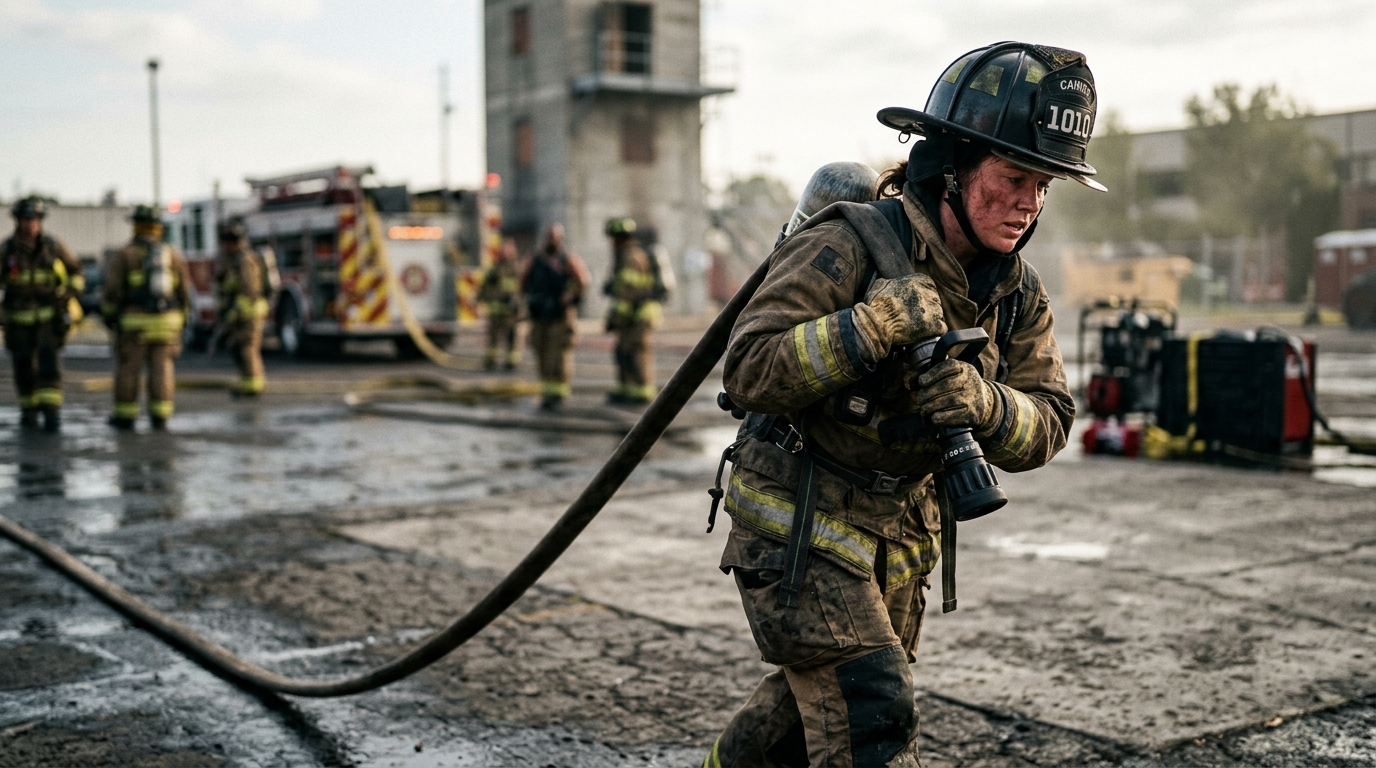
Firefighters face physical demands that most gym programs never account for: dragging charged hoselines, forcing entry with a Halligan, climbing ladders in full turnout gear, and doing it all on disrupted sleep after a 2 a.m. alarm. A functional fitness program for firefighters is a structured training system that mirrors the movement patterns, energy demands, and recovery constraints of fireground work. The best programs combine strength, cardiovascular conditioning, mobility, and nutrition into a single cohesive plan built around 24-hour shift schedules. This guide breaks down exactly what to look for, why it matters, and how to start.
Why Firefighter Fitness Is a Life-or-Death Priority
The data is sobering. According to the NFPA's 2024 fatality report, heart attacks accounted for 30 of 62 on-duty firefighter deaths that year, making cardiac events the single leading medical cause of line-of-duty fatalities. Overexertion or strain was responsible for 65 percent of all firefighter deaths in 2024.
Firefighters are increasingly recognized as tactical athletes, meaning professionals whose occupation demands the endurance, strength, speed, and flexibility of competitive sport. A peer-reviewed study published in PMC found that a dedicated core-strength intervention reduced lost work time due to injury by 62 percent and decreased overall injuries by 42 percent in just one year. The takeaway is clear: a structured fitness program is not optional. It is protective equipment.
What "Functional" Actually Means for Firefighters
Functional training is exercise that improves your ability to perform real-world tasks specific to your job. For firefighters, that means movements like squats, deadlifts, carries, presses, and pulling patterns that replicate dragging hose, raising ladders, and breaching walls.
A good firefighter kettlebell foundations program is a perfect example: kettlebell swings build posterior-chain power, goblet squats develop the leg drive needed for stair climbs, and Turkish get-ups reinforce total-body stability under load.
What Functional Training Is Not
It is not bodybuilding splits focused on aesthetics. Isolated bicep curls and machine leg extensions have a place, but they should not be the backbone of a firefighter's training week. The goal is movement competency and work capacity, not mirror muscles.
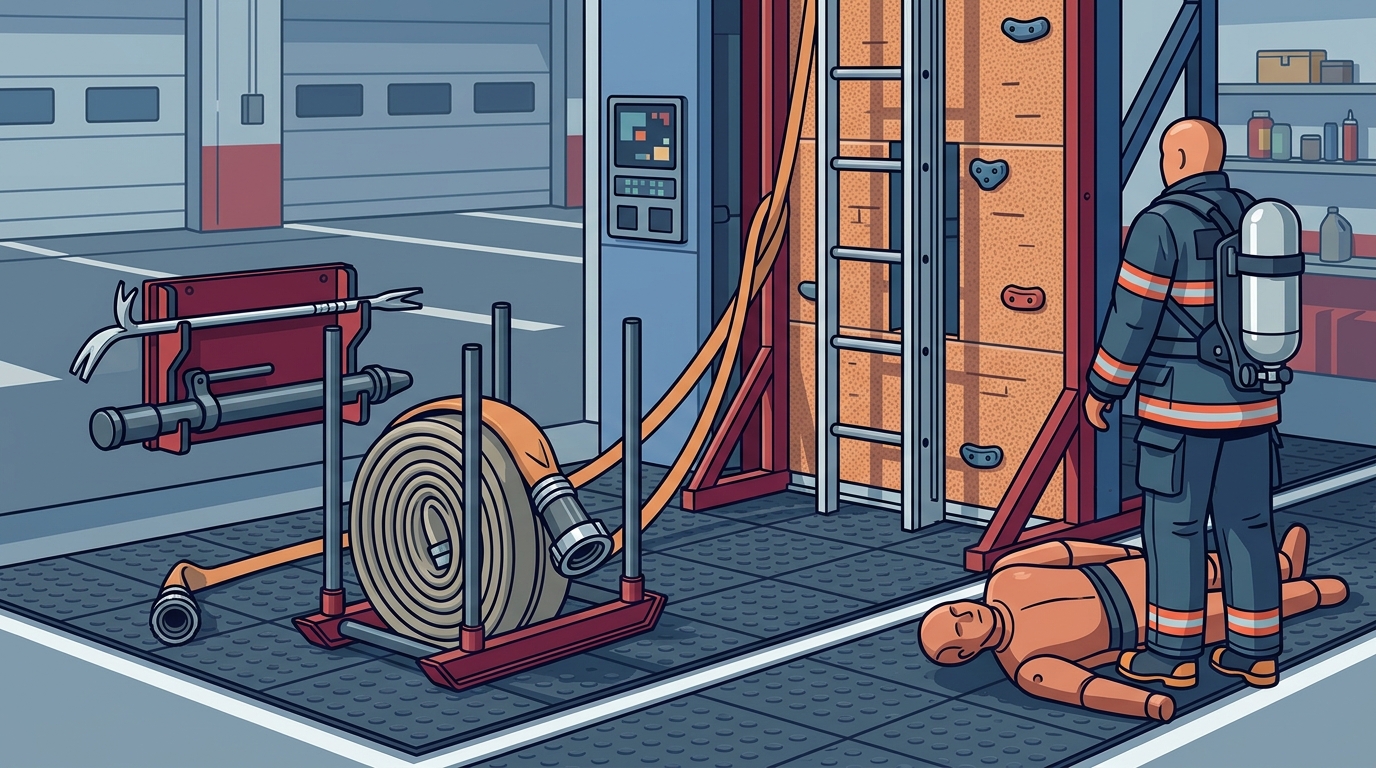
The 5 Pillars of an Effective Firefighter Fitness Program
1. Strength and Power
Compound lifts like back squats, deadlifts, and overhead presses build the raw force production firefighters need. Research recommends 1 to 5 reps at 80 to 100 percent of one-rep max for maximal strength development.
2. Cardiovascular Conditioning
High-intensity interval training (HIIT) and steady-state cardio both play a role. HIIT mirrors the burst-and-recover pattern of fireground work, while steady-state cardio builds the aerobic base that supports faster recovery between calls.
3. Core Stability and Injury Prevention
The trunk is one of the most common injury sites in the fire service. Exercises that improve core muscular endurance, like planks, pallof presses, and loaded carries, directly reduce the risk of back injuries that sideline firefighters for months.
4. Mobility and Recovery
Foam rolling, dynamic stretching, and dedicated mobility sessions keep joints healthy and reduce the chronic stiffness that builds up from wearing heavy gear. Recovery is not a luxury; it is a training variable.
5. Nutrition and Hydration
Fire station culture often revolves around communal meals and irregular eating windows. A strong program includes science-backed nutrition guidance and custom meal plans tailored to shift schedules, not cookie-cutter calorie counts.
On-Shift vs. Off-Shift Training: How to Schedule It
One of the biggest mistakes firefighters make is crushing a heavy workout on shift and then being unable to perform when the alarm drops. The smart approach is to keep on-shift training moderate: think lighter interval circuits, core work, foam rolling, and stretching. Save the heavy compound lifts and high-intensity sessions for off-duty days.
A well-planned weekly schedule might look like this:
| Day | Focus | Intensity |
|---|---|---|
| Sunday (Off) | Full-body strength or metabolic conditioning | High |
| Monday (Off) | Cardiovascular intervals (sprints, rowing) | Moderate-High |
| Tuesday (On-Shift) | Foam rolling, light core work, stretching | Low |
| Wednesday (Off) | Full-body strength | High |
| Thursday (On-Shift) | Light cardio intervals, mobility | Low-Moderate |
| Friday (Off) | Intervals or a 5K run | Moderate |
| Saturday (Off) | Full-body metabolic workout | High |
The key principle: always be ready to perform. Your workout should enhance readiness, never compromise it. Programs like the free 4-week Functional First Responder training plan are designed with exactly this balance in mind.
Comparing Firefighter Fitness Program Features
Not all firefighter fitness programs are created equal. Here is what to look for when evaluating your options:
| Feature | Generic Gym Program | Firefighter-Specific Program |
|---|---|---|
| Shift-based scheduling | No | Yes |
| Functional movement focus | Sometimes | Always |
| Nutrition for shift work | Rarely | Included |
| 1-on-1 coaching and accountability | Extra cost | Often built-in |
| Fireground-specific exercises | No | Yes |
| Community of first responders | No | Yes |
| Progress tracking | Self-managed | Coach-managed |
A program built by a firefighter who understands the job, the burnout, and the pressure that comes with shift work will always outperform a generic plan. Everyday Heroes Fitness checks every box in the right column, with custom training, weekly coaching calls, and a tight-knit first responder community.
What Real Results Look Like
Theory is important, but outcomes matter more. Everyday Heroes Fitness has helped over 1,000 first responders regain their strength and confidence. Firefighters in the program have reported losing 20 to 45 pounds, eliminating chronic back pain, completing the CPAT with ease, and feeling energized at the end of shift instead of wrecked.
One firefighter described the experience: he lost 20 pounds even on the days he wanted to quit, thanks to built-in coaching accountability. Another went from volunteer to full-time firefighter after losing 21 pounds and resolving chronic back issues through the program.
These are not outliers. They are the expected result of consistent, job-specific training paired with real coaching.
Key Takeaways
- Heart attacks remain the leading cause of on-duty firefighter deaths, making cardiovascular fitness non-negotiable.
- Functional fitness for firefighters means training movement patterns that transfer directly to fireground tasks.
- The five pillars of an effective program are strength, cardio, core stability, mobility, and nutrition.
- On-shift workouts should be low to moderate intensity; save heavy training for off-duty days.
- A dedicated core-strength program can reduce firefighter injuries by over 40 percent.
- Generic gym programs lack the shift-based scheduling and job-specific design firefighters need.
- Coaching, accountability, and community are what separate programs that deliver results from those that collect dust.
Frequently Asked Questions
What is the best workout for firefighters on shift?
On-shift workouts should prioritize light cardio intervals, core exercises, foam rolling, and stretching. The goal is to maintain fitness without depleting the energy reserves you need for emergency response.
How often should firefighters work out per week?
Most firefighter fitness experts recommend 4 to 5 training sessions per week, with 2 to 3 higher-intensity sessions on off days and 1 to 2 lighter recovery sessions on shift.
Do firefighters need a special fitness program?
Yes. Firefighters face unique physical demands, irregular schedules, and occupational stressors that generic programs do not address. A firefighter-specific program accounts for shift work, fireground movement patterns, and communal nutrition challenges.
What exercises are most important for firefighters?
Compound movements like squats, deadlifts, overhead presses, rows, and loaded carries are the foundation. Core exercises like planks and pallof presses are equally critical for back injury prevention.
Can I train for the CPAT with a functional fitness program?
Absolutely. The CPAT (Candidate Physical Ability Test) is a series of functional tasks. A well-designed firefighter fitness coaching program will build the strength, endurance, and work capacity the CPAT demands.
Is kettlebell training good for firefighters?
Kettlebells are one of the most versatile tools for firefighter fitness. Swings, cleans, presses, and get-ups develop total-body power and grip strength. Try the free Kettlebell Foundations program to get started.
How does nutrition fit into a firefighter fitness program?
Nutrition is a core pillar, not an afterthought. Firefighters deal with irregular meal times and communal cooking. A strong program provides custom macros and practical meal plans that work within the realities of station life.
What results can I expect from a firefighter fitness program?
With consistent effort and proper coaching, firefighters typically see meaningful improvements in body composition, strength, endurance, and on-shift energy within the first 4 to 8 weeks.
Ready to Train Like the Firefighter You Were Meant to Be?
Stop guessing and start following a proven system. Everyday Heroes Fitness was built by a firefighter, for firefighters, and has helped over 1,000 first responders transform their fitness and their lives. Apply for coaching today and take the first step toward showing up stronger on every single shift.