
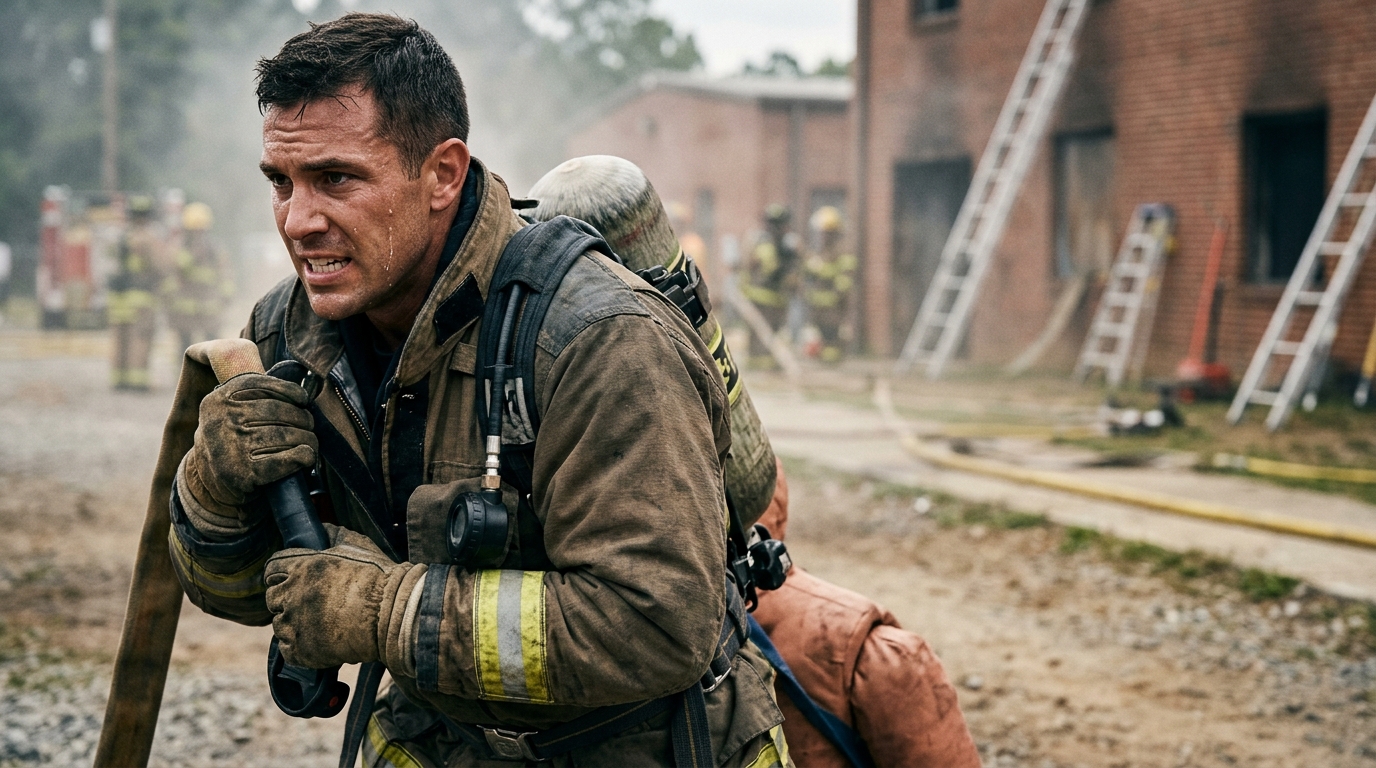
If you are a firefighter searching for a training program that helps you shed excess weight while building the real-world strength your job demands, you are far from alone. A CDC study found that more than 70 percent of U.S. firefighters are overweight or obese, exceeding the national average for adults. Even more alarming, nearly half of all on-duty firefighter deaths are linked to cardiac events. The right training program can change both statistics—for you personally and for the crew that depends on you.
This guide breaks down the science, the program options, the workout structure, and the nutrition fundamentals you need to lose weight and build functional strength as a firefighter.
Why Generic Gym Programs Fall Short for Firefighters
Standard bodybuilding splits and casual cardio routines miss the mark for fire service professionals. Firefighting demands a unique combination of physical capacities that generic programs simply do not address.
- Load-bearing endurance: Firefighters regularly operate while carrying 50 to 75 pounds of PPE, tools, and equipment.
- Multi-plane movement: Kicking doors, pulling hose, climbing ladders, and dragging victims require strength through every plane of motion.
- Sustained output under extreme stress: Fireground operations push heart rates to or beyond theoretical maximums for extended periods.
According to Current Sports Medicine Reports, performing the job well requires high levels of aerobic fitness, anaerobic capacity, and muscular strength and endurance. A retired CAL FIRE captain and CrossFit gym owner put it bluntly: firefighters need to train their body as a system using strength training, conditioning, and gymnastics at a high level of intensity—leisurely cardio and light weights will not cut it.
The Five Pillars of a Firefighter Weight-Loss and Strength Program
Every effective firefighter fitness program rests on five interconnected pillars. Neglecting any one of them will stall your progress.
1. Functional Strength Training
Functional strength for firefighters directly relates to the ability to carry, lift, drag, push, and pull. The fundamental lifts recommended by fire service fitness experts include:
- Deadlifts (hose drags, victim drags)
- Squats and goblet squats (stair climbing under load)
- Overhead presses (ladder raises, ceiling pulls)
- Pull-ups (self-rescue, climbing)
- Cleans and kettlebell swings (explosive equipment handling)
- Farmer carries (carrying tools across the fireground)
Aim for compound, multi-joint movements that engage the entire kinetic chain. Isolation curls and leg extensions have a place, but they should never be the foundation.
2. Cardiovascular and Metabolic Conditioning
There are two primary approaches to improving cardiovascular capacity for firefighters: high-intensity interval training (HIIT) and endurance-based cardiovascular training. Both are necessary.
- HIIT sessions (2–3 per week): Rowing intervals, assault bike sprints, stair climber intervals, or circuit-based metabolic conditioning. These replicate the repeated bursts of maximal effort firefighters experience on calls.
- Zone 2 endurance (1–2 per week): Steady-state running, cycling, or rowing at 60–70 percent of max heart rate for 30–45 minutes. This builds the aerobic base that supports recovery between exertions.
3. Core Stability and Mobility
Flexibility and core strength are often the most neglected areas of firefighter fitness, yet improving them has been shown to decrease the frequency and severity of sprains and strains. Include:
- Planks and anti-rotation presses
- Russian twists and pallof presses
- Dynamic warm-ups before every session (5–10 minutes)
- Static stretching or yoga-based recovery at least twice per week
4. Nutrition Aligned with Shift Work
For the best fat-loss results and performance gains, you must combine cardio training, functional resistance training, and a purposeful diet. No program can out-train poor firehouse eating habits. Key principles:
- Protein priority: Target 0.8–1 gram per pound of bodyweight daily to support muscle retention during a caloric deficit.
- Meal prep around your schedule: Cook in bulk on off days so you have ready meals at the station instead of relying on takeout.
- Hydration: Water is the most essential component for performance—aim for half your bodyweight in ounces daily, more during training.
- Caloric deficit without deprivation: A 300–500 calorie daily deficit supports steady fat loss (1–1.5 lbs per week) without tanking performance.
5. Recovery and Accountability
Schedule at least one dedicated rest or active-recovery day per week. Sleep is critical—especially on shift days when it is disrupted. Accountability through a community, training partner, or structured program keeps you consistent long-term.
Firefighter-Specific Training Programs Worth Exploring
Several programs have been purpose-built for the fire service. Here is a breakdown of options at different experience levels and budgets:
| Program | Best For | Format | Key Features |
|---|---|---|---|
| FRF Foundations (Fire Rescue Fitness) | Beginners or those returning after a long break | 60-day calendar, app + PDF | Teaches fundamentals of functional training and nutrition; designed for firefighters who need to lose 20–50+ pounds |
| FRF Ultimate (Fire Rescue Fitness) | Intermediate firefighters | Multi-phase program | Builds conditioning foundation then advances to higher-level strength; ideal for CPAT prep |
| FDX (Firefighter Furnace) | All levels seeking ongoing programming | App-based, $27/month | Six-day weekly structure; shift-flexible scheduling; large online community; free 7-day trial |
| Firefighter Fitness Overhaul (Train Your Probie) | Those with zero equipment | 12-week e-book | Bodyweight-only workouts with running program; focused on fat loss and cardiovascular endurance |
| CrossFit-style programming | Firefighters near a local box | In-person classes | Constantly varied functional movements at high intensity; strong community aspect |
Sample Weekly Training Schedule for Firefighters
This template is adaptable to 24-hour shift rotations. Rearrange days as needed—what matters is hitting each training type every week.
| Day | Focus | Duration | Example Session |
|---|---|---|---|
| Monday | Functional Strength A | 45–55 min | Back squat 5x5, weighted pull-ups 4x6, single-arm DB row 3x10, farmer carry 3x40m, plank hold 3x45s |
| Tuesday | HIIT / Metabolic Conditioning | 25–35 min | 5 rounds: 500m row, 10 burpees, 15 KB swings (24 kg), 1 min rest |
| Wednesday | Functional Strength B | 45–55 min | Deadlift 5x3, overhead press 4x6, goblet squat 3x12, sled push 4x20m, hanging leg raise 3x12 |
| Thursday | Active Recovery | 20–30 min | Light walk or bike, foam rolling, yoga flow, mobility drills |
| Friday | Power + Met-Con | 40–50 min | Hang clean 5x3, box jump 4x5, then AMRAP 12 min: 8 thrusters, 8 pull-ups, 200m run |
| Saturday | Zone 2 Endurance | 30–45 min | Steady-state run, bike, or row at conversational pace; stair climber with weighted vest optional |
| Sunday | Rest | — | Full rest, meal prep for the week ahead |
Fireground-Specific Exercises You Should Include
Beyond standard gym movements, integrate exercises that directly simulate fireground tasks:
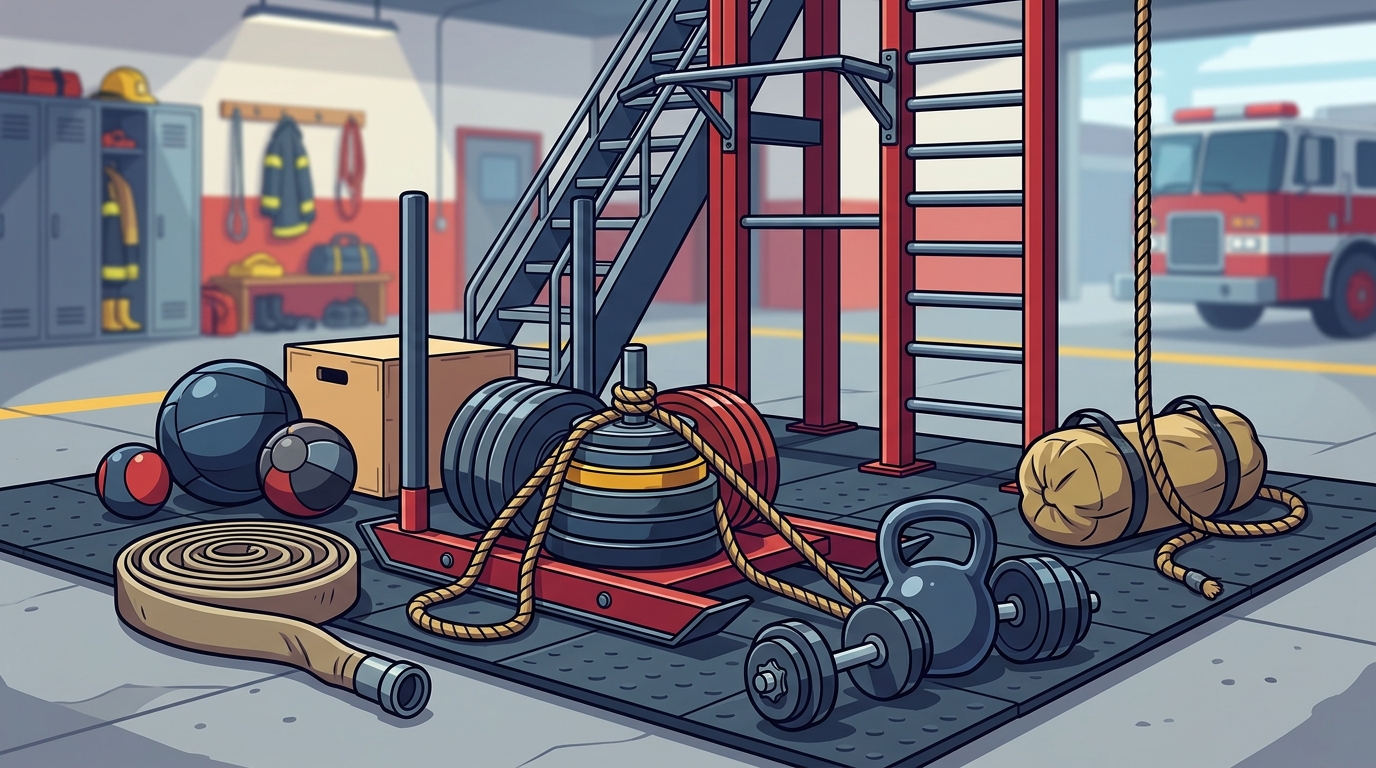
- Sled push/pull: Mimics forcing entry and advancing hose lines.
- Rope pull (hand over hand): Replicates equipment hoisting—attach a kettlebell to a rope and pull it up repeatedly.
- Stair climbs with a weighted vest: The closest gym equivalent to climbing flights in full turnout gear.
- Sledgehammer strikes on a tire: Builds rotational power for breaching and overhaul.
- Dummy drag: Use a heavy bag or training dummy to practice the low-stance pulling motion of victim rescue.
- Ladder carry and raise simulation: Shoulder a barbell or heavy sandbag and walk, then press overhead to mimic ladder deployment.
How to Track Progress Beyond the Scale
Weight alone is a poor metric for firefighters because you will likely gain lean muscle while losing fat. Track these instead:
- Waist circumference: A more reliable indicator of visceral fat loss than BMI.
- Benchmark workout times: Record your time on a standard met-con or stair-climb test monthly.
- Strength numbers: Track your deadlift, squat, and press maxes every 8–12 weeks.
- CPAT or pack test performance: The gold-standard measure of job readiness.
- Resting heart rate: A declining resting HR over weeks signals improved cardiovascular fitness.
Common Mistakes Firefighters Make When Trying to Lose Weight
- Crash dieting before a physical: Extreme caloric restriction tanks performance and leads to muscle loss. A moderate deficit is far more sustainable.
- Cardio-only approaches: Long slow-distance training alone will not prepare you for the fireground and often leads to muscle loss.
- Ignoring mobility work: Skipping warm-ups and stretching increases injury risk—especially for firefighters who go from sleeping to sprinting at 3 a.m.
- Training like a bodybuilder: Isolated muscle splits are less effective than total-body functional sessions for firefighting demands.
- No plan at all: Walking into the gym without a program leads to inconsistency and stalled progress.
Key Takeaways
- Over 70 percent of U.S. firefighters are overweight or obese—structured training programs address a genuine health crisis in the fire service.
- High-intensity functional fitness training is considered the optimal approach for improving the fitness areas firefighters need most.
- Effective programs combine functional strength, metabolic conditioning, cardiovascular endurance, core stability, and nutrition.
- Several purpose-built programs exist (FRF, FDX, Firefighter Fitness Overhaul) at various price points and equipment levels.
- Consistency and accountability matter more than any single workout—find a program, follow it, and stay with a community that keeps you showing up.
Frequently Asked Questions
What kind of training program is best for firefighters who want to lose weight and build functional strength?
High-intensity functional fitness (HIFT) programs that combine compound lifts, metabolic conditioning, and cardiovascular intervals are considered optimal. Research shows that HIFT addresses the key aspects of firefighter fitness: aerobic capacity, muscular strength and endurance, power, flexibility, and agility. Purpose-built programs like FRF and FDX structure these elements around shift schedules so firefighters can stay consistent.
How many days per week should a firefighter train?
Most firefighter-specific programs schedule 4–5 structured training days per week with at least one recovery day. As a baseline minimum, experts recommend at least 30 minutes of functional workouts three times per week. From there, add metabolic conditioning and endurance sessions as your schedule and recovery allow.
Can I follow a firefighter fitness program with minimal equipment?
Absolutely. Many programs include modifications for dumbbells, bodyweight, or minimal gear. The Firefighter Fitness Overhaul, for instance, is a 12-week bodyweight-only program combined with a progressive running plan. FDX also offers limited-equipment options for training at the station.
Why is functional fitness more important than traditional bodybuilding for firefighters?
Functional strength directly relates to the ability to carry, lift, drag, push, and pull—the exact demands of the fireground. Firefighters work in full PPE weighing 50–75 pounds and need multi-plane strength, grip endurance, and sustained cardiovascular output. Bodybuilding-style isolation work does not build these qualities effectively.
What role does nutrition play in a firefighter weight-loss program?
Nutrition is at least half the equation. Combining cardio training, functional resistance training, and a purposeful diet produces the best fat-loss results and performance gains. Focus on adequate protein, hydration, portion awareness, and meal prepping around your shift schedule to eliminate reliance on fast food.
Where can I find a firefighter training program near me?
If you prefer in-person coaching, local CrossFit affiliates often have first-responder-friendly programming and community. For app-based or online options, programs like FDX by Firefighter Furnace and Fire Rescue Fitness offer structured plans you can follow anywhere—at the station, a home gym, or a commercial facility. At Everyday Heroes Fitness, we specialize in functional training designed for first responders, combining weight loss and strength-building in programs that fit around shift work.