
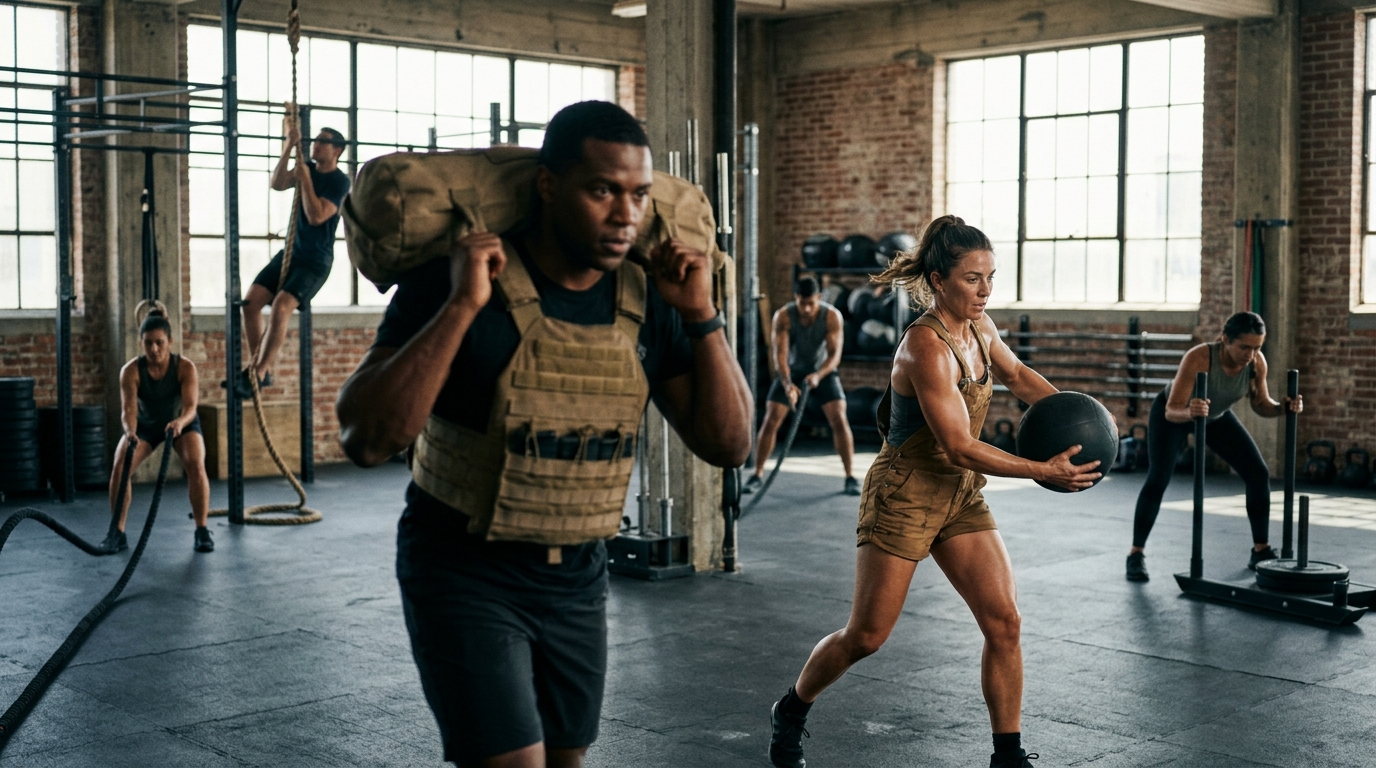
Best Exercises to Simulate Job-Specific Movements So You Can Perform Your Duties at the Highest Level
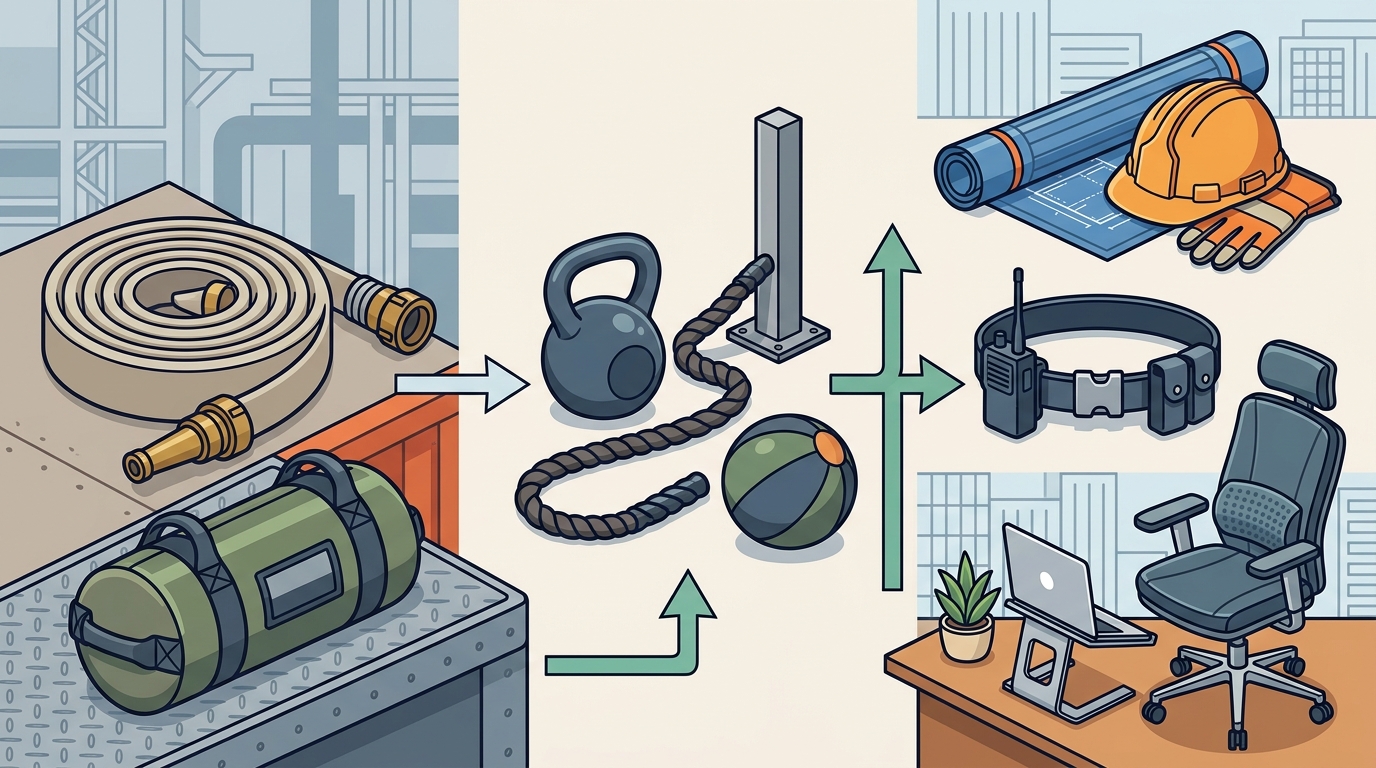
Whether you're a firefighter hauling hose up a stairwell, a law-enforcement officer sprinting after a suspect, a construction worker lifting heavy materials, or an office professional fighting chronic back pain, your fitness routine should mirror the physical demands of your job. Generic gym programs build general strength, but they often miss the specific movement patterns that keep you safe, effective, and resilient when it matters most.
This ultimate guide breaks down the science of occupational fitness, maps exercises to real-world job demands across six career categories, and gives you a ready-to-use programming framework so you can train like the everyday hero you are.
Why Job-Specific Exercise Matters
Research consistently shows that general physical activity alone is not enough to prepare you for the unique demands of your profession. A 2026 study published in the Journal of Strength and Conditioning Research found that general physical activity may not be sufficient for training job-specific fitness in law-enforcement officers, and that resistance-training frequency was related to lower resting heart rate and better muscular endurance. The takeaway: you need targeted training.
A systematic review of physical training programs for tactical populations confirmed that structured programs lasting longer than four weeks can produce medium-to-large improvements in both physical fitness measures and performance in simulations of occupationally specific tasks. Meanwhile, a scoping review on workers in physically strenuous jobs concluded that job-specific training proved to be effective, with all studies using tailored interventions reporting significant positive effects on work ability.
In occupations where public safety is on the line, physical capacity is not optional. Both medical and physical performance criteria are used for roles like firefighting and military service, based on essential job functions. Training that mirrors those functions is the most direct path to peak on-duty performance.
The Principle: Train the Movement, Not Just the Muscle
Traditional bodybuilding splits isolate muscles. Job-specific training isolates movement patterns — pushing, pulling, carrying, climbing, rotating, bracing, and locomotion — then loads them in ways that replicate your occupational demands. Here is how to think about it:
- Identify your job's critical tasks. What do you lift, carry, drag, push, or climb during a typical shift?
- Map each task to a movement pattern. Carrying a victim = loaded carry + squat. Pulling hose = horizontal pull + grip endurance.
- Select exercises that replicate force, direction, and duration. A cable row done for 30-second sets better simulates sustained hose pulling than a heavy 3-rep barbell row.
- Progress with specificity. Add load, speed, duration, or environmental complexity (uneven surfaces, gear, fatigue) over time.
Exercises by Occupation: Six Career Categories
1. Firefighters, EMTs & Paramedics
Firefighting demands total-body strength, grip endurance, cardiovascular stamina, and the ability to move under heavy gear. Functional exercises that replicate real-life emergency-response tasks are invaluable for improving coordination, balance, and strength on the fire or rescue scene.
| Job Task | Exercise | Why It Works |
|---|---|---|
| Carrying victims or equipment | Farmer's Carry / Sandbag Carry | Targets grip strength, forearms, shoulders, and core muscles — all crucial for maintaining control while handling equipment or performing rescues. |
| Lifting heavy objects from the ground | Trap-Bar Deadlift | Builds total-body strength and enhances functional movement patterns needed to lift equipment and carry injured individuals. |
| Pulling hose lines | Cable / Band Pulls from multiple angles | Trains the pulling system — grip, forearm, biceps, and back — and can be varied to simulate fireground activities. |
| Climbing stairs under load | Weighted Stair Climbs | Conditions the body for turnout-gear demands; box jumps and stair intervals better match on-duty cardiovascular demands than steady-state running. |
| Breaching / forcible entry | Sledgehammer Tire Strikes (alternating hands) | Builds rotational power and encourages ambidextrous strength — important because doors and walls require different swing angles. |
| Core bracing under load | Plank / Side Plank / Anti-Rotation Press | Trains core musculature in a functional manner to prevent injuries and improve performance in tasks. |
Pro tip: Incorporate active mobility exercises — like the Spiderman stretch — to improve hip, shoulder, and spine mobility for better movement quality during critical situations.
2. Law Enforcement Officers
Police work involves unpredictable bursts of maximal effort: sprinting, grappling, vaulting barriers, and controlling subjects. It is recommended that police departments provide a regular, supervised, job-based exercise program throughout the year to keep officers prepared.
| Job Task | Exercise | Why It Works |
|---|---|---|
| Sprinting / foot pursuits | Hill Sprints & Sled Pushes | Develops acceleration and anaerobic power in a duty-belt-relevant loaded position. |
| Defensive tactics / grappling | Turkish Get-Ups & Kettlebell Swings | Builds ground-to-standing transition strength and hip-hinge power used in subject control. |
| Barrier vaulting | Box Jumps & Lateral Bounds | Improves explosive lower-body power and lateral agility for obstacle clearance. |
| Weapon retention / pushing | Single-Arm Dumbbell Floor Press | Trains unilateral pressing strength while the core resists rotation — mimics real-world grappling asymmetry. |
| Sustained patrol (body armor) | Ruck Walks (weighted vest) | Builds load-bearing endurance and postural stamina under gear weight. |
3. Military & Tactical Personnel
Military branches have moved toward job-specific physical fitness tests that use the same standards for both men and women. The Army's Occupational Physical Assessment Test (OPAT) includes a standing long jump, seated power throw, one-rep-max deadlift, and an aerobic interval run — each tied to combat-arms demands.
| OPAT Component | Training Exercise | Application |
|---|---|---|
| Standing Long Jump | Broad Jumps & Depth Jumps | Explosive lower-body power for dismounted operations |
| Seated Power Throw | Med-Ball Chest Pass & Overhead Slam | Upper-body power for breaching, throwing, and loading |
| 1-RM Deadlift | Progressive Barbell Deadlift Program | Total-body maximal strength for casualty drag and equipment lift |
| Aerobic Interval Run | 800 m Repeats at Threshold Pace | Sustained cardiovascular output under mission loads |
4. Construction Workers & Tradespeople
Workers in physically strenuous jobs like construction are often exposed to intense, repeated, or sustained exertion, unexpected peak loads, and the need to maintain extreme and static body postures at work. Training should build both capacity and injury resilience.
- Goblet Squats — reinforce proper lifting mechanics for picking materials off the ground.
- Overhead Press (standing) — prepares shoulders for work performed above head height such as electrical wiring, drywall, or painting.
- Suitcase Deadlifts — trains the asymmetric loading common when carrying tools or buckets in one hand.
- Pallof Press — anti-rotation core work that protects the spine during twisting tasks.
- Band Pull-Aparts — counter the forward-shoulder posture from prolonged manual labor.
- Loaded Lunges — build single-leg stability for navigating uneven terrain and scaffolding.
5. Healthcare Workers & Nurses
Patient handling involves repetitive bending, pulling, and awkward lifting postures. The prevention and treatment of musculoskeletal discomfort can be achieved by increasing the flexibility and strength of trunk muscles, especially those in the neck, shoulder, and lower back regions.
- Hip Hinge with Kettlebell (Romanian Deadlift) — teaches the posterior chain to share the load during patient transfers.
- Bent-Over Row — strengthens mid-back to resist rounding when leaning over beds.
- Half-Kneeling Cable Chop — builds the rotational control needed when repositioning patients.
- Glute Bridge with March — activates glutes and core to protect the low back during prolonged standing shifts.
- Thoracic Spine Rotation Stretch — maintains upper-back mobility compromised by long hours in forward-flexed positions.
6. Desk-Based & Office Professionals
Workplace exercise directly improves workers' quality of life, reducing the rates of repetitive strain injuries, work-related musculoskeletal disorders, occupational stress, and burnout syndrome. Even if your job is sedentary, targeted exercise keeps you performing at your cognitive and physical best.
Office exercise programs should include stretching and resistance training, be easy to perform in the working environment without special equipment, and target the upper and lower body — particularly the core muscles and vertebral column — since these are the areas where problems are most prevalent. Three sessions per week during work hours is an optimal frequency.
- Seated Band Pull-Apart — counteracts forward-head and rounded-shoulder posture from screen work.
- Chair-Assisted Bodyweight Squats — activates glutes and legs that go dormant from prolonged sitting.
- Desk Push-Ups — maintains upper-body pressing strength without leaving the office.
- Standing Hip Flexor Stretch (30 s per side) — opens hip flexors tightened by sitting.
- Neck Retraction & Rotation Series — relieves cervical tension from monitor use.
How to Build Your Own Job-Specific Program
Follow this five-step framework to design a training plan aligned with your occupational demands:
- Task Audit — List every physical task you perform in a typical work week. Note which are most frequent, most intense, and most injury-prone.
- Movement Mapping — Categorize each task: push, pull, hinge, squat, carry, rotate, or locomotion.
- Exercise Selection — Choose 1–2 exercises per movement pattern that closely replicate the task's force, direction, and tempo.
- Program Structure — Train 3–4 days per week. Alternate between strength-focused days (heavier loads, lower reps) and work-capacity days (moderate loads, higher reps or timed sets).
- Progressive Overload & Recovery — Add load or complexity every 2–3 weeks. Include active recovery such as foam rolling, mobility work, and adequate sleep.
Sample Weekly Template (Adaptable to Any Job)
| Day | Focus | Example Exercises |
|---|---|---|
| Monday | Strength — Lower Body & Carry | Trap-Bar Deadlift 4×5, Goblet Squat 3×10, Farmer's Carry 3×40 m |
| Tuesday | Work Capacity — Upper Body & Core | Push-Up Variations 3×AMRAP, Cable Row 3×15, Pallof Press 3×12/side |
| Wednesday | Active Recovery | Foam rolling, mobility flow, 20–30 min Zone 2 cardio |
| Thursday | Strength — Upper Body & Power | Overhead Press 4×5, Med-Ball Slam 4×8, Pull-Ups 4×6–8 |
| Friday | Job-Specific Circuit | Sled Push, Stair Climb, Sledgehammer Strike, Sandbag Carry — 5 rounds for time |
| Weekend | Rest / Light Activity | Walk, hike, recreational sport |
Key Takeaways
- General fitness is a foundation, but it is not enough for peak occupational performance. Targeted, job-specific training produces measurably better results.
- Map your daily work tasks to fundamental movement patterns, then choose exercises that replicate those patterns under similar loads and durations.
- Firefighters and first responders should prioritize loaded carries, deadlifts, pulling exercises, and stair-based cardio.
- Law enforcement officers benefit from explosive power work, grappling-oriented strength, and load-bearing endurance.
- Desk workers need postural correction exercises, core activation, and mobility work performed consistently throughout the work week.
- Progressive overload, recovery, and nutrition are the glue that holds any job-specific program together.
Frequently Asked Questions
What does job-specific exercise mean?
Job-specific exercise refers to training that replicates the physical demands, movement patterns, and energy systems required by your occupation. Rather than training muscles in isolation, you train the pushing, pulling, carrying, climbing, and bracing movements that mirror what you actually do on duty, with loads and durations that match your work environment.
Can general fitness replace job-specific training?
Research suggests that general physical activity may not be sufficient for developing job-specific fitness. While a base of cardiovascular and muscular fitness is essential, targeted exercises that simulate your occupational tasks produce greater improvements in on-the-job performance and injury prevention.
How often should I do job-specific workouts?
Most evidence-based programs recommend 3–4 training sessions per week. For office workers, even three short sessions during work hours can significantly reduce musculoskeletal discomfort. For tactical athletes like firefighters and police officers, structured year-round programs are recommended.
What are the best exercises for firefighters?
Top exercises for firefighters include farmer's carries (simulating carrying heavy loads), deadlifts (total-body lifting strength), cable or band pulls from multiple angles (hose-pulling simulation), weighted stair climbs (loaded climbing conditioning), sledgehammer tire strikes (rotational breaching power), and core series work including planks and anti-rotation exercises.
Do office workers really need job-specific exercises?
Yes. Prolonged sitting and repetitive screen use cause musculoskeletal issues in the neck, shoulders, and lower back. Workplace exercise programs that include stretching and resistance training have been shown to improve workers' quality of life and reduce repetitive strain injuries and occupational stress.
How do I know which exercises match my job?
Start with a task audit: list every physical action you perform during a typical shift. Categorize each into a movement pattern — push, pull, hinge, squat, carry, rotate, or locomotion — and then select gym exercises that replicate those patterns. A certified trainer experienced in occupational or tactical fitness can accelerate this process.