
Firefighters, paramedics, EMTs, and law enforcement officers operate under conditions that rival elite athletes — yet without the elite recovery systems to match. This ultimate guide covers everything you need to build sustainable fitness, fuel your body properly, and protect your energy across grueling 12- to 24-hour shifts.
Why Staying Fit Is Uniquely Difficult for First Responders
First responder work is defined by long stretches of sedentary time interrupted by sudden, maximum-effort demands. Research shows that law enforcement officers spend upwards of 90% of their shift sedentary, while firefighters face unpredictable bursts of high-intensity exertion. This combination creates a dangerous health profile over time.
According to occupational health data, approximately 80% of firefighters are overweight or obese, and roughly 40% of police officers struggle with obesity. The consequences are severe: obese firefighters in the United States are five times more likely to experience musculoskeletal injuries, and both law enforcement officers and firefighters face a disproportionate burden of cardiovascular disease.
Shift work compounds every problem. Over 70–90% of first responders work rotating shifts, night shifts, or extended-hour schedules. Research from the NIH and occupational medicine journals shows cortisol levels rise by 30–50% while testosterone and growth hormone decline by 15–40% due to circadian disruption. Injury risk increases by up to 60%, and long-term cardiovascular disease risk rises by 20–40%.
Micro-Exercising: The Science-Backed Strategy That Fits Any Shift
When structured gym time is impossible, micro-exercising — also called “exercise snacking” — offers a research-supported alternative. These are short, focused bursts of movement lasting one to 15 minutes, performed wherever you happen to be: a patrol car, a firehouse bay, or the back of an ambulance.
Why It Works
Short bouts of light activity, especially after meals, help regulate blood sugar and reduce insulin spikes. For first responders who often eat quickly or at odd hours, this can play a key role in stabilizing energy levels and long-term metabolic health.
Practical Micro-Exercises During Shift
- Seated in a patrol car or ambulance cab: Seated leg lifts, glute squeezes (hold 10 seconds, repeat 5–10 times), and torso twists
- At the station bay: Squats, push-ups after report writing, or a quick stair climb before the next call
- Between calls: Dead hangs for grip strength and spinal decompression, or wall Pilates for core and lower-back stability
Building the Habit
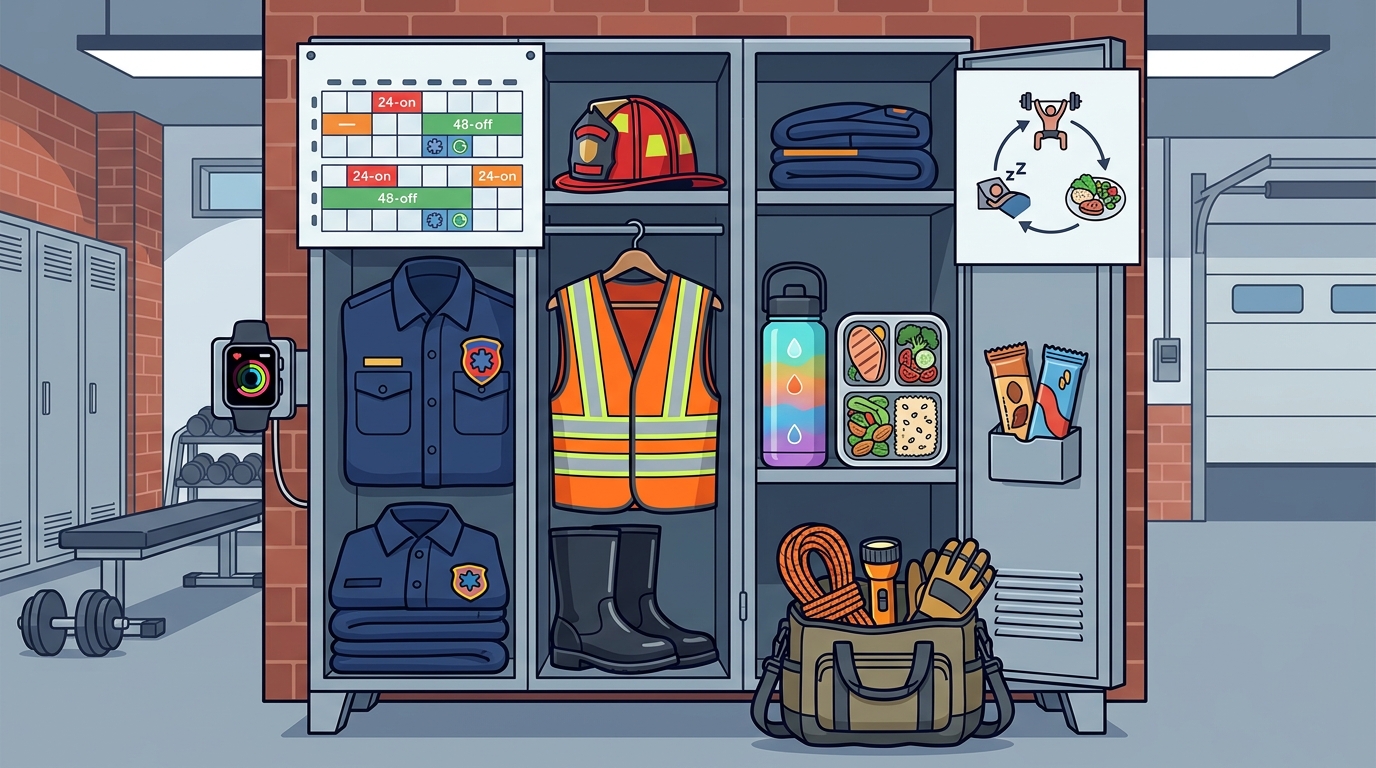
Set a personal goal of five micro-exercises per shift and log each one. Try keeping tally marks on the whiteboard at roll call. If you thrive on competition, start a friendly challenge with your partner or crew to see who can log the most movement sessions during the week.
Structured Training: Building a First Responder Fitness Foundation
Micro-exercises maintain a baseline, but structured training builds the capacity to perform under extreme conditions. Fitness programs for first responders should include three core components: strength, cardiovascular conditioning, and mobility.
Strength Training
Two brief strength sessions per week — around 30 minutes each — focused on basic compound movements can deliver meaningful results. Body-weight exercises such as push-ups, pull-ups, squats, and lunges are effective ways to maintain fitness without expensive equipment and can be performed nearly anywhere.
Cardiovascular Conditioning
Walking 8,000–10,000 steps daily is a sustainable cardiovascular goal. For many first responders who are not regular runners, walking provides better results for both mental health and sustainable weight management than jumping straight into a running program. The 12-3-30 treadmill method — 12% incline, 3 mph, 30 minutes — has gained popularity for its accessibility and effectiveness.
Mobility and Flexibility
Mobility training is essential for injury prevention. Fire departments like Menlo Fire in Northern California make foam rolling and flexibility work key parts of their conditioning programs. This reduces the risk of injury from physically demanding tasks such as climbing ladders and carrying equipment in heavy gear.
Team-Based Training
Working out together during shifts builds camaraderie and unit cohesion while keeping everyone accountable. Many fire departments have invested in station fitness equipment — cardio machines, medicine balls, squat racks, and dumbbells — after demonstrating cost savings from keeping firefighters injury-free and on the job.
Tactical Nutrition: Fueling for Performance, Not Convenience
Good nutrition is not a luxury for first responders — it is a performance tool. Yet the realities of shift work, overtime, and back-to-back calls leave little time for balanced eating. Here is a practical framework built for first responder life.
The Three Nutrition Guardrails
- Stay hydrated. Aim for 8–10 glasses of water per day and keep a reusable bottle within reach. Hydration helps control appetite, reduces headache risk, and aids recovery after workouts or long shifts. Avoid excessive caffeine or sugary drinks that lead to dehydration and energy crashes.
- Eat adequate lean protein. Grilled chicken, turkey, fish, eggs, and low-sodium beef jerky support muscle repair and keep you satiated. Pair protein with a plant (fruit or vegetable) at every meal for fiber that sustains fullness.
- Be mindful of sugar. Processed sugar — candy, cookies, donuts — creates short energy spikes followed by crashes and brain fog, which can be dangerous in demanding situations.
Meal Timing Matters
Nutrition experts recommend eating every 4–6 hours, even if it is just a small snack. Many firefighters under-eat during shifts, leading to fatigue, brain fog, and over-reliance on energy drinks. Carbohydrates are faster fuel than fat, so consuming some carbs at the beginning of a shift or before a training event helps ensure you are properly fueled for the mission.
Meal Prep for Shift Workers
Set aside time each week to prepare meals and snacks in advance. This saves time during hectic shifts and helps avoid unhealthy food choices. For those who pick up overtime regularly, outsourcing meal prep to a delivery service can be cost-effective — most meals cost $10–15 each, and many companies offer a first responder discount.
Smart Snacks to Keep in Your Bag
- Mixed nuts and seeds (almonds, walnuts, pumpkin seeds)
- Greek yogurt cups
- Low-sugar protein bars with wholesome ingredients
- Fresh fruit or dried fruit
- Low-sodium beef jerky
- Smoothie squeeze packs with plant protein
Sleep and Recovery: The Missing Pillar
Sleep is the foundation of human performance, yet first responders average only 5.5–6.5 hours per night — often fragmented and inconsistent. Circadian rhythm disruption does not just cause fatigue; it alters cortisol production, suppresses growth hormone, and interferes with deep sleep cycles essential for neurological recovery and tissue repair.
Evidence-Based Sleep Strategies
- Exercise during the day, not right before bed. Research shows physical exertion during the day helps the body's circadian rhythm stay in tune. People who exercise regularly have 40% lower odds of insomnia.
- Create a conducive sleep environment. Use blackout curtains, maintain a cool room temperature, and limit exposure to screens before bed.
- Establish a consistent routine. Even with irregular schedules, a predictable pre-sleep ritual signals the body to wind down.
- Limit caffeine near the end of a shift. Tea or green tea offers a gentler lift than coffee and is less likely to interfere with deep, restful sleep.
Mental Resilience Through Physical Fitness
The connection between physical fitness and mental health is especially significant for first responders. A comprehensive meta-analysis published in The BMJ in 2024 examined 218 randomized controlled trials with 14,170 participants and found that various forms of exercise significantly alleviate symptoms of depression, regardless of severity.
Exercise boosts energy levels and improves mood by triggering endorphins — the natural “feel good” neurotransmitters that start exerting their effects after about 20 minutes of training. Over time, these regular boosts improve overall mental health. For first responders facing constant exposure to trauma, irregular schedules, and high-stress environments, consistent physical activity serves as a proven, medication-free path to better resilience.
Key Takeaways
- First responders are tactical athletes who need training and nutrition strategies designed for unpredictable, high-stress environments — not generic fitness plans.
- Micro-exercising (1–15 minute sessions throughout a shift) is scientifically supported to regulate blood sugar, stabilize energy, and maintain fitness.
- Two 30-minute strength sessions per week, daily walking, and regular mobility work form the core of an effective first responder fitness program.
- Follow three nutrition guardrails: stay hydrated, eat lean protein at every meal, and minimize processed sugar.
- Eat every 4–6 hours and meal-prep before shifts to avoid relying on fast food or vending machines.
- Prioritize sleep quality — exercise during the day, darken your sleep environment, and limit late-shift caffeine.
- Consistent physical activity directly improves mental health, reducing symptoms of depression and anxiety.
Frequently Asked Questions
How can first responders exercise during a 12- or 24-hour shift?
Micro-exercising — short bursts of movement lasting 1–15 minutes — can be done anywhere on shift. Examples include squats in the station bay, seated leg lifts in a patrol car, push-ups between calls, and quick stair climbs. Aim for at least five micro-exercise sessions per shift to maintain a baseline of activity.
What should first responders eat to maintain energy during long shifts?
Focus on balanced meals containing lean protein, complex carbohydrates, and healthy fats. Eat every 4–6 hours, pack nutrient-dense snacks like mixed nuts and Greek yogurt, and stay hydrated with water rather than sugary drinks or excessive caffeine.
Why are first responders at higher risk for obesity and heart disease?
Most first responder shift time is sedentary, while the work itself is punctuated by extreme physical demands. Irregular schedules disrupt sleep and eating patterns, elevate cortisol, and suppress recovery hormones. These factors combine to produce obesity rates around 30% or higher and significantly elevated cardiovascular disease risk.
What is the best workout routine for firefighters and police officers?
An effective program includes two 30-minute strength sessions per week focused on compound movements, daily walking toward 8,000–10,000 steps, and regular mobility and flexibility work. Body-weight exercises like push-ups, pull-ups, squats, and lunges require no equipment and can be done at any station.
How does exercise improve first responder mental health?
Exercise triggers endorphin release, reduces symptoms of depression and anxiety, and improves sleep quality. A 2024 BMJ meta-analysis of over 14,000 participants confirmed that exercise significantly alleviates depression regardless of severity. Regular physical activity also helps regulate the insulin resistance cycle linked to weight gain and worsening mental health in shift workers.