
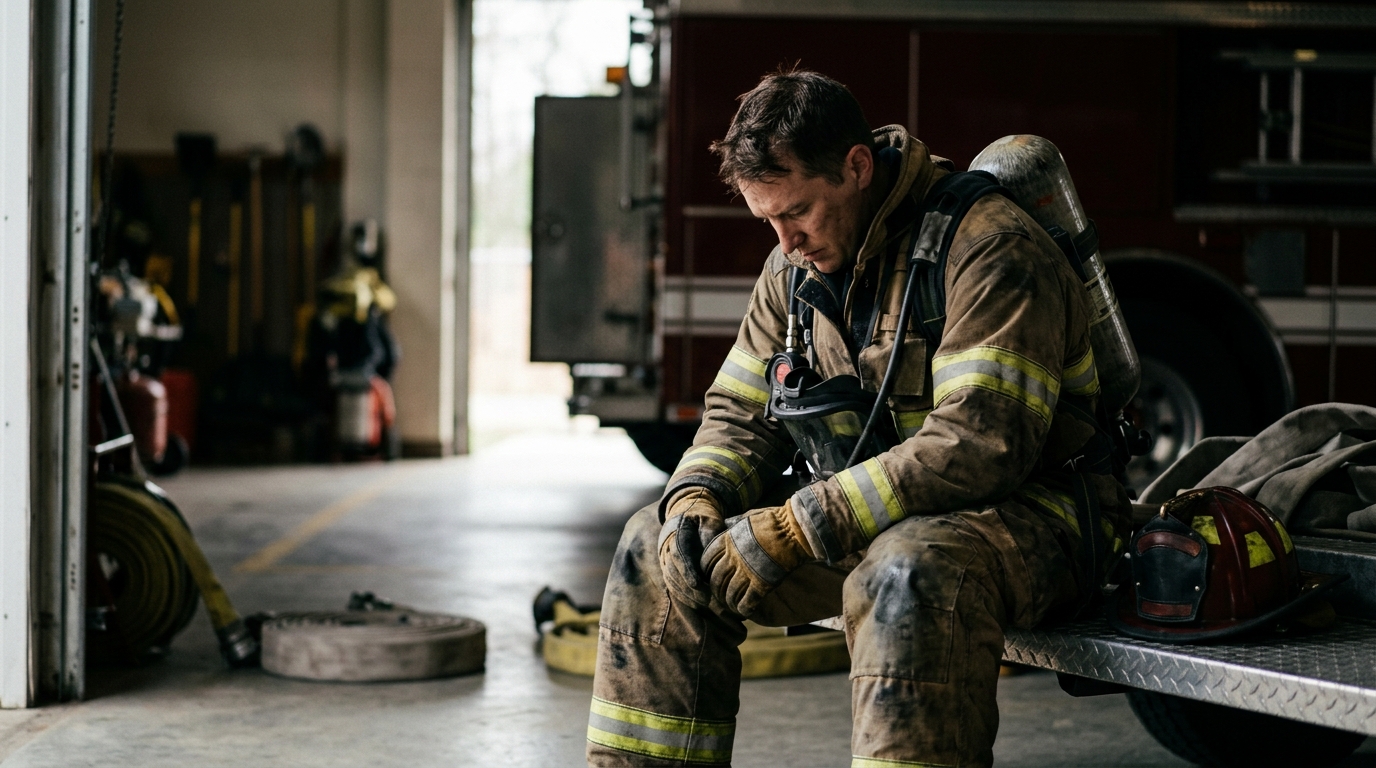
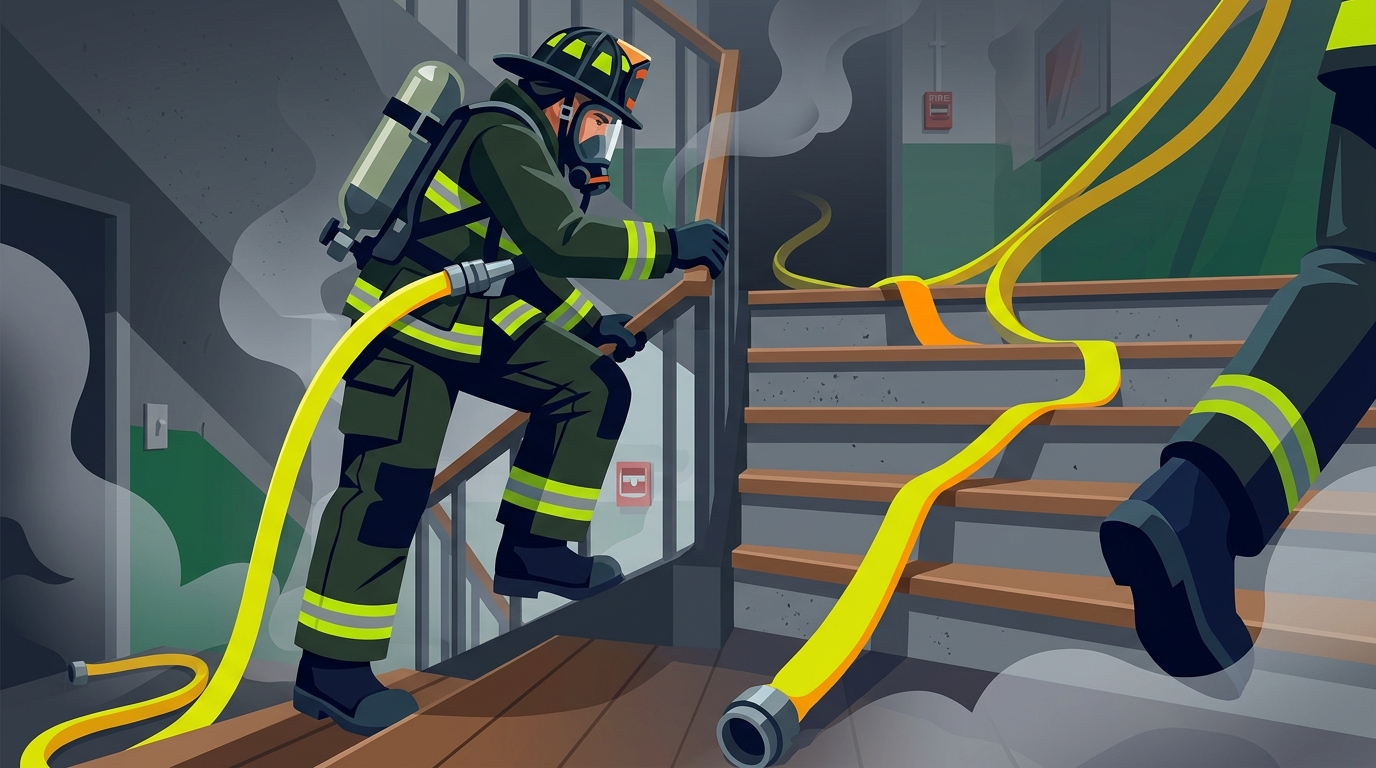
You clipped in your SCBA, pulled a charged line through the front door, and halfway up the stairs your legs turned to concrete. Your partner kept moving. You didn't. In that moment, the alarm in your head wasn't the pass device—it was a single, crushing thought: I'm the weak link.
If that scenario sounds familiar, you're far from alone. This guide unpacks why so many firefighters quietly feel like a liability on calls—and lays out a concrete path to reclaiming physical confidence without gimmicky programs or gym-bro culture.
The Scope of the Problem: Numbers That Should Alarm Every Firehouse
Firefighting has been named one of the most physically demanding occupations in the United States. Yet the gap between what the job demands and how prepared many firefighters actually are is staggering.
- Overweight and obesity rates exceed the general population. Research on career and volunteer firefighters found high prevalence rates of overweight-plus-obesity: 79.5 % among career firefighters and 78.4 % among volunteers.
- Cardiovascular disease remains the top killer on duty. CVD accounts for roughly 45 % of all on-duty firefighter fatalities, a proportion that has persisted since the late 1970s.
- One in four firefighters can't hit the minimum aerobic threshold. A study by Donovan et al. found that 25 % of firefighters did not meet a 12.0 MET minimal exercise tolerance threshold—the level experts consider necessary for safe fireground operations.
- Most departments lack wellness programs. Only about one quarter of U.S. fire departments employ firefighters who participate in a basic fitness and health program.
These aren't abstract statistics. They translate directly into the lived experience of feeling gassed on a two-story walk-up, dreading the next RIT drill, or quietly hoping the tones don't drop during your shift.
Five Root Causes of the "Liability Mindset"
1. The CPAT Cliff: Tested Once, Never Again
Most firefighters must pass the Candidate Physical Ability Test to earn their badge. But for many, that will be the last formal assessment of their fireground fitness. Without ongoing benchmarks, physical decline happens invisibly—until it suddenly doesn't on a working fire.
2. Firehouse Culture That Normalizes Decline
As firefighters settle into firehouse routines, unhealthy behaviors—lack of physical activity, poor sleep habits, and calorie-dense meals—can quietly become the norm. When the environment normalizes being out of shape, individuals lose the external cues that something is wrong.
3. Misperception of Personal Fitness
Research shows a startling disconnect between perceived and actual fitness. In a study of 768 professional firefighters, approximately 68 % underestimated their own BMI classification. When you think you're fitter than you are, the motivation to change never materializes—until the fireground exposes the truth.
4. Fear of Exercising On Shift
Some firefighters avoid working out while on duty out of concern it could leave them fatigued for an emergency call. However, research has demonstrated that physically trained firefighters outperformed their untrained and non-fatigued counterparts on simulated fireground tasks, even when tested in a fatigued state. The fear is understandable but largely unsupported by the evidence.
5. Cumulative Mental Load
The psychological weight of the job compounds the physical problem. Chronic exposure to trauma, disrupted sleep, and sustained hypervigilance can erode both mental resilience and the motivation to train. Nearly 20 % of firefighters report experiencing symptoms of depression during their careers, and depression has been shown to predict decreases in physical output like push-up performance. When your mind is struggling, your body follows.
The Confidence–Performance Cycle on the Fireground
Physical self-doubt on the fireground isn't just uncomfortable—it's operationally dangerous. Here's how the cycle typically works:
- Poor conditioning → task failure or near-failure. You can't maintain pace during a hose advance or victim drag.
- Task failure → internal narrative shift. "I'm putting my crew at risk" replaces "I belong here."
- Negative narrative → avoidance behavior. You skip drills, avoid extra training, or mentally check out.
- Avoidance → further deconditioning. The gap between demand and capacity widens.
- Wider gap → deeper self-doubt. Repeat.
Breaking this cycle requires intervention at multiple points: physical programming, mental health support, and cultural accountability. One without the others won't hold.
A Four-Phase Framework to Rebuild Physical Confidence
This isn't a 30-day challenge. It's a career-long operating system built around the actual demands of the fireground.
Phase 1: Honest Assessment (Weeks 1–2)
You can't fix what you won't measure. Start with these five data points:
- Resting heart rate – a proxy for cardiovascular baseline.
- 1.5-mile run time – correlates strongly with fireground task completion time.
- Body composition – waist circumference or body-fat percentage, not just BMI.
- Standing broad jump – a pure test of explosive power relevant to forcible entry and victim drags.
- Loaded stair climb (3 flights in full PPE) – the single most revealing fireground-specific benchmark.
Record your numbers without judgment. The goal is a starting line, not a verdict.
Phase 2: Foundation Rebuild (Weeks 3–10)
Priority one is aerobic capacity. Experts suggest that firefighting activities require up to 12.0 METs of aerobic capacity, and that this should be considered the minimum threshold for safe performance. Build toward that floor with:
- Three sessions per week of sustained moderate-intensity cardio (zone 2 heart rate): rowing, cycling, or brisk incline walking.
- Two sessions per week of full-body strength using compound movements: deadlifts, loaded carries, goblet squats, pull-ups, and overhead presses.
- Daily mobility work—10 minutes of hip, shoulder, and thoracic spine drills to protect joints under load and in turnout gear.
Phase 3: Fireground Simulation (Weeks 11–18)
General fitness is necessary but not sufficient. This phase bridges the gym and the fireground:
- Hose-drag intervals: 150 feet of charged 1¾" line, rest 90 seconds, repeat for 5 rounds.
- Dummy drags: 180 lb rescue mannequin, 50 feet, alternating between webbing drag and traditional firefighter carry.
- Ladder raises and extensions: Timed sets with a 24-foot extension ladder.
- SCBA air-management circuits: Perform a task sequence on a single bottle and track completion time and remaining air.
This kind of task-specific training builds not just capacity but familiarity—and familiarity is the foundation of confidence.
Phase 4: Sustained Readiness (Ongoing)
Fitness isn't a destination. Guidance from the Wellness Fitness Initiative recommends allocating 60 to 90 minutes for exercise on every work shift. Treat it like checking apparatus—non-negotiable. Key habits for this phase:
- Retest your baseline metrics every 12 weeks.
- Rotate training emphasis quarterly: hypertrophy → strength → power → work capacity.
- Include one crew-based workout per shift to build accountability and unit cohesion.
- Track sleep quality—disrupted sleep impairs recovery and fuels cardiovascular risk.
Changing Firehouse Culture From the Inside Out
Individual effort hits a ceiling without institutional support. Departments that have embraced comprehensive wellness see measurable results: research comparing departments that provided annual screenings, health coordinators, peer fitness trainers, and on-duty exercise time found they demonstrated more desirable physical, behavioral, and mental health outcomes than departments that didn't.
What Officers Can Do Today
- Normalize non-punitive assessments. Fitness checks should identify who needs support, not who gets punished. Departments can use assessments to prevent injury and reduce line-of-duty death risk.
- Fund on-duty training time. Even 60–90 minutes per shift changes the trajectory of a career.
- Pair physical and mental health resources. Physical fitness and wellness programs can positively influence mental health by reducing stress and promoting a healthier lifestyle. Don't separate the two.
- Lead from the front. If the company officer is training, the crew will follow.
What Individual Firefighters Can Do Today
- Ask a trusted peer to be your training partner—accountability beats willpower.
- Replace one unhealthy firehouse meal per shift with a high-protein, vegetable-rich plate.
- Use controlled breathing techniques and mental rehearsal before and after calls to manage stress arousal.
- If you're struggling with anxiety, depression, or PTSD symptoms, reach out to a mental health professional who understands first-responder culture. There is no weakness in asking for help.
Key Takeaways
- Feeling like a liability on calls is often a symptom of a system-wide fitness gap—not a personal failing.
- Cardiovascular disease is the leading cause of line-of-duty deaths, making aerobic fitness a literal survival priority.
- Most firefighters are tested at hire and never formally assessed again, allowing invisible decline.
- Physically trained firefighters outperform untrained peers even when exercising immediately before a simulated call.
- Rebuilding confidence requires honest measurement, progressive programming, fireground-specific simulation, and ongoing accountability.
- Mental health and physical fitness are inseparable—address both or risk undermining each.
- Culture change at the department level amplifies individual effort exponentially.
Frequently Asked Questions
Why do so many firefighters feel like a liability on calls?
The primary driver is a mismatch between the extreme physical demands of firefighting and actual fitness levels that have declined over years without formal reassessment. Combined with cumulative stress, disrupted sleep, and a culture that sometimes normalizes being out of shape, firefighters can reach a point where their body can no longer keep pace with the job—and they know it.
What is the minimum fitness level a firefighter needs?
Experts recommend a minimum aerobic capacity of 12.0 METs to safely perform required fireground activities. This threshold also corresponds to the suggested minimal level necessary to perform firefighting tasks after a diagnosis of coronary artery disease. Your department may have additional standards under NFPA 1582.
Can working out on shift hurt my performance if we get a call?
Research suggests the opposite. In a study simulating a worst-case scenario, physically trained firefighters who exercised immediately before testing still outperformed untrained firefighters who were fully rested. The key is to avoid true maximal-effort sessions during high call-volume periods.
How does mental health affect fireground performance?
Mental health issues can impair decision-making, reaction times, and overall job performance. Depression has been directly linked to reduced muscular endurance in firefighters. Meanwhile, higher resilience is correlated with lower levels of anxiety, depression, and PTSD symptoms, creating a protective buffer for both mind and body.
What should a firefighter do if they feel too out of shape to start training?
Start with an honest, private assessment of baseline metrics—resting heart rate, a timed walk or jog, and body composition. Begin with low-intensity aerobic work (walking, cycling, rowing) three times per week and basic bodyweight strength movements. Progress gradually. The goal in the first month isn't transformation—it's consistency. If your department has a peer fitness trainer or wellness coordinator, reach out to them for a personalized plan.
How can fire departments support firefighters who are struggling physically?
Departments should implement non-punitive fitness assessments, provide dedicated on-shift exercise time, employ peer fitness trainers, and integrate mental health resources alongside physical wellness programs. Research shows that departments offering these combined resources see better outcomes across physical, behavioral, and mental health measures.