
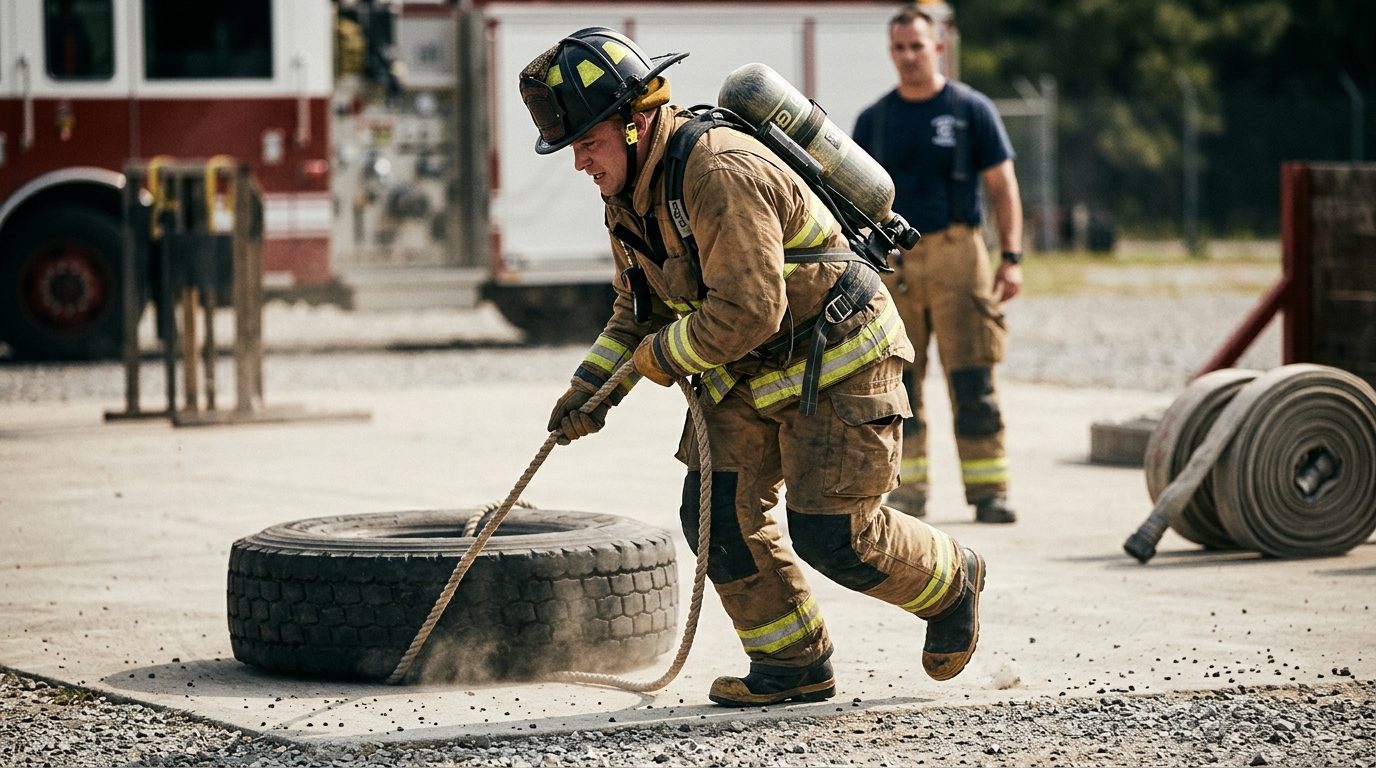
Firefighters are tactical athletes who must perform under extreme heat, heavy gear, and unpredictable conditions. Building the right combination of strength and endurance is not optional for the fire service; it is a career-long requirement. According to research published in the Journal of Medical Internet Research, firefighters must excel in flexibility, power, muscular endurance, and cardiovascular capacity to meet job demands. This guide breaks down the most effective exercises, backed by science and real-world fireground experience, so you can train smarter and perform when it matters most. If you are serious about a structured firefighter coaching program, this article will show you exactly where to focus.
Why Strength and Endurance Matter for Firefighters
Cardiac events have been one of the leading causes of on-duty firefighter deaths since 1977, according to the NSCA's TSAC Report. In 2018 alone, there were 22,975 reported musculoskeletal fireground injuries, with 38% involving strains, sprains, and pain. These numbers make the case clear: fitness is not a bonus for firefighters, it is survival equipment.
Functional fitness is the ability to perform real-world physical tasks efficiently and safely. For firefighters, this means carrying hose bundles up stairwells, performing forcible entry, and dragging victims to safety, all while wearing 60+ pounds of turnout gear. A well-rounded program targets both muscular strength and aerobic capacity simultaneously.
Compound Lifts: The Foundation of Firefighter Strength
Compound lifts are multi-joint exercises that recruit large muscle groups in a single movement. Squats, deadlifts, and bench presses form the backbone of any serious firefighter training plan. These movements build the raw strength needed for lifting equipment, climbing ladders, and pulling charged hose lines.
Deadlifts
The deadlift is arguably the most fireground-relevant barbell exercise. It strengthens the posterior chain, including the glutes, hamstrings, and lower back, which are essential for picking up tools, advancing hose, and dragging victims. A study in the Journal of Strength and Conditioning Research found that physical fitness directly correlates with improved fireground test performance.
Back Squats
Squats develop leg drive and trunk stability. Whether you are climbing stairs in full gear or lifting a portable ladder off the rig, squat strength translates directly to on-the-job performance. Start with bodyweight squats if needed and progress to barbell loading over time.
Bench Press and Overhead Press
Upper-body pressing strength supports forcible entry work, ladder raises, and ceiling pulls during overhaul. Both flat bench press and standing overhead press should be staples in your weekly rotation. If you are new to barbell training, our 4-Week Functional First Responder Training Program is a great starting point.
Loaded Carries and Functional Movements
Loaded carries are exercises in which you hold or carry a weight while walking for distance or time. They develop grip strength, trunk stability, and total-body endurance in a way almost no other movement can. As noted by Fire Rescue Wellness, loaded carries require very little coaching and directly simulate carrying tools, hose bundles, and victims on the fireground.
Variations to include in your program:
- Farmer's carries with dumbbells or kettlebells
- Sandbag carries at chest or shoulder height
- Sled drags to simulate victim rescue pulls
Kettlebell training is another powerful tool for firefighters. Kettlebell swings build explosive hip power and grip endurance. Explore our dedicated Firefighter Kettlebell Foundations program for guided progressions.
Cardiovascular and Endurance Training
Cardiovascular endurance is the ability of the heart and lungs to supply oxygen to working muscles over prolonged periods. For firefighters, this capacity determines how long you can work on the fireground before fatigue compromises safety and decision-making.
HIIT (High-Intensity Interval Training)
HIIT is a training method that alternates short bursts of intense effort with brief recovery periods. It mimics the stop-and-go nature of fireground operations and improves both aerobic and anaerobic capacity. Examples include rowing intervals, assault bike sprints, and burpee circuits.
Stair Climbing and Running
Stair climbing develops leg endurance and cardiovascular strength, making it ideal for high-rise fire training. Steady-state running builds your aerobic base. If your goal is to build running endurance from scratch, check out the Zero to Hero 10K Running Program designed for first responders.
Core Stability and Injury Prevention
A strong core is critical for lifting, moving, and staying balanced under pressure. Core stability training goes beyond crunches. It focuses on anti-rotation, anti-extension, and bracing patterns that protect the spine during heavy, awkward loads.
Key core exercises for firefighters include:
- Planks (front, side, and bridge variations) for isometric endurance
- Russian twists for rotational strength
- Wood chops with cables, kettlebells, or medicine balls for deceleration control
- Dead bugs for anti-extension and coordination
Mobility work also plays a vital role. Our First Responder Stretching and Mobility Program pairs well with any strength plan to keep you moving freely through the demands of a 24-hour shift.
Exercise Comparison Table
| Exercise | Primary Benefit | Fireground Application | Equipment Needed |
|---|---|---|---|
| Deadlift | Posterior chain strength | Tool pickup, victim drag | Barbell |
| Back Squat | Leg drive, trunk stability | Stair climbing, ladder work | Barbell or bodyweight |
| Farmer's Carry | Grip, trunk endurance | Carrying tools and equipment | Dumbbells or kettlebells |
| Kettlebell Swing | Explosive hip power | Forcible entry, hose advancement | Kettlebell |
| Stair Climbing | Cardiovascular endurance | High-rise operations | Stairs or stair machine |
| HIIT Circuits | Aerobic and anaerobic capacity | Sustained fireground work | Varies |
| Plank Variations | Core stability | Carrying loads, crawling | Bodyweight |
| Sled Drag | Full-body pulling strength | Victim rescue drag | Sled and rope |
Programming Tips for Shift Workers
Firefighting is shift work. That means training often happens after broken sleep, missed meals, or back-to-back calls. A sustainable program accounts for this reality rather than ignoring it.
Research shows that consistent, moderate training doses improve strength and reduce injury risk far better than occasional high-intensity sessions. Focus on 3 to 4 training days per week, prioritize compound lifts and carries, and add conditioning as your recovery allows. Avoid the trap of treating every workout like a competition.
Periodization is the planned variation of training volume and intensity over time. Consider using undulating periodization, which varies the training stimulus daily or weekly, to keep progressing without burning out during tough shift rotations.
Key Takeaways
- Compound lifts like deadlifts, squats, and presses build the foundational strength firefighters need on the fireground.
- Loaded carries develop grip, trunk stability, and endurance that directly transfer to carrying tools and victims.
- HIIT and stair climbing improve cardiovascular capacity for sustained operations in extreme conditions.
- Core stability training prevents injuries and supports performance under heavy, awkward loads.
- Mobility work is essential to maintain range of motion and prevent strains during 24-hour shifts.
- Consistent moderate training outperforms sporadic high-intensity sessions for long-term firefighter fitness.
- A structured program designed for shift work makes the difference between progress and burnout.
Frequently Asked Questions
What is the best single exercise for firefighter fitness?
The deadlift is widely considered the most fireground-relevant exercise because it strengthens the entire posterior chain used in lifting, dragging, and carrying tasks. However, no single exercise replaces a well-rounded program.
How often should firefighters work out?
Three to four sessions per week is ideal for most firefighters. This frequency allows adequate recovery between shifts while still building strength and endurance consistently.
Are kettlebells effective for firefighter training?
Yes. Kettlebell swings build explosive hip power and grip endurance, both critical for fireground tasks. Kettlebell training is also space-efficient, making it ideal for station workouts.
Should firefighters do cardio or strength training first?
Prioritize strength training at the beginning of your session when energy is highest. Add cardiovascular work afterward, or on separate days if your schedule allows.
How does HIIT compare to steady-state cardio for firefighters?
Both are valuable. HIIT mimics the stop-and-go demands of fireground operations, while steady-state cardio builds your aerobic base. A balanced program includes both methods.
What role does mobility play in firefighter fitness?
Mobility is critical. Firefighters need full range of motion to climb, crawl, and move in tight spaces while wearing heavy gear. Regular stretching and mobility work reduce injury risk and improve performance.
Can firefighters train effectively at the station?
Absolutely. Many effective exercises, including bodyweight movements, kettlebell work, and loaded carries, require minimal equipment and can be performed in a station bay or small gym area.
What is functional fitness for firefighters?
Functional fitness is training that mimics real-world job demands. For firefighters, this means exercises that improve the ability to carry loads, climb stairs, pull hose, and rescue victims under fatigue and stress.
Start Training Like the Tactical Athlete You Are
You took the oath to serve. Now back it up with a body that can answer every call. Everyday Heroes Fitness offers a proven online coaching program built specifically for the demands of the fire service, with personalized workouts, nutrition guidance, and accountability from coaches who understand the job. Apply today and start building the strength and endurance your crew depends on.