
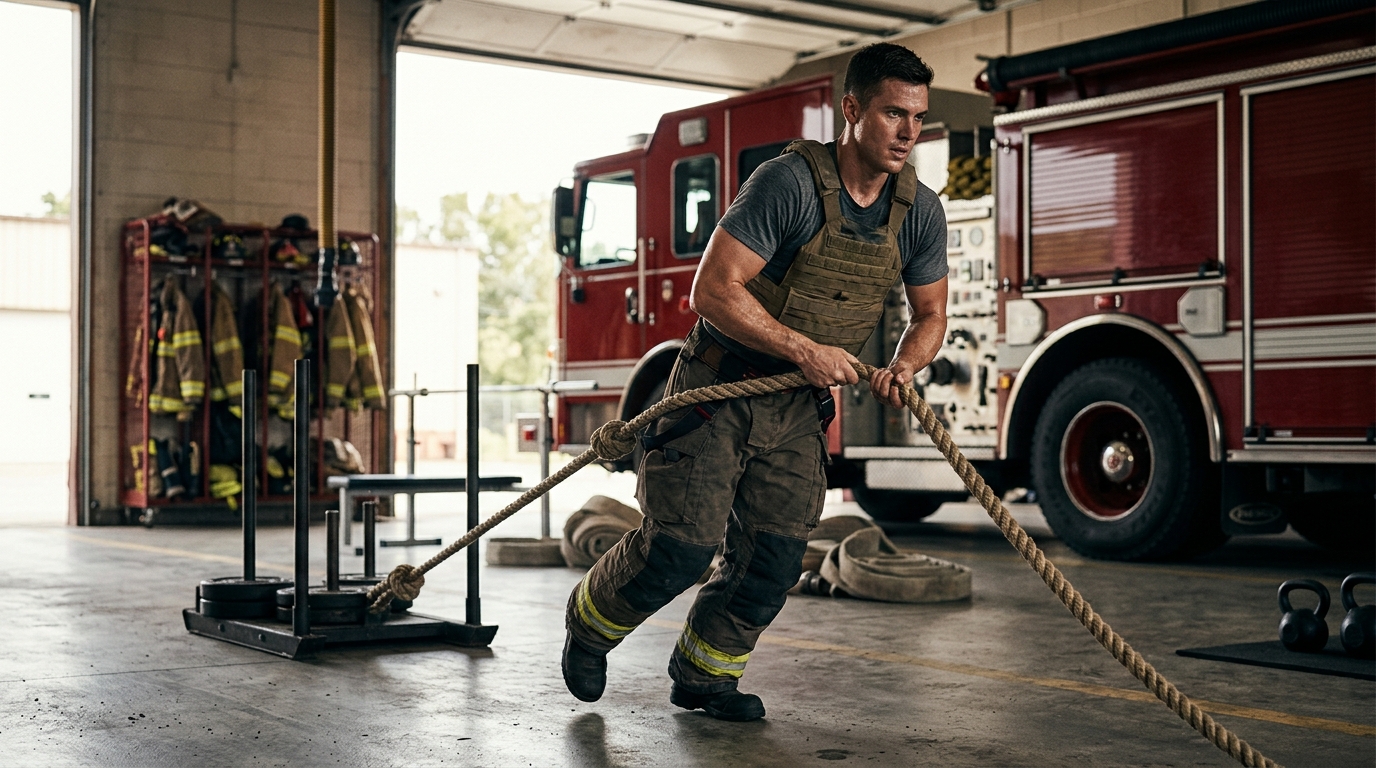
Firefighting is one of the most physically demanding professions on the planet. Between hauling charged hose lines, climbing stairs in full turnout gear, and carrying victims to safety, your body needs to perform under extreme stress for extended periods. The right training program bridges the gap between the gym and the fire ground, building functional strength and cardiovascular endurance that actually transfer to the job. This guide breaks down the most effective exercises for firefighters, backed by peer-reviewed research and real-world experience from the fire service.
Why Firefighter-Specific Fitness Matters
Firefighters are tactical athletes. They need power for forced entry, endurance for sustained operations, and mobility for navigating tight spaces. According to the NSCA, cardiac events have been one of the leading causes of on-duty deaths among firefighters since 1977, making cardiovascular fitness a non-negotiable priority.
Research published in the Journal of Medical Internet Research confirms that firefighters must excel in flexibility, power, muscular endurance, and strength to handle their occupational demands. A generic gym routine simply will not cut it. Programs like the Everyday Heroes online coaching program are designed around these exact needs.
Compound Lifts That Build Fire Ground Strength
Functional strength is the ability to produce force in movement patterns that mirror real-world tasks. For firefighters, that means pushing, pulling, lifting, and squatting under load.
Deadlifts
The deadlift is a foundational hip-hinge movement that strengthens the posterior chain. It directly mimics picking up heavy equipment, pulling ceiling, and lifting victims. According to the California State Firefighters' Association, deadlifts work several muscle groups and replicate the lifting movements firefighters use on every call.

Squats
Squats build lower-body strength essential for stair climbing, crawling, and standing up under heavy loads. They also reinforce proper lifting mechanics that reduce back injury risk.
Overhead Press
Firefighters frequently lift objects overhead, from ladders to ceiling hooks. The overhead press develops shoulder stability and pressing strength that transfers directly to the fire ground.
Loaded Carries for Job-Ready Durability
A loaded carry is an exercise where you hold a heavy weight and walk a set distance. It is one of the most fire-ground-specific movements you can train. As noted by Fire Rescue Wellness, loaded carries develop grip, trunk stability, and overall strength that translates to job performance in ways almost nothing else does.
Farmer's walks, sandbag carries, and suitcase carries all fall into this category. If you can walk across the apparatus bay holding two heavy dumbbells without breaking form, you can likely make it across a front yard carrying irons and a saw. Explore the firefighter kettlebell foundations program for guided carry progressions.
HIIT and Endurance Training for Cardiovascular Readiness
High-intensity interval training (HIIT) is a training method that alternates short, intense bursts of exercise with brief recovery periods. A 2016 study in the Journal of Strength and Conditioning Research identified HIIT as particularly beneficial for improving firefighters' cardiorespiratory fitness. Research also supports mixing HIIT with steady-state cardiovascular training at roughly 70% of maximum heart rate for well-rounded conditioning.
Effective HIIT exercises for firefighters include stair climbing, rowing intervals, sled pushes, and air bike sprints. If you are looking for a structured cardio progression, check out the Zero to Hero 10K running program for building an endurance base.
Core Stability and Injury Prevention
Core stability is the ability to control the position and movement of the trunk over the pelvis. It is critical for every firefighting task, from dragging hose to breaching walls. More than 50% of firefighters experience back injuries during their careers, making core work essential rather than optional.
Planks, anti-rotation presses (Pallof presses), and Russian twists all target the deep stabilizers and rotational muscles that protect the spine under load. Incorporate these into every training session for lasting injury prevention.
Mobility and Flexibility Work
Flexibility is a commonly overlooked aspect of firefighter fitness, but good flexibility can prevent injuries and increase overall physical capabilities. Turnout gear restricts movement significantly, which makes off-duty mobility work even more important.
Dynamic stretching before workouts and dedicated mobility sessions on recovery days pay dividends. Everyday Heroes Fitness offers a dedicated first responder stretching and mobility program that addresses the specific range-of-motion limitations firefighters face.
Sample Weekly Training Split
Below is a balanced weekly template that covers all the key training domains for firefighters:
| Day | Focus | Key Exercises | Duration |
|---|---|---|---|
| Monday | Upper Body Strength | Overhead press, pull-ups, bench press | 45 min |
| Tuesday | HIIT / Conditioning | Rowing intervals, sled push, air bike | 30 min |
| Wednesday | Lower Body Strength | Squats, deadlifts, lunges | 45 min |
| Thursday | Active Recovery / Mobility | Dynamic stretching, yoga, foam rolling | 30 min |
| Friday | Full Body / Carries | Farmer's walks, kettlebell swings, circuit | 40 min |
| Saturday | Steady-State Cardio | Run, bike, or stair climb at 70% MHR | 30-45 min |
| Sunday | Rest | Complete rest or light walk | -- |
Adjust volume and intensity based on shift schedules and recovery. Consistent, moderate training doses improve strength and reduce injury risk far better than occasional high-intensity sessions.
Key Takeaways
- Compound lifts like deadlifts, squats, and overhead presses build the functional strength firefighters need on the fire ground.
- Loaded carries are among the most job-specific exercises, developing grip strength, trunk stability, and real-world carrying capacity.
- HIIT improves cardiorespiratory fitness more effectively than steady-state cardio alone for firefighters.
- Core stability work prevents the back injuries that affect over 50% of firefighters during their careers.
- Mobility and flexibility training reduces injury risk and combats the movement restrictions caused by turnout gear.
- Consistency beats intensity: regular moderate training outperforms sporadic high-intensity sessions.
- A structured program built for firefighters, like those from Everyday Heroes Fitness, ensures all training domains are covered.
Frequently Asked Questions
What is the best workout for firefighters?
The best firefighter workout combines compound strength training (deadlifts, squats, presses), HIIT conditioning, loaded carries, and mobility work. Programs tailored to the fire service outperform generic gym routines because they address job-specific demands.
How often should firefighters work out?
Most research supports 4 to 5 training sessions per week, adjusted around shift schedules. Consistent moderate training produces better long-term results than sporadic intense sessions.
Are deadlifts good for firefighters?
Yes. Deadlifts strengthen the posterior chain and replicate the lifting patterns firefighters use when handling equipment, pulling hose, and carrying victims. They are considered a foundational exercise for fire service fitness.
Why is cardiovascular fitness important for firefighters?
Cardiac events are one of the leading causes of line-of-duty deaths among firefighters. Research suggests firefighters need a minimum aerobic capacity of 42 mL/kg/min to safely perform fire suppression duties and reduce sudden cardiac arrest risk.
What are loaded carries and why do firefighters need them?
A loaded carry involves holding heavy weights and walking a set distance. It develops grip strength, trunk stability, and total-body endurance. These qualities directly transfer to carrying tools, hose bundles, and victims on the fire ground.
Can firefighters train on shift?
Yes, and research from the NSCA shows that firefighters participating in on-duty training programs perform significantly better on simulated fire ground tests than those who do not train on shift.
How does HIIT benefit firefighters?
HIIT raises maximal oxygen uptake (VO2 max), allowing firefighters to work longer before reaching exhaustion. It also trains both the aerobic and anaerobic energy systems, which mirrors the stop-and-go nature of fireground operations.
Is mobility training necessary for firefighters?
Absolutely. Flexibility prevents injuries and improves movement efficiency. Firefighters work in restrictive turnout gear, making off-duty mobility work critical for maintaining range of motion and reducing strain injuries.
Start Your Firefighter Fitness Journey
You do not have to figure this out alone. Everyday Heroes Fitness offers a proven system built specifically for the demands firefighters face every shift. Whether you are looking to rebuild your fitness foundation or take your performance to the next level, our online coaching program gives you a personalized plan, expert guidance, and the accountability you need to get results. Take the first step today.