
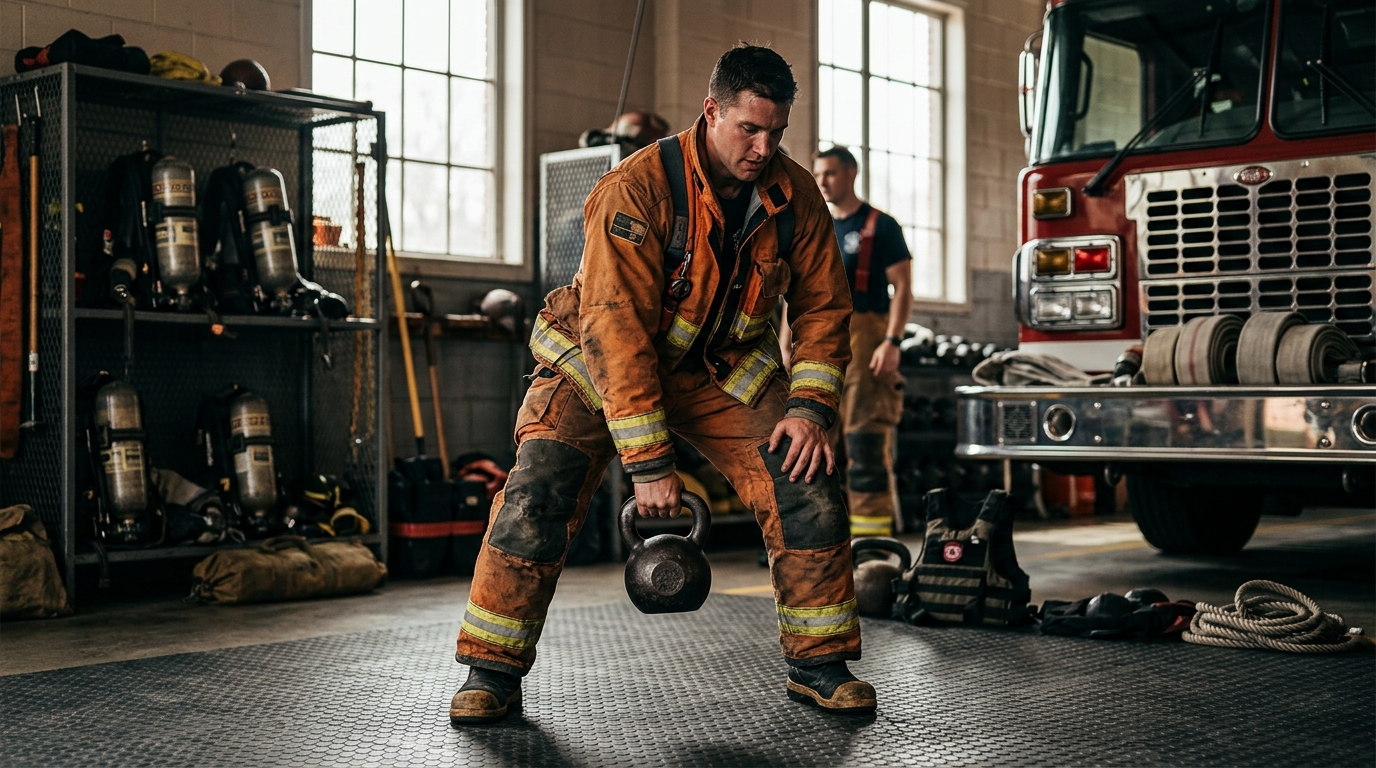
Firefighting is one of the most physically demanding professions in the world. Between hauling charged hose lines, climbing ladders in full turnout gear, and carrying victims to safety, the job requires a unique blend of raw strength and lasting endurance. Yet research shows that over 80% of firefighters are classified as overweight or obese, and cardiac events remain a leading cause of line-of-duty deaths. The right training program can change that. In this guide, we break down the most effective exercises for building firefighter-grade fitness, backed by science and built for the realities of shift work.
Why Firefighter-Specific Fitness Matters
Firefighters are tactical athletes. They need power for forced entry, cardiovascular endurance to climb flights of stairs under load, and flexibility to navigate tight spaces. A 2020 study published in the Journal of Occupational Medicine and Toxicology found that high-intensity functional training programs improved fire ground test performance, cardiorespiratory endurance, and strength among fire academy recruits.
Generic gym routines often miss the mark. Firefighter fitness training is a specialized approach to exercise that mirrors the physical demands of fire ground operations, from dragging hose to climbing ladders in gear weighing upwards of 75 pounds. Programs like the Everyday Heroes online coaching program are designed specifically for these demands.
Functional Strength Exercises
Functional strength training is resistance-based exercise that replicates real-world movement patterns. For firefighters, this means compound lifts that engage multiple muscle groups simultaneously.
Deadlifts
The deadlift mimics the lifting movement firefighters use constantly, from picking up equipment to raising ladders. Research from the California State Firefighters' Association confirms that full-body resistance training effectively improves both muscular strength and endurance.
Squats
Squats build the lower-body power needed for stair climbs, lifting with the legs, and maintaining stability in awkward positions. They are a cornerstone of any functional first responder training program.
Overhead Press
Firefighters frequently push objects overhead, whether raising a ceiling hook or throwing a ladder. The overhead press directly trains this movement pattern and builds shoulder resilience.
Cardiovascular Endurance Training
Cardiovascular endurance is the ability to sustain prolonged physical effort under stress. A 2016 study in the Journal of Strength and Conditioning Research identified HIIT as particularly beneficial for improving firefighters' cardiorespiratory fitness.
High-Intensity Interval Training (HIIT)
HIIT is a cardiovascular training method that alternates short, intense bursts of exercise with brief recovery periods. A typical firefighter HIIT session might mix 30-second high-intensity bursts with 30-second recovery periods. Research supports combining HIIT with steady-state cardio at roughly 70% of maximum heart rate for well-rounded conditioning.
Stair Climbing
Stair climbing develops leg endurance and cardiovascular strength, making it ideal preparation for high-rise fire operations. Consider using a weighted vest to simulate turnout gear. If you are looking for a structured running and endurance plan, the Zero to Hero 10K running program offers a progressive approach.
Core Stability and Injury Prevention
Core stability is the ability of the muscles surrounding the spine and pelvis to maintain proper posture and control during movement. More than 50% of firefighters experience back injuries during their careers, making core training essential.
Key core exercises include planks for overall trunk stability, Russian twists for rotational strength, and stability ball work for balanced movement control. A strong core supports every other movement on the fire ground, from pulling hose to carrying a victim down stairs.
For dedicated recovery and flexibility routines, check out the first responder stretching and mobility program from Everyday Heroes Fitness.
Loaded Carries: The Ultimate Firefighter Exercise
Loaded carries are exercises in which you hold a weight and walk a set distance. They develop grip strength, trunk stability, and full-body endurance in a way that directly transfers to the job. As one fire service training expert noted, carries require very little coaching: pick it up, walk with it, set it down.
Variations to include in your routine:
- Farmer's walks with dumbbells or kettlebells
- Sandbag carries to simulate victim rescue
- Single-arm suitcase carries for anti-lateral flexion strength
Grip strength and trunk stability are closely linked to reduced injury risk and overall functional capacity. The firefighter kettlebell foundations program is an excellent starting point for building carry strength.
Mobility and Flexibility Work
Flexibility is a commonly overlooked aspect of firefighter fitness, but good flexibility prevents injuries and increases overall physical capability. Dynamic stretching before workouts prepares muscles for action and prevents strains, while yoga-based poses enhance recovery and mental focus.
Turnout gear restricts natural range of motion, so training with extra mobility work ensures you can move safely in confined spaces. Explore the free resources from Everyday Heroes Fitness for mobility routines you can do at the station.
Putting It All Together: Programming Tips
Research shows that consistent, moderate training doses improve strength and reduce injury risk far better than occasional high-intensity sessions. Here are practical programming principles for firefighters:
- Train 3 to 4 days per week, prioritizing compound lifts and carries.
- Include 2 HIIT sessions and 1 longer steady-state cardio session weekly.
- Add mobility work on every training day (10 to 15 minutes).
- Adjust volume and intensity based on shift schedules and sleep quality.
- Use undulating periodization to vary daily training stimulus and prevent plateaus.
Firefighting is shift work. You will sometimes train tired and underfed. A smart program accounts for that reality rather than ignoring it.
Exercise Comparison Table
| Exercise | Primary Benefit | Firefighting Application | Equipment Needed |
|---|---|---|---|
| Deadlift | Full-body strength | Lifting equipment, raising ladders | Barbell |
| Squat | Lower-body power | Stair climbing, lifting with legs | Barbell or bodyweight |
| Overhead Press | Shoulder strength | Overhead tasks, ladder throws | Barbell or dumbbells |
| Farmer's Walk | Grip and trunk stability | Carrying tools and victims | Dumbbells or kettlebells |
| Stair Climb | Cardiovascular endurance | High-rise operations | Staircase or machine |
| HIIT Circuit | Cardiorespiratory fitness | Sustained fire ground effort | Varied |
| Plank | Core stability | Injury prevention, posture under load | None |
| Russian Twist | Rotational strength | Hose advancement, tool use | Medicine ball |
Key Takeaways
- Firefighter fitness requires a blend of functional strength, cardiovascular endurance, core stability, and mobility.
- Deadlifts, squats, and overhead presses form the foundation of firefighter strength training.
- HIIT and stair climbing are the most effective methods for building fire ground cardiovascular endurance.
- Loaded carries are uniquely valuable because they develop grip, trunk stability, and job-specific endurance simultaneously.
- Over 50% of firefighters experience back injuries, making core stability training non-negotiable.
- Consistent moderate training outperforms sporadic high-intensity sessions for long-term results.
- Smart programming accounts for shift work, sleep disruption, and recovery demands.
Frequently Asked Questions
What is the best workout for firefighters?
The best workout combines compound strength exercises like deadlifts and squats, HIIT for cardiovascular conditioning, loaded carries for functional endurance, and daily mobility work. Programs tailored to firefighters, such as the Everyday Heroes coaching program, deliver the most relevant results.
How often should firefighters work out?
Three to four strength sessions per week, combined with two HIIT sessions and regular mobility work, is an effective frequency. Adjust volume based on shift schedules and sleep quality.
Are deadlifts safe for firefighters?
Yes, when performed with proper form. Deadlifts directly replicate the lifting patterns firefighters use on the job and are one of the most effective exercises for building full-body strength and reducing injury risk.
What is HIIT and why does it matter for firefighters?
High-intensity interval training (HIIT) is a method of cardiovascular exercise that alternates short, all-out efforts with brief recovery periods. Research from the Journal of Strength and Conditioning Research shows HIIT significantly improves the cardiorespiratory fitness firefighters need for sustained fire ground operations.
How do loaded carries help firefighters?
Loaded carries build grip strength, trunk stability, and total-body endurance. They simulate carrying tools, hose bundles, and victims, making them one of the most job-specific exercises available.
Can firefighters train effectively at the station?
Absolutely. Many effective exercises require minimal equipment. Bodyweight movements, kettlebells, and a set of dumbbells are enough to build serious strength and endurance. Check out the kettlebell foundations program for station-friendly workouts.
What role does flexibility play in firefighter fitness?
Flexibility prevents injuries and improves movement efficiency, especially when wearing restrictive turnout gear. Dynamic stretching and yoga are both proven methods for maintaining range of motion.
What is the minimum cardiovascular fitness level for firefighters?
Research suggests firefighters need a minimum aerobic capacity of 42 mL/kg/min to safely handle fire suppression duties and reduce the risk of sudden cardiac events on the job.
Start Your Firefighter Fitness Journey
You took the oath to protect others. Now invest in the fitness that lets you keep that promise. The Everyday Heroes online coaching program is built specifically for firefighters, with structured strength, endurance, and mobility programming that fits your shift schedule. Apply today and train like the tactical athlete you are.