
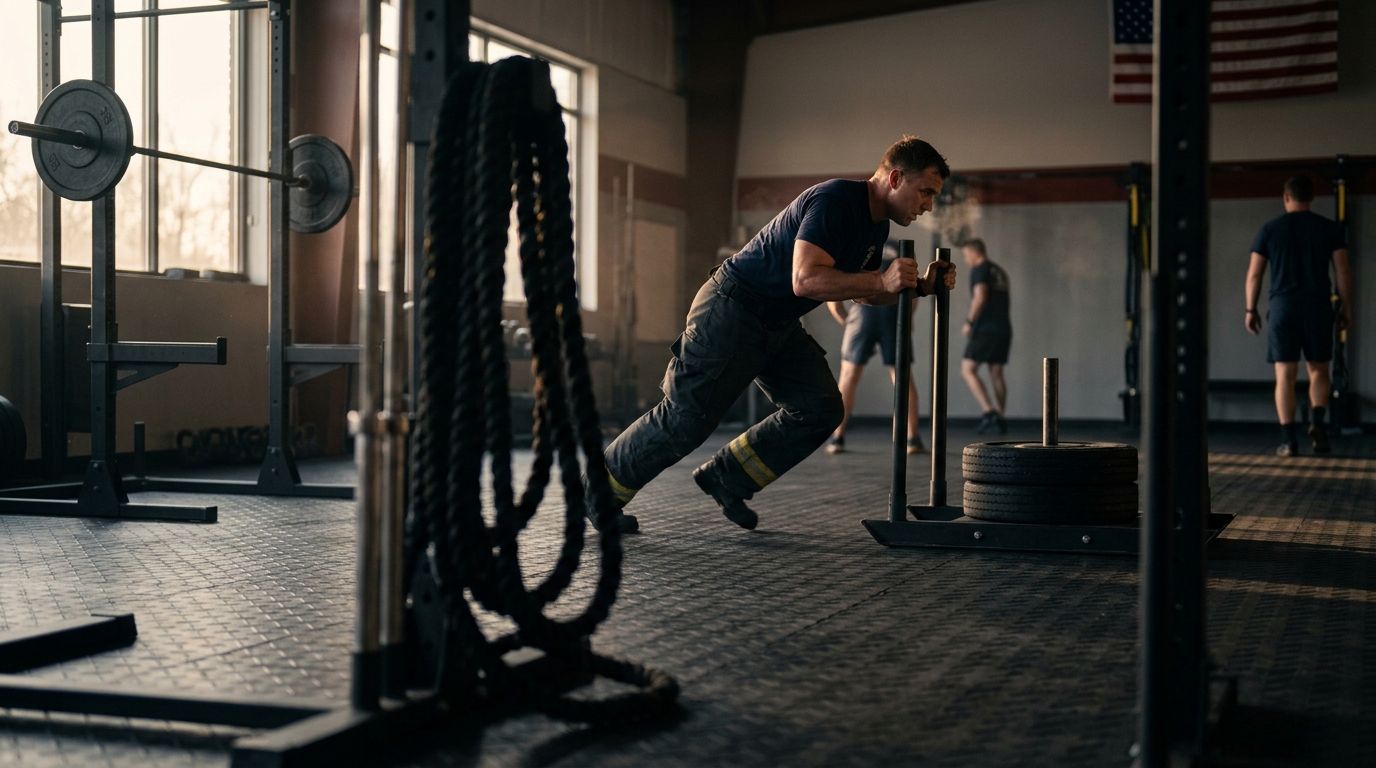
Firefighting demands a rare combination of raw strength, sustained cardiovascular endurance, and functional mobility. Whether you are dragging a charged hose line up a stairwell or carrying a victim to safety, your body must perform under extreme stress. The right training program does not just build muscle; it prepares you for the unpredictable, high-intensity nature of the job. In this guide, we break down the most effective exercises for firefighter strength and endurance, backed by scientific research and real-world fireground experience, so you can train smarter and perform when it matters most.
Why Firefighter-Specific Fitness Matters
General gym routines are not designed for the physical demands firefighters face daily. Firefighters often have to carry heavy equipment, climb stairs, and work in hot, smoky environments, all of which require excellent cardiovascular fitness according to the California State Firefighters' Association. Research published in the Journal of Occupational Medicine and Toxicology found that programs combining high-intensity circuits with both resistance and endurance exercises optimized occupational performance, resilience to injury, and mobility.
Functional fitness is a training approach that prioritizes movements mimicking real-world tasks over isolated muscle exercises. For firefighters, this means training patterns like lifting, carrying, pulling, and climbing rather than simply chasing aesthetic goals. The Everyday Heroes Fitness online coaching program is built around this exact philosophy.
Compound Strength Exercises Every Firefighter Needs
Compound exercises are multi-joint movements that recruit several muscle groups simultaneously. Research from the University of Illinois found that full-body resistance training was effective at improving both muscular strength and endurance for firefighters, as reported by the CSFA. The following exercises should anchor any firefighter strength program:
Deadlifts
The deadlift is a compound lift that targets the posterior chain, including the glutes, hamstrings, and lower back. It directly mimics the lifting movements firefighters use when moving equipment and victims. Aim for 3 to 5 sets of 5 repetitions at a challenging weight.
Squats
Squats build lower-body strength essential for stair climbing, carrying loads, and maintaining stability on uneven surfaces. Both barbell back squats and goblet squats are excellent choices for firefighters at any level.
Overhead Press
Firefighters frequently lift objects overhead, such as ladders and ceiling hooks. The overhead press develops the shoulder and upper-back strength required for these tasks. If you are new to pressing, the Firefighter Kettlebell Foundations program offers a solid starting point.
Cardiovascular Endurance Training for the Fireground
A 2016 study published in the Journal of Strength and Conditioning Research identified high-intensity interval training (HIIT) as particularly beneficial for improving firefighters' cardiorespiratory fitness, as noted by the CSFA. HIIT is a cardiovascular training method consisting of short, intense bursts of exercise followed by brief periods of rest or lower-intensity movement.
Research also supports mixing HIIT with steady-state endurance training at roughly 70% of maximum heart rate for balanced cardiovascular development. Stair climbing is one of the most job-specific conditioning tools available and directly develops leg endurance and cardiovascular capacity. For a structured cardio progression, explore the Zero to Hero 10K Running Program.
Studies indicate firefighters need a minimum aerobic capacity of 42 mL/kg/min to meet cardiovascular demands and reduce the risk of sudden cardiac events, according to Volunteer Guide.
Core Stability and Injury Prevention
Core strength is the ability of the muscles surrounding the spine and pelvis to stabilize the trunk during movement. It is critical for lifting, carrying, and maintaining balance under load. More than 50% of firefighters experience back injuries during their careers, making core training essential for career longevity.
Effective core exercises for firefighters include planks, Russian twists, and stability ball movements. These exercises target both rotational and anti-rotational strength, which directly transfers to tasks like dragging hose and forcing entry. The First Responder Stretching and Mobility Program pairs well with core work for a complete injury-prevention approach.
Functional Carries and Job-Specific Drills
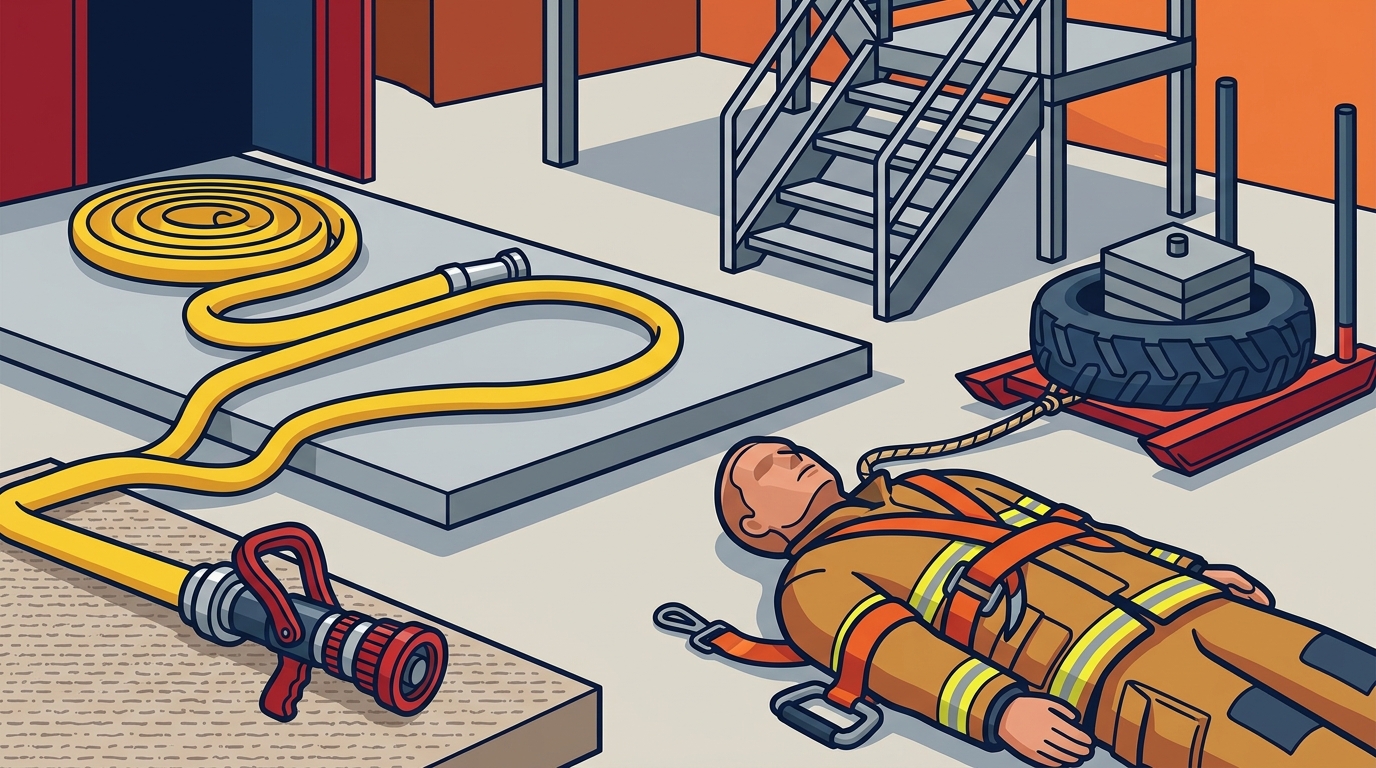
Functional carries are loaded walking exercises that simulate carrying tools, hose bundles, and victims. The farmer's carry builds grip and core strength, directly mimicking long tool carries to the fireground. Sandbag carries and sled drags add variety and replicate the awkward loading patterns firefighters encounter.
According to the NSCA's Tactical Strength and Conditioning Report, firefighters already participating in an on-duty training program completed simulated fireground suppression tests significantly faster than those who were not training. This underscores the value of consistent, job-specific drill work.
Mobility and Flexibility Work
Flexibility is a commonly overlooked aspect of firefighter fitness. Good mobility prevents strains, improves movement efficiency, and supports recovery between shifts. Dynamic stretching before workouts and static stretching or yoga after sessions keeps muscles pliable and joints healthy.
Everyday Heroes Fitness offers a dedicated stretching and mobility program designed specifically for first responders. Investing 10 to 15 minutes per day in mobility work can pay significant dividends in injury prevention over a career.
Sample Weekly Training Plan
Below is a balanced weekly training structure that covers all key fitness domains for firefighters. Adjust volume and intensity based on your current fitness level and shift schedule.
| Day | Focus | Key Exercises | Duration |
|---|---|---|---|
| Monday | Strength (Lower Body) | Squats, Deadlifts, Lunges | 45-60 min |
| Tuesday | HIIT / Cardio | Interval Sprints, Stair Climbs, Rowing | 30-40 min |
| Wednesday | Strength (Upper Body) | Overhead Press, Pull-Ups, Rows | 45-60 min |
| Thursday | Active Recovery / Mobility | Dynamic Stretching, Yoga, Foam Rolling | 20-30 min |
| Friday | Functional Circuits | Farmer's Carries, Sled Drags, Sandbag Cleans | 30-45 min |
| Saturday | Steady-State Endurance | Running or Cycling at 70% Max HR | 30-45 min |
| Sunday | Rest | Full Rest or Light Walk | - |
Key Takeaways
- Compound lifts like deadlifts, squats, and overhead presses form the foundation of firefighter strength training.
- HIIT is one of the most research-backed methods for improving firefighter cardiovascular fitness.
- Core stability training is essential because over half of firefighters experience back injuries.
- Functional carries such as farmer's walks and sandbag carries replicate real fireground tasks.
- Mobility work prevents injuries and should be performed daily, even on rest days.
- A minimum aerobic capacity of 42 mL/kg/min is recommended to meet the cardiovascular demands of firefighting.
- Consistent, structured training programs outperform random gym sessions for fireground performance.
Frequently Asked Questions
What is the best workout for firefighters?
The best workout for firefighters combines compound strength exercises (deadlifts, squats, overhead presses), HIIT for cardiovascular endurance, functional carries, and daily mobility work. This balanced approach addresses the full range of physical demands on the fireground.
How often should firefighters work out?
Most research supports training 4 to 5 days per week, balancing strength, cardio, and flexibility sessions with adequate rest and recovery days.
Is HIIT better than steady-state cardio for firefighters?
Both are valuable. HIIT is particularly effective for improving peak cardiovascular capacity, while steady-state cardio at around 70% of maximum heart rate builds aerobic endurance. A combination of both yields the best results.
Why is core training important for firefighters?
Over 50% of firefighters suffer back injuries during their careers. Core training stabilizes the spine and pelvis during lifting, carrying, and pulling tasks, significantly reducing injury risk.
What is functional fitness?
Functional fitness is a training methodology that prioritizes movements replicating real-world physical tasks. For firefighters, this means exercises like loaded carries, stair climbing, and sled drags that directly transfer to job performance.
Can I train effectively at the fire station?
Yes. Many effective exercises, including bodyweight squats, push-ups, planks, and stair climbs, require minimal equipment. Kettlebells and sandbags are compact tools that enable a full firefighter training program in a station setting. Check out the Firefighter Kettlebell Foundations program for station-friendly workouts.
How do I get started with a firefighter fitness program?
Start by assessing your current fitness level and identifying weak areas. A structured program designed for firefighters, like the 4-Week Functional First Responder Training Program, provides a clear starting point with progressive workouts.
Ready to Train Like a Firefighter Should?
Stop guessing in the gym and start training with a system built for the demands of your job. Everyday Heroes Fitness offers proven programs designed specifically for firefighters, from free resources to comprehensive online coaching. Take the first step toward becoming stronger, more resilient, and ready for anything the fireground throws at you.