
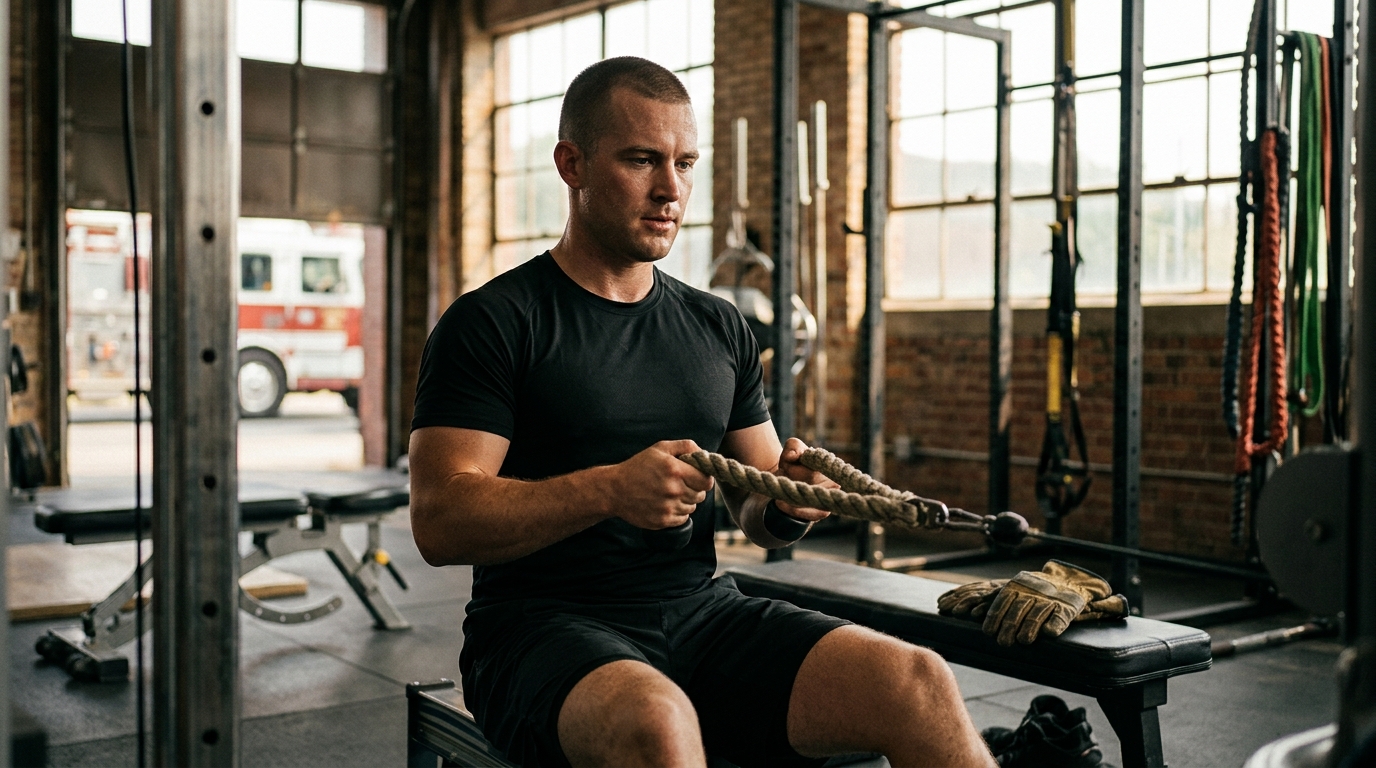
Firefighter Fitness Program to Regain Strength and Confidence
Firefighting is one of the most physically demanding professions in the world, yet many firefighters quietly struggle with declining fitness after their first few years on the job. Weight creeps on, motivation fades, and confidence slips. The good news: a fitness program built specifically for the demands of the fireground can reverse all of that. This guide breaks down why generic gym plans fail firefighters, what an effective firefighter fitness program actually looks like, and how programs like Everyday Heroes Fitness are helping thousands of first responders reclaim their edge.
Why Firefighters Lose Fitness on the Job
Most firefighters enter the service in peak condition. Then 24-hour shifts, poor station nutrition, disrupted sleep, and the emotional weight of the job take their toll. Before long, the person who crushed the CPAT feels miles away from their probie self.
This pattern is extremely common. Shift work disrupts circadian rhythms and hormonal balance, making fat loss harder and recovery slower. Without a structured plan that accounts for these realities, even motivated firefighters spin their wheels in the gym or skip workouts entirely.
The Cardiac Risk That Makes Fitness Non-Negotiable
Firefighter fitness is not vanity. It is a life-or-death professional obligation. According to NFPA research, sudden cardiac events have been the leading cause of on-duty firefighter deaths for decades. Each year, 45% to 60% of firefighter line-of-duty deaths are cardiovascular-related, as reported by Lexipol. Despite this, 72% of fire departments do not have programs to maintain basic firefighter fitness and health.
In 2025, 48 of 76 on-duty firefighter deaths were caused by cardiac events, according to USFireDept data. The NFPA senior research analyst has stated that physical evaluations and fitness programs are key to prevention. A structured training program is not optional for firefighters who want long, healthy careers.
What an Effective Firefighter Fitness Program Includes
A firefighter fitness program is a structured training system designed around the physical demands of fireground operations, including strength, cardiovascular endurance, mobility, and mental resilience. It differs from a generic gym plan because every element maps to job-specific tasks like hose advancement, ladder carries, victim rescue, and sustained work in turnout gear.
Strength That Transfers to the Fireground
Firefighters need to move heavy, awkward objects under extreme stress. Training should prioritize compound lifts, kettlebell work, and loaded carries rather than isolated bodybuilding movements. The Firefighter Kettlebell Foundations program from Everyday Heroes Fitness focuses on exactly this type of functional strength development.
Cardiovascular Conditioning
Aerobic capacity keeps you working longer on the fireground. Anaerobic conditioning helps during high-intensity bursts like forcing a door or pulling ceiling. A good program blends both through interval work, EMOMs, and zone-based cardio. The Zero to Hero 10K Running Program is one example of structured cardiovascular progression built for first responders.
Mobility and Recovery
Chronic back pain, shoulder issues, and hip tightness are common among firefighters. A complete program includes dedicated mobility work. The First Responder Stretching and Mobility Program addresses the specific movement limitations that develop from years of heavy gear use and repetitive fireground tasks.
Functional Training: The Foundation of Fireground Performance
Functional training is exercise that mimics real-world movement patterns to improve performance in daily activities and occupational tasks. For firefighters, this means training movements like squats, deadlifts, presses, carries, and pulls that directly replicate fireground demands.
Core strength is especially critical. A firefighter's core is activated in almost every operational task, from carrying equipment up stairwells to dragging charged hoselines. Balance and stability under load separate a reliable crew member from a liability.
Kettlebells are one of the most effective tools for firefighter functional training because they build grip strength, hip power, and shoulder stability simultaneously. A single kettlebell can deliver a complete workout in a firehouse gym with minimal space.
Why Coaching and Accountability Change Everything
Information is not the problem. Most firefighters know they should train. The gap is execution. This is where coaching-based programs outperform generic workout apps and PDF plans.
Everyday Heroes Fitness provides custom training, real coaching, weekly accountability, and nutrition guidance that fits a firefighter's lifestyle. In-app progress tracking and weekly coaching calls help members stay consistent even during brutal shift rotations. One member reported losing 21 pounds, getting hired full-time as a firefighter, and eliminating chronic back pain. Another lost 41 pounds and achieved the best shape of his life while preparing for the CPAT.
The program has been used by over 6,000 firefighters to lose weight, build functional strength, and perform better on and off shift. That scale of real-world results speaks louder than any marketing claim. Explore the full Online Coaching Program to see how it works.
Comparing Firefighter Fitness Program Approaches
| Feature | Generic Gym Plan | Firefighter-Specific Program | Coaching-Based System (e.g., Everyday Heroes) |
|---|---|---|---|
| Job-specific programming | No | Yes | Yes |
| Shift-schedule flexibility | No | Sometimes | Yes |
| Nutrition guidance | Rarely | Sometimes | Yes, customized |
| 1-on-1 coaching calls | No | No | Yes, weekly |
| In-app tracking | Varies | Sometimes | Yes |
| Accountability system | No | Community-based | Coach-led + community |
| Mobility / injury prevention | Rarely | Sometimes | Yes, integrated |
The key differentiator is sustained accountability paired with programming that respects the unique schedule and stressors firefighters face daily.
Key Takeaways
- Cardiac events are the leading cause of on-duty firefighter deaths, making fitness a professional obligation, not a personal hobby.
- 72% of fire departments lack formal fitness programs, leaving individual firefighters responsible for their own preparation.
- An effective firefighter fitness program combines functional strength, cardiovascular conditioning, mobility work, and nutrition.
- Kettlebells are among the most versatile tools for firehouse-friendly functional training.
- Coaching and weekly accountability close the gap between knowing what to do and actually doing it.
- Everyday Heroes Fitness has helped over 6,000 firefighters regain strength, lose weight, and perform better on the fireground.
- Starting with free resources like the Kettlebell Foundations program is a low-risk first step.
Frequently Asked Questions
What makes a firefighter fitness program different from a regular workout plan?
A firefighter fitness program is built around the physical demands of the job, including heavy lifting, sustained cardiovascular output in heat, and operational movements like dragging and climbing. Generic plans lack this specificity.
How often should firefighters work out?
Most effective programs call for 3 to 5 sessions per week, structured around 24/48 or 48/96 shift schedules. Rest and recovery are programmed in, not left to chance.
Can I start a firefighter fitness program if I am out of shape?
Yes. Programs like the Everyday Heroes Online Coaching Program are designed for firefighters who have gained weight and want a plan that meets them where they are.
Why are cardiac events so dangerous for firefighters?
Firefighting combines extreme heat, heavy physical exertion, and high psychological stress, which places enormous strain on the cardiovascular system. The NFPA has reported that cardiac events were the leading cause of on-duty deaths in 42 of the last 45 years tracked.
What equipment do I need?
Many firefighter programs are designed around minimal equipment: a kettlebell, pull-up bar, and space to run or carry. Everyday Heroes Fitness offers programming that works in most firehouse gyms.
How does accountability coaching help firefighters stay consistent?
Weekly coaching calls and in-app tracking create external structure that survives disrupted sleep, overtime shifts, and motivation dips. This is the single biggest factor separating firefighters who see results from those who do not.
Is there a free way to get started?
Yes. Everyday Heroes Fitness offers a free Firefighter Kettlebell Foundations program and a First Responder Stretching and Mobility Program at no cost.
How long before I see results?
Most firefighters following a structured coaching program notice measurable improvements in strength, body composition, and energy within 4 to 6 weeks of consistent effort.
Take the First Step Back to Your Strongest Self
You became a firefighter to serve and protect. You owe it to your crew, your family, and yourself to show up fit for duty. Whether you start with the free Kettlebell Foundations program or apply for the full Online Coaching Program, the most important thing is to start today. Your strongest chapter is still ahead.