
First Responder Strength and Endurance Training: The Ultimate Guide
First responders face physical demands that standard gym routines were never designed to address. From dragging hose lines up stairwells to lifting patients in cramped spaces, firefighters, paramedics, and law enforcement officers need a unique blend of raw strength, cardiovascular endurance, and functional mobility. In 2024, overexertion and strain accounted for 65 percent of all U.S. firefighter fatalities, making job-specific fitness a life-or-death priority. This guide breaks down how to build the strength and endurance your career demands.
Why Generic Fitness Programs Fail First Responders
Functional fitness is a training approach that mimics real-world movement patterns rather than isolating individual muscles. Unlike bodybuilding splits or casual cardio plans, first responder training must prepare your body for unpredictable, high-intensity work in full gear.
Research from Oklahoma State University's Dr. Jay Dawes highlights a core problem: although fitness is a stated priority, most of a first responder's shift is actually sedentary. Without a proactive, structured program, health and performance steadily decline over a career.
The solution is a program designed specifically for the demands of the fire service and emergency response. Everyday Heroes Fitness online coaching was built for exactly this purpose, combining strength, conditioning, and nutrition into one system.
Building Functional Strength for the Job
Functional strength training is the practice of developing force production through multi-joint, compound movements that transfer directly to occupational tasks. For first responders, that means exercises like deadlifts, squats, loaded carries, and pull-ups.
Compound Movements Over Isolation
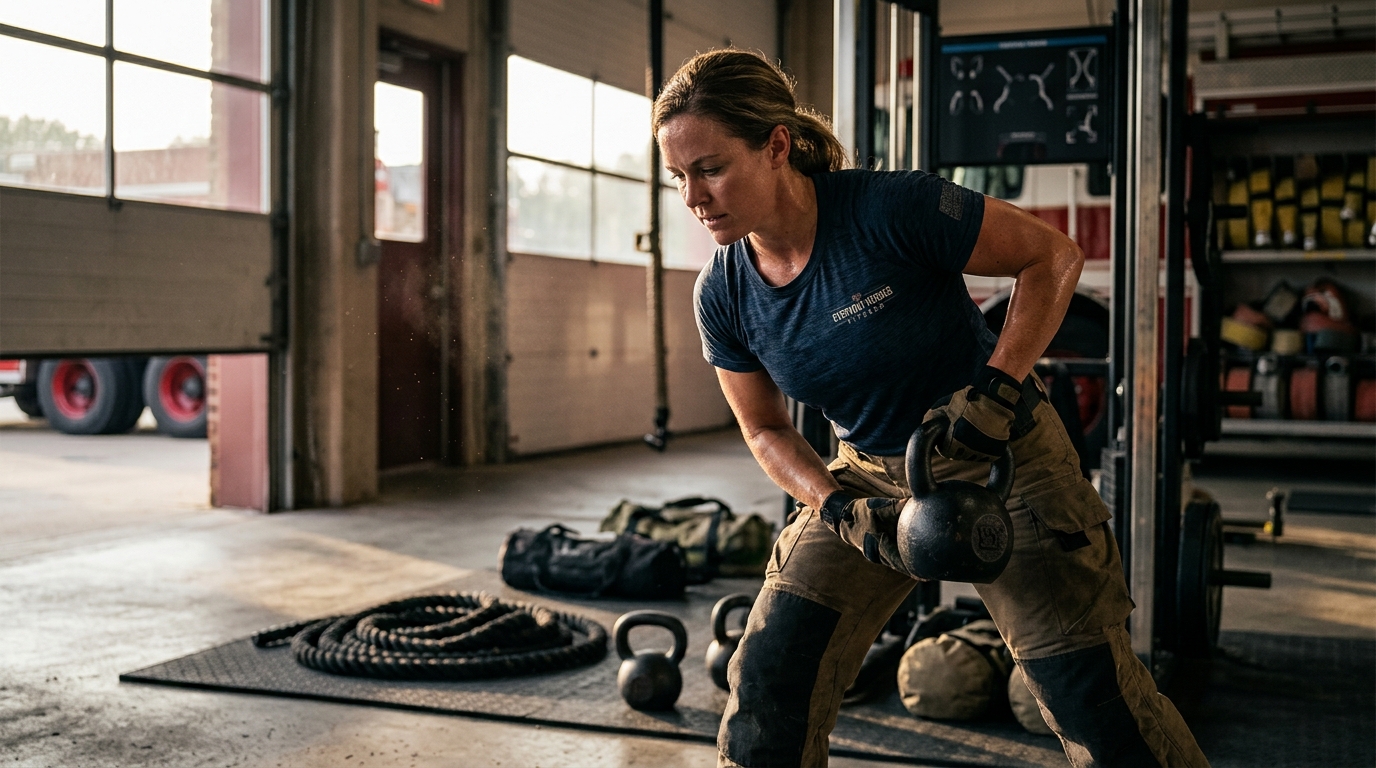
Focus on training movements rather than muscle groups. A heavy deadlift builds the posterior chain strength needed to drag a victim. Loaded carries replicate hauling equipment up flights of stairs. Kettlebell work, like the exercises in the Firefighter Kettlebell Foundations program, develops grip strength, hip power, and core stability simultaneously.
Progressive Overload on a Shift Schedule
Progressive overload is the gradual increase of training stress over time to force continued adaptation. On a 24/48 or 48/96 schedule, this means planning your heaviest sessions on off days and using lighter maintenance work on shift days. Aim for 3 to 4 strength sessions per week.
Core and Stability Work
A strong core is not about crunches. Anti-rotation exercises like Pallof presses, single-arm farmer carries, and Turkish get-ups build the trunk stability that protects your spine under heavy, awkward loads. This is especially critical when working in turnout gear that adds 45 to 75 pounds to your frame.
Developing Cardiovascular Endurance That Saves Lives
Heart attacks were the leading medical cause of firefighter line-of-duty deaths in 2024, accounting for 30 of 62 total fatalities according to NFPA data. Cardiovascular conditioning is not optional.
Blend HIIT and Steady-State Cardio
High-Intensity Interval Training (HIIT) is a conditioning method alternating short bursts of maximum effort with recovery periods. It mirrors the stop-and-go nature of emergency calls. Pair two HIIT sessions per week with one or two steady-state sessions (jogging, cycling, or rowing at a conversational pace) to build your aerobic base.
If you need a structured running plan, the Zero to Hero 10K Running Program offers a progressive plan designed for first responders who are rebuilding their endurance from scratch.
Job-Specific Conditioning Drills
Stairmill intervals in gear, sled drags, and battle rope circuits replicate fireground demands far better than a treadmill jog. Work up to 20 to 30 minutes of sustained effort in these modalities.
Mobility and Recovery: The Missing Piece
Mobility is the ability to move a joint through its full range of motion under control. Without it, strength gains plateau and injury risk skyrockets. The repetitive postures of station life, like sitting in a recliner or riding in an apparatus, tighten hip flexors and round shoulders over time.
Dedicate 10 to 15 minutes daily to targeted stretching and foam rolling. The First Responder Stretching and Mobility Program from Everyday Heroes Fitness provides guided routines built around the most common trouble spots for firefighters.
Sleep quality matters enormously as well. Aim for consistent sleep windows even on shift, and prioritize 7 to 9 hours on off days for hormonal recovery and muscle repair.
How to Structure Your Weekly Training
Below is a sample weekly framework that balances strength, conditioning, and recovery around a typical 48/96 shift rotation.
| Day | Focus | Duration | Example Exercises |
|---|---|---|---|
| Off Day 1 | Upper Body Strength | 45-60 min | Bench press, pull-ups, overhead press, rows |
| Off Day 2 | Lower Body Strength | 45-60 min | Squats, deadlifts, lunges, kettlebell swings |
| Off Day 3 | HIIT Conditioning | 25-35 min | Sled pushes, battle ropes, burpees, box jumps |
| Off Day 4 | Steady-State Cardio + Mobility | 40-50 min | Easy run or bike, foam rolling, stretching |
| On Shift | Maintenance / Mobility | 20-30 min | Bodyweight circuits, stretching, light kettlebells |
Adjust volume based on call volume and fatigue. The goal is consistency over intensity. A structured program like the 4-Week Functional First Responder Training Program takes the guesswork out of programming entirely.
Nutrition and Fueling for Shift Work
Training without proper nutrition is like running a call without water supply. First responders need to prioritize protein intake (0.7 to 1.0 grams per pound of bodyweight daily) to support muscle recovery, along with complex carbohydrates for sustained energy on long shifts.
Meal prepping on off days is the single most effective habit for avoiding the firehouse junk-food trap. Focus on lean proteins, vegetables, whole grains, and healthy fats. Hydration matters too: aim for half your bodyweight in ounces of water daily, more in hot environments or during training.
Key Takeaways
- Standard gym routines do not prepare first responders for the unpredictable, high-intensity demands of their job.
- Functional strength training using compound, multi-joint movements builds the most transferable job performance.
- Cardiovascular fitness is critical: heart attacks accounted for 48% of firefighter fatalities in 2024.
- Mobility and recovery work prevents the chronic injuries that shorten careers.
- A balanced weekly plan should include 3 to 4 strength sessions, 2 to 3 conditioning sessions, and daily mobility work.
- Proper nutrition and hydration are foundational to every other training goal.
- A structured, occupation-specific program delivers faster and safer results than improvised workouts.
Frequently Asked Questions
What is functional fitness for first responders?
Functional fitness is training that mimics real-world movement patterns like lifting, carrying, climbing, and dragging. For first responders, it focuses on building the specific strength, endurance, and mobility needed to perform safely and effectively on duty.
How often should firefighters work out?
Most firefighters benefit from 4 to 5 training sessions per week, split between strength work on off days and lighter maintenance or mobility sessions while on shift. Consistency matters more than any single workout.
Can I train effectively at the fire station?
Yes. Bodyweight exercises, kettlebells, and resistance bands can deliver effective on-shift workouts in 20 to 30 minutes. The key is having a plan. Check out the free resources from Everyday Heroes Fitness for station-friendly routines.
Why is cardiovascular health so important for firefighters?
Heart attacks are the leading medical cause of firefighter line-of-duty deaths. The combination of extreme physical exertion, heat stress, and heavy gear creates massive cardiovascular strain. Regular aerobic and anaerobic conditioning significantly reduces this risk.
What exercises are best for firefighter strength?
Deadlifts, squats, overhead presses, pull-ups, loaded carries, and kettlebell swings are among the most effective exercises. They train multiple joints and muscle groups simultaneously, directly transferring to fireground tasks.
How does shift work affect training and recovery?
Irregular sleep patterns and interrupted rest impair muscle recovery and hormonal balance. Planning heavier training for off days and focusing on sleep hygiene, mobility, and lighter work on shift helps manage these challenges.
Do I need a specialized program or can I follow a general plan?
A specialized program designed for the demands of first responder work will always outperform a generic plan. Occupation-specific programming accounts for shift schedules, job tasks, gear loads, and the unique cardiovascular risks of the profession.
What role does nutrition play in first responder fitness?
Nutrition provides the fuel for training and the building blocks for recovery. Adequate protein supports muscle repair, complex carbohydrates sustain energy through long shifts, and proper hydration is essential for performance under heat stress.
Ready to Train Like the Hero You Are?
Stop guessing and start following a program built for the job you do every day. Explore the Everyday Heroes Fitness online coaching program and get a personalized plan that fits your shift schedule, your goals, and the real demands of first responder life. Your career, your health, and the people you protect are worth it.