
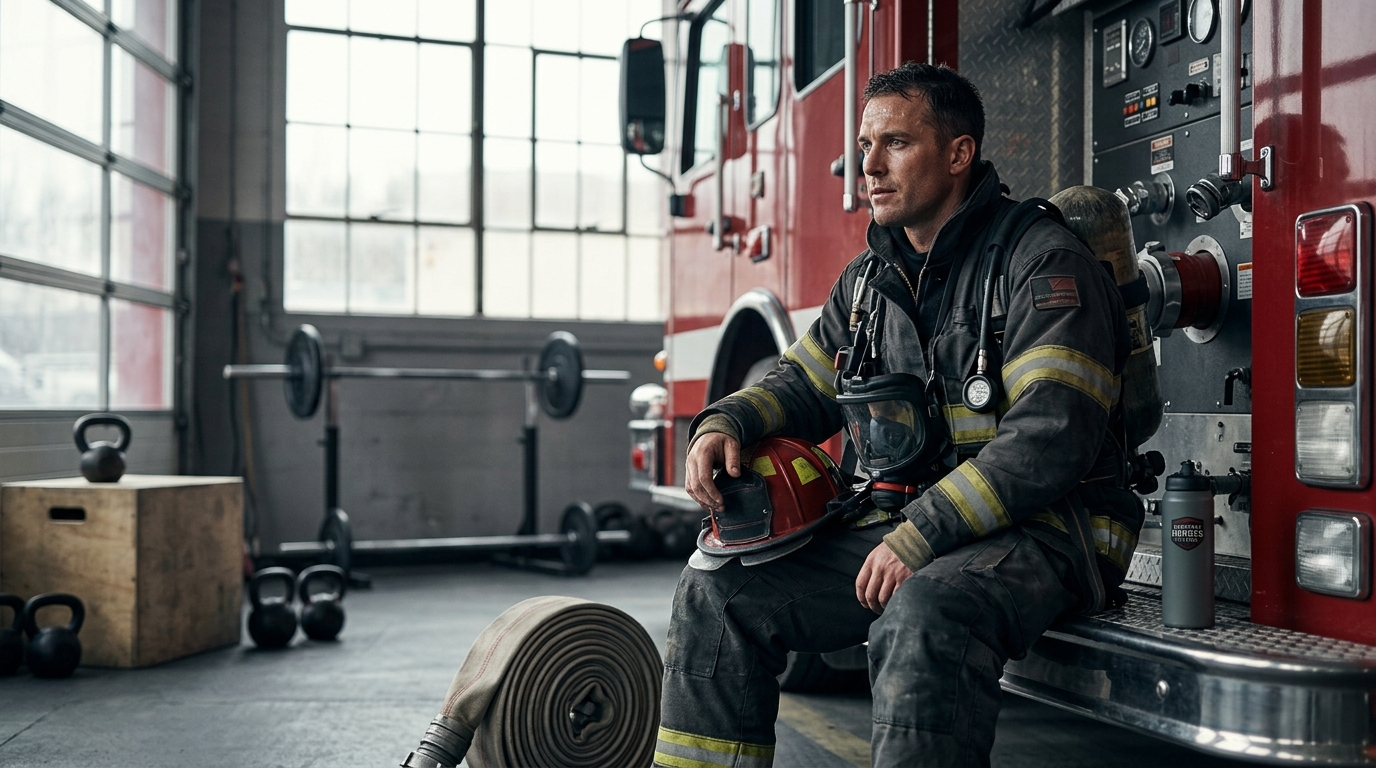
First Responder Strength and Endurance Training: The Ultimate Guide
First responders face physical demands that most gym programs never prepare you for. Dragging hose, climbing ladders under load, forcing entry, and performing rescues all require a unique blend of raw strength and sustained endurance. According to the NFPA, there were an estimated 53,575 firefighter injuries in 2024 alone, with overexertion and strain consistently ranking as the leading cause. The right training program can reduce that risk dramatically. This guide breaks down exactly how firefighters, EMTs, and law enforcement officers can build job-ready fitness that lasts an entire career.
Why First Responders Need Specialized Training
A tactical athlete is a first responder or military professional whose fitness directly impacts life-or-death outcomes on the job. Unlike recreational gym-goers, first responders must perform high-intensity work while wearing 45 to 75 pounds of gear, often after hours of sedentary station time.
Research published in the Journal of Occupational and Environmental Medicine found that firefighters are almost four times more likely than private-sector employees to experience a musculoskeletal disorder. Sprains, strains, and muscular pain remain the most prevalent injury type, according to the U.S. Fire Administration. Generic bodybuilding programs do not address these risks.
The Shift-Work Challenge
Most of a first responder's shift is sedentary in nature, punctuated by sudden bursts of maximal exertion. This pattern leads to a steady decline in fitness over the occupational lifespan unless proactive measures are taken. A program built around the specific demands of the job, like the Everyday Heroes online coaching program, accounts for these irregular schedules.
Functional Strength Foundations
Functional fitness is a training approach that mimics real-world movement patterns to build strength, endurance, and mobility for the job. For first responders, that means training movements rather than isolated muscle groups.
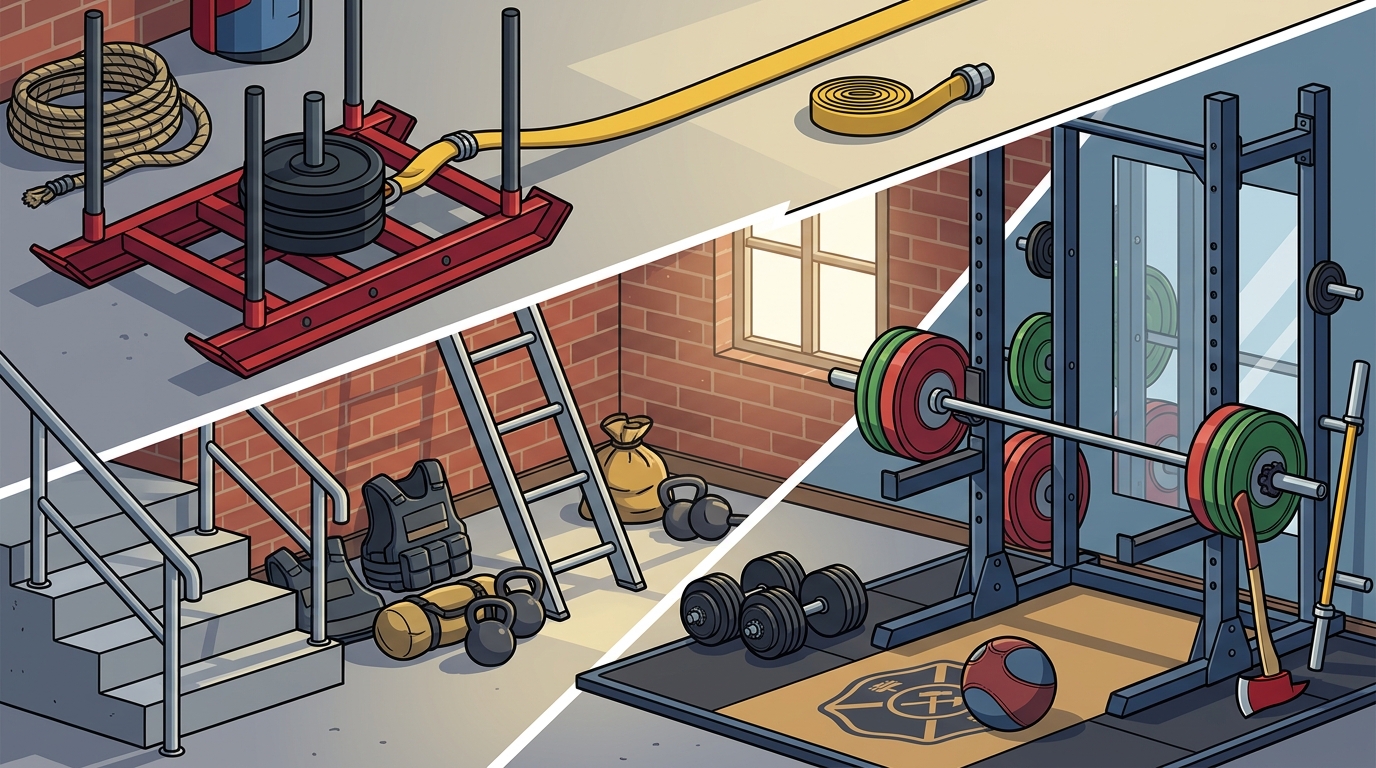
Key Movement Patterns
Every on-duty task maps to one of these foundational movements:
| Movement Pattern | On-Duty Application | Top Exercises |
|---|---|---|
| Hip Hinge | Lifting victims, pulling hose | Kettlebell swings, deadlifts |
| Squat | Standing from low positions in gear | Goblet squats, front squats |
| Push | Forcible entry, CPR compressions | Push-ups, overhead press |
| Pull | Ladder raises, victim drags | Pull-ups, bent-over rows |
| Carry | Transporting equipment and hose | Farmer carries, sandbag carries |
| Rotation | Swinging tools, turning in tight spaces | Cable chops, medicine ball throws |
Why Kettlebells Work for Firefighters
The kettlebell is one of the most effective tools for building functional firefighter strength because it trains grip, hip power, and core stability in a single movement. Everyday Heroes Fitness offers a free Firefighter Kettlebell Foundations plan that covers the essentials in four days.
Building Endurance for Shift Work
Cardiovascular endurance is the ability to sustain work output over extended periods. For firefighters, that could mean operating at a structure fire for 20 minutes or longer while wearing an SCBA.
Aerobic Base Training
Building a solid aerobic base reduces resting heart rate, improves recovery between bursts of effort, and lowers cardiac risk. Zone 2 running, cycling, or rowing for 30 to 45 minutes, three times per week, establishes this foundation. The Zero to Hero 10K Running Program from Everyday Heroes Fitness is a structured way to progress your aerobic capacity safely.
High-Intensity Interval Training
HIIT mimics the work-to-rest ratio first responders experience on calls. Short, intense efforts of 30 to 90 seconds followed by incomplete recovery periods train the anaerobic energy system and improve lactate threshold. Two HIIT sessions per week is sufficient for most first responders.
Mobility and Injury Prevention
Mobility training is the practice of improving joint range of motion and tissue quality to move more efficiently under load. Without it, the repetitive postures of the job, such as bending, lifting, and crawling, accelerate wear on the spine, shoulders, and knees.
Everyday Heroes Fitness provides a dedicated First Responder Stretching and Mobility Program that targets the areas most vulnerable to overuse. Even five to ten minutes of mobility work before or after a shift can significantly reduce injury risk.
Sample Weekly Training Split
Below is a balanced weekly template designed to fit around 24/48 or 48/96 shift schedules:
| Day | Focus | Duration | Example Session |
|---|---|---|---|
| Monday | Upper Body Strength | 35-45 min | Push-ups, rows, overhead press, farmer carries |
| Tuesday | Aerobic Base | 30-40 min | Zone 2 run or row |
| Wednesday | Lower Body Strength | 35-45 min | Squats, deadlifts, lunges, sled drags |
| Thursday | Active Recovery / Mobility | 20-30 min | Foam rolling, hip openers, thoracic spine work |
| Friday | HIIT / Functional Circuit | 25-35 min | Kettlebell swings, burpees, battle ropes, box jumps |
| Saturday | Optional Endurance | 30-60 min | Long run, hike, or bike |
| Sunday | Rest | -- | Walk, stretch, recover |
Adjust rest days around your shift rotation. The key is consistency over perfection.
Nutrition for Tactical Athletes
Training means nothing without proper fueling. First responders need adequate protein (0.7 to 1.0 grams per pound of body weight) to support muscle repair, complex carbohydrates for sustained energy, and hydration strategies that account for heavy gear and heated environments.
Meal prepping on off days and keeping nutrient-dense options at the station can prevent reliance on fast food during shifts. The Everyday Heroes coaching program includes personalized nutrition guidance alongside workout plans for a comprehensive approach.
Key Takeaways
- First responders are nearly four times more likely to suffer musculoskeletal injuries than private-sector workers, making specialized training essential.
- Functional fitness, focused on movement patterns like hinge, squat, push, pull, and carry, directly transfers to on-duty performance.
- Kettlebells are among the best tools for building firefighter-specific strength and power.
- Aerobic base training (Zone 2) combined with two HIIT sessions per week builds the endurance needed for sustained fireground operations.
- Mobility work reduces the strain and sprain injuries that are the most common injury type in the fire service.
- Nutrition and hydration are non-negotiable components of a complete tactical fitness plan.
- Consistency on a schedule built around shift work matters more than any single workout.
Frequently Asked Questions
How often should first responders work out?
Most first responders benefit from four to five training sessions per week, combining two to three strength days, one to two cardio sessions, and at least one dedicated mobility day. Rest days should align with your shift schedule for sustainable results.
What is functional fitness for firefighters?
Functional fitness is a training methodology that replicates the movement patterns used on the job, such as lifting, carrying, climbing, and dragging. It builds practical strength and endurance that directly improves fireground performance.
Are kettlebells effective for firefighter training?
Yes. Kettlebells train grip strength, hip power, and core stability simultaneously, making them ideal for firefighters. The kettlebell swing alone targets the posterior chain muscles most critical for hose pulls and victim drags.
How can I train around a 24/48 shift schedule?
Focus on full-body or upper/lower splits that allow flexibility. Train on off days when possible, and keep station workouts shorter (20 to 30 minutes) using bodyweight or minimal equipment. Programs like the 4-Week Functional First Responder Training Program are designed for exactly this.
What is the leading cause of firefighter injuries?
Overexertion and strain are consistently the leading cause of firefighter injuries and fatalities, according to the NFPA. In 2024, overexertion accounted for 65% of fatal firefighter injuries. Proper strength and conditioning programs directly reduce this risk.
Do I need a gym to train as a first responder?
No. Many effective programs use minimal equipment like kettlebells, resistance bands, and bodyweight exercises. Station-based workouts can be highly effective when properly programmed.
How important is stretching for firefighters?
Extremely important. The repetitive bending, lifting, and awkward postures of firefighting accelerate joint wear. A consistent mobility routine protects the spine, shoulders, and knees from chronic overuse injuries.
Where can I find a firefighter-specific training program?
Everyday Heroes Fitness offers programs built specifically for the demands of the fire service, including free training resources and a full online coaching program with guaranteed results.
Start Training Like the Tactical Athlete You Are
You took an oath to protect others. That starts with protecting yourself through proper training. Whether you are a rookie or a 20-year veteran, it is never too late to build the strength and endurance your job demands. Explore the free resources from Everyday Heroes Fitness or apply for the online coaching program to get a plan built for your schedule, your goals, and your mission.