
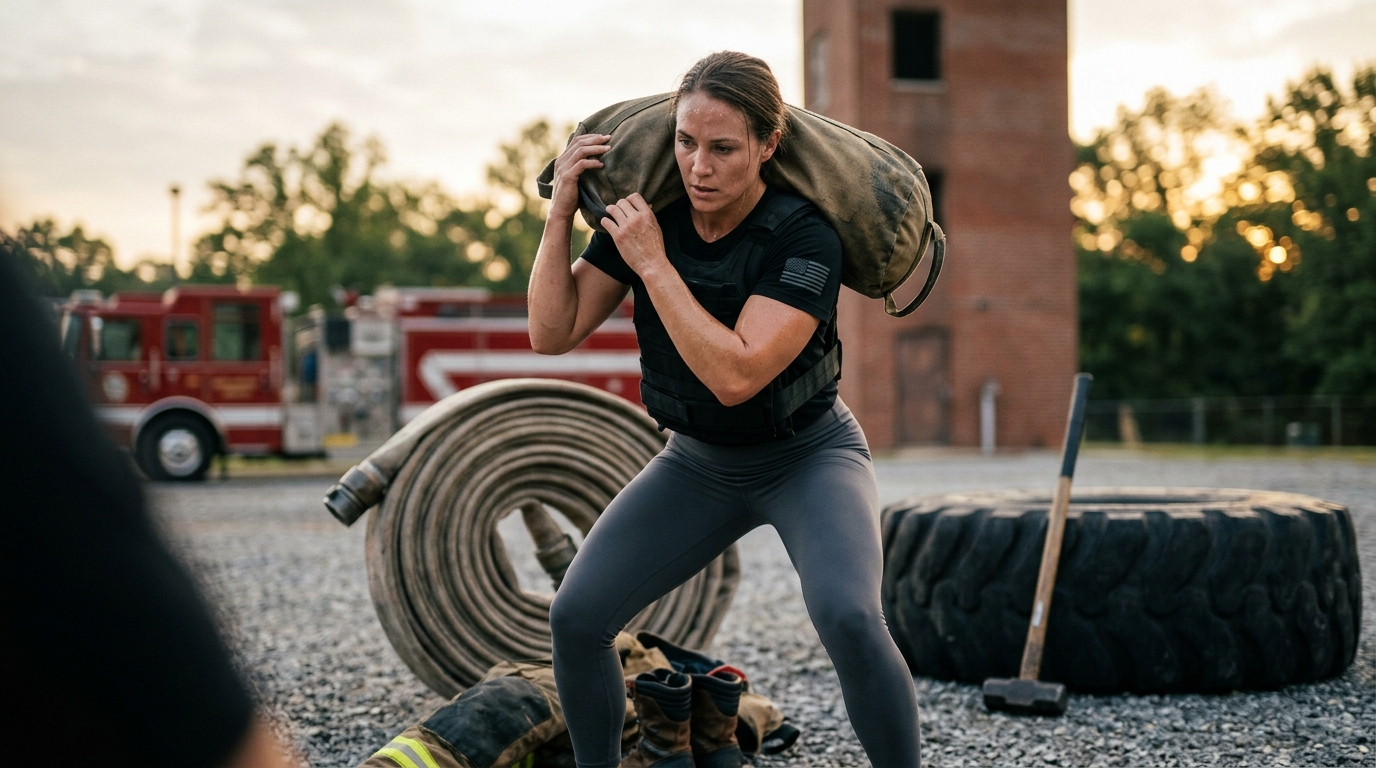
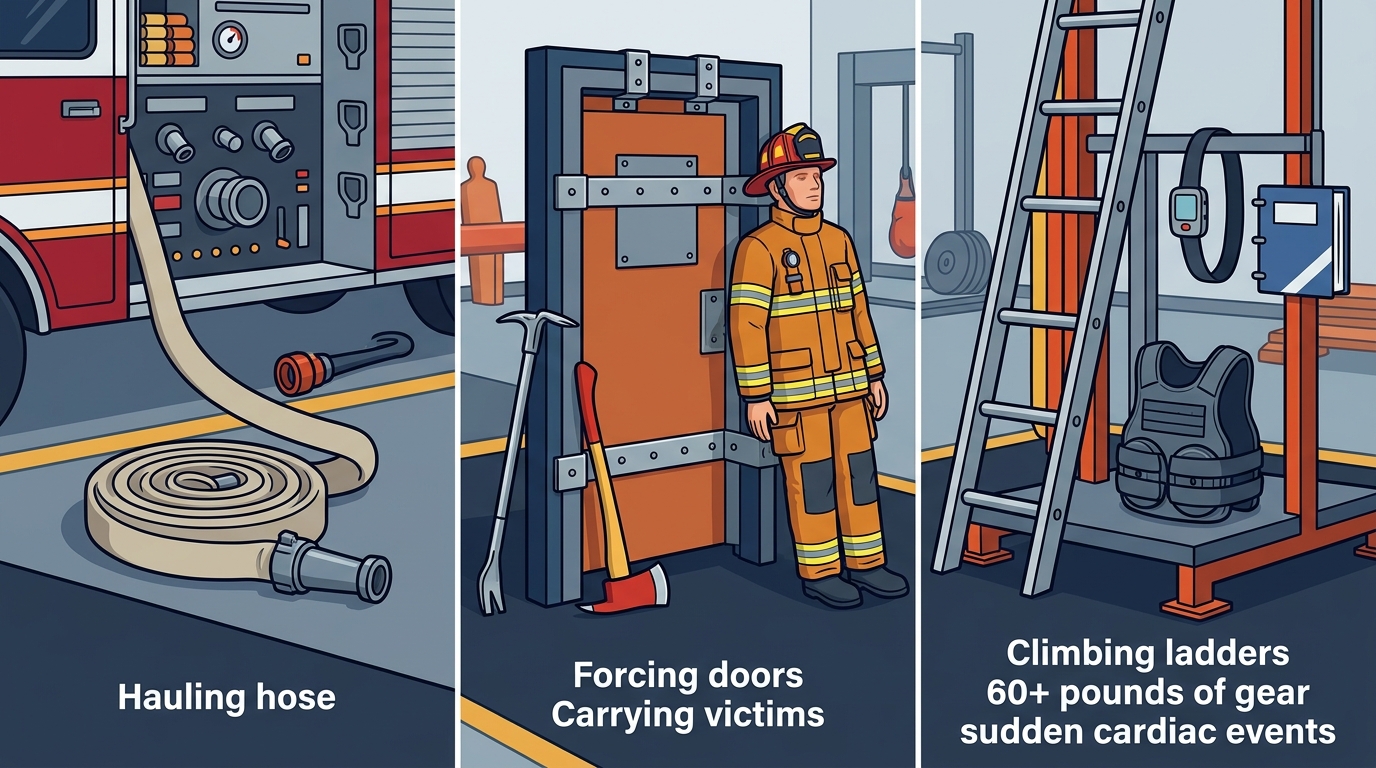
First responders face physical demands that most gym-goers never encounter. Hauling hose, forcing doors, carrying victims, and climbing ladders while wearing 60+ pounds of gear requires a unique blend of strength and endurance. According to NFPA data, approximately 45% of firefighter line-of-duty fatalities each year stem from sudden cardiac events. A structured, job-specific fitness program is not optional. It is a matter of survival. This guide breaks down exactly how first responders can build the strength and endurance their job demands, reduce injury risk, and perform at their best when it matters most.
Why Generic Fitness Programs Fail First Responders
Most commercial fitness programs are designed for aesthetics or general health. They do not account for the occupational demands firefighters, EMTs, and paramedics face daily. Firefighting ranks among the most physically stressful jobs in America, combining long hours, irregular sleep, and sudden bursts of maximal effort.
Research published in the Journal of Occupational and Environmental Medicine found that firefighters with lower aerobic capacity (VO2max below 43 mL/kg/min) were 2.2 times more likely to suffer an occupational injury than those with higher fitness levels. That statistic alone proves that random workouts are not enough. First responders need structured coaching programs built around occupational performance.
Understanding the Physical Demands of the Job
Functional fitness is the ability to perform real-world movements under load and stress. For first responders, this means training patterns that mirror actual job tasks: pushing, pulling, carrying, dragging, and climbing.
Injury Data Every First Responder Should Know
According to the U.S. Fire Administration, sprains, strains, and muscular pain are the most prevalent injury types among firefighters. Overexertion is the leading cause. These injuries do not only happen on the fireground. In fact, one study found that 65% of musculoskeletal disorders were sustained at the fire station or during physical training activities.
| Injury Type | Percentage of Total | Primary Cause |
|---|---|---|
| Sprains, strains, muscular pain | 52.6% | Overexertion |
| Wounds, cuts, bleeding | 15.2% | Contact with objects |
| Burns | ~8% | Fireground exposure |
| Smoke/gas inhalation | ~7% | Respiratory exposure |
This data makes one thing clear: strength and conditioning are not just about performance. They are about preventing the injuries that take first responders off the job.
Strength Training Principles for First Responders
Occupational strength training is resistance training designed to improve force production in job-specific movement patterns. For first responders, this means focusing on compound lifts and functional movements rather than isolation exercises.
Essential Movement Patterns
- Hip hinge (deadlifts, kettlebell swings): Mimics lifting patients and pulling hose
- Squat (goblet squats, front squats): Builds leg drive for ladder work and standing from low positions
- Carry (farmer carries, sandbag carries): Replicates carrying equipment and victims
- Push/Pull (overhead press, rows): Matches forcible entry and ventilation tasks
The kettlebell is the number-one tool for functional firefighter strength because it trains multiple movement patterns in a single, compact piece of equipment. Kettlebell swings, cleans, and Turkish get-ups develop the hip power, grip strength, and core stability first responders rely on.
Progressive Overload on a Shift Schedule
Progressive overload is the gradual increase in training stress over time to drive adaptation. First responders often work 24-hour or 48-hour shifts, making consistency difficult. The key is programming 3 to 4 training days per week and adjusting volume based on call load. A well-designed 4-week functional training program can provide the structure needed to stay consistent.
Building Endurance That Transfers to the Fireground
VO2max is the maximum amount of oxygen your body can use during intense exercise, measured in milliliters per kilogram per minute. It is the single best predictor of cardiovascular readiness for fireground operations. NFPA 1580 now consolidates health and fitness standards for emergency responders, placing greater emphasis on cardiorespiratory fitness assessments.
Two Types of Endurance Training
Aerobic base work: Steady-state efforts at 60 to 70% of max heart rate, sustained for 30 to 60 minutes. Examples include jogging, cycling, and rucking. This builds the cardiac output foundation that supports all other work.
High-intensity interval training (HIIT): Short bursts of maximal effort followed by rest. Interval training is a method where periods of high-intensity effort alternate with periods of lower intensity or rest. This mirrors the stop-and-go nature of emergency calls. Think 30-second assault bike sprints followed by 90 seconds of recovery, repeated for 15 to 20 minutes.
If you are starting from zero, a progressive running program designed for first responders is a smart on-ramp to building aerobic capacity safely.
Mobility and Recovery: The Missing Piece
Many first responders train hard but neglect recovery. Poor sleep, station food, and chronic stress compound the physical toll. Mobility work reduces injury risk and improves movement quality under load.
A dedicated stretching and mobility program should include daily hip, thoracic spine, and shoulder work. Even 10 to 15 minutes before a shift can make a measurable difference in readiness. Foam rolling, banded distractions, and controlled articular rotations are effective tools that require minimal equipment.
Nutrition and Sleep
Recovery is not complete without proper fueling. First responders should prioritize protein intake (0.7 to 1 gram per pound of body weight), stay hydrated throughout shifts, and aim for 7 to 9 hours of sleep when off duty. These basics are not glamorous, but they underpin every training adaptation.
Sample Weekly Training Plan
| Day | Focus | Duration | Example Exercises |
|---|---|---|---|
| Monday | Strength (Lower Body) | 45 min | Deadlifts, goblet squats, farmer carries |
| Tuesday | Endurance (Aerobic Base) | 30-40 min | Steady-state run or ruck |
| Wednesday | Mobility / Active Recovery | 20 min | Hip openers, thoracic rotations, foam rolling |
| Thursday | Strength (Upper Body) | 45 min | Overhead press, pull-ups, kettlebell cleans |
| Friday | HIIT / Conditioning | 20-25 min | Assault bike intervals, sled pushes, burpees |
| Weekend | Active Recovery or Off | Optional | Light walk, stretching, recreation |
This template can be adapted to any shift schedule. The goal is consistency over perfection. If a call-heavy shift wrecks your Thursday workout, shift it to Friday and adjust accordingly.
Key Takeaways
- First responders need job-specific training, not generic gym programs.
- Over 52% of firefighter injuries are sprains, strains, and muscular pain, largely caused by overexertion.
- Firefighters with higher VO2max levels are significantly less likely to suffer occupational injuries.
- Compound movements like deadlifts, squats, and carries transfer directly to job tasks.
- Both aerobic base training and HIIT are essential for fireground readiness.
- Mobility work and recovery are non-negotiable for long-term durability.
- A structured program with built-in accountability produces better results than training alone.
Frequently Asked Questions
What is the best type of workout for firefighters?
Functional strength training combined with cardiovascular conditioning delivers the best results for firefighters. Focus on compound movements like deadlifts, squats, carries, and kettlebell work, paired with both steady-state cardio and interval training.
How often should first responders work out?
Three to four sessions per week is ideal. This allows adequate recovery between sessions, especially for those working 24-hour or 48-hour shift rotations.
What is VO2max and why does it matter for firefighters?
VO2max is the maximum rate of oxygen consumption during intense exercise. Research shows that firefighters with a VO2max below 43 mL/kg/min are over twice as likely to be injured on duty. Higher VO2max means better cardiovascular endurance and fireground performance.
Can I train effectively at the fire station?
Yes. Kettlebells, resistance bands, pull-up bars, and bodyweight exercises are all effective tools that fit in a station gym. A well-structured program matters more than fancy equipment.
How do I avoid injury during training?
Warm up properly, progress loads gradually, prioritize mobility work, and avoid training through pain. Proper programming that accounts for on-shift fatigue is critical. Consider working with a coach who understands the demands of the job.
What role does nutrition play in first responder fitness?
Nutrition fuels performance and recovery. Prioritize lean protein, complex carbohydrates, and hydration. Avoid relying on caffeine and processed station food as primary fuel sources.
Is there a free program I can start with?
Yes. Everyday Heroes Fitness offers free resources including a 4-week functional training program and a kettlebell foundations guide to help first responders get started.
Take the First Step Today
You took an oath to serve and protect. That starts with being physically ready for whatever the job throws at you. Everyday Heroes Fitness has helped over 1,000 first responders regain their strength, confidence, and drive through a proven system built for the unique demands of the job. Explore the online coaching program and start training with purpose.