
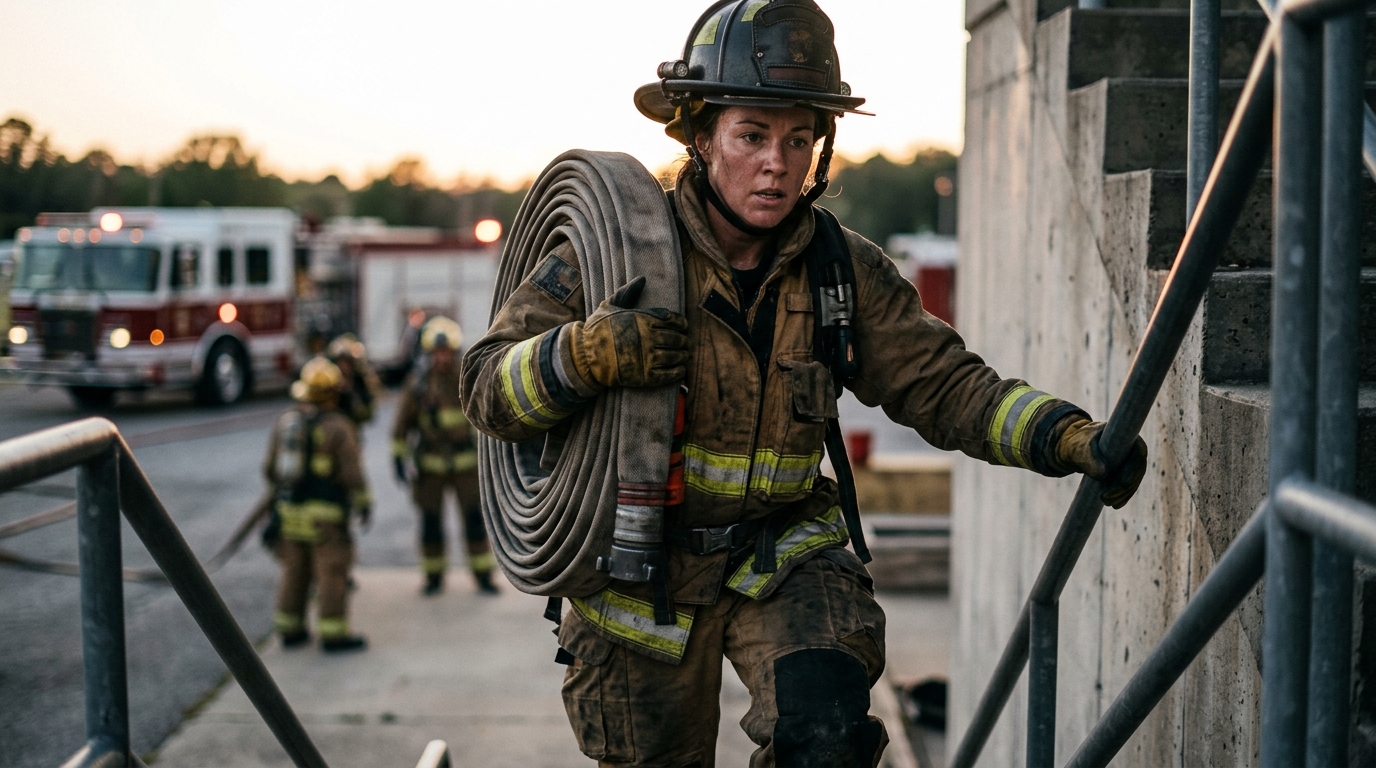
Firefighting remains one of the most physically demanding professions in the world. The average firefighter must carry over 100 pounds of gear while navigating unstable terrain, climbing ladders, and forcing entry into burning structures. According to the National Fire Protection Association, the physical requirements of the job have increased significantly over the last decade, demanding a higher baseline of cardiovascular and muscular endurance. This guide outlines the proven strategies to build the specific strength and stamina required to perform safely and effectively on the fireground. (Everyday Heroes Fitness)
Understanding Functional Movement for Firefighters
Traditional bodybuilding routines often fail first responders because they isolate muscles rather than training them as a cohesive unit. Functional fitness is the practice of training your body to work together and prepare you for real-life tasks. For a firefighter, this means movements that mimic the demands of the job, such as lifting heavy objects, dragging hoses, and climbing stairs while fatigued.
Generic gym programs focus on aesthetics. A functional program focuses on readiness. When you train for function, you improve your ability to lift, move, and endure during long shifts. This type of training enhances your capacity to perform critical tasks without succumbing to premature fatigue. It bridges the gap between the gym and the firehouse.
Many firefighters struggle with weight gain and loss of drive after their probationary period. This is often due to a lack of structured programming that accounts for shift work and irregular sleep schedules. By adopting a system built for the unique demands of the job, you can regain the strength and confidence you had as a probie. The goal is not just to look fit, but to be fit for duty and fit for life.
The Kettlebell Advantage
Among the various tools available for first responders, the kettlebell stands out as the number one tool for functional firefighter strength. Its offset center of gravity forces your stabilizer muscles to work harder than with traditional dumbbells or barbells. This mimics the uneven loads firefighters often encounter on the fireground.
A structured kettlebell foundation program can unlock your full potential. These programs typically involve a four-day plan that teaches proper form and builds a base level of strength. The movements are designed to be scalable, meaning they can be adjusted for any fitness level, from a new recruit to a veteran chief.
Using kettlebells helps you build real strength that translates directly to the field. You will learn to generate power from your hips and core, which is essential for tasks like breaking down doors or carrying a downed colleague. This approach avoids the injury risks associated with complex Olympic lifts while still providing a high-intensity workout.
Fueling for Long Shifts
Training is only half the equation. Nutrition plays a critical role in maintaining energy levels during 24-hour shifts. Many first responders rely on quick, processed foods available in the station kitchen, which leads to energy crashes and weight gain. Science-backed nutrition is the strategic planning of your diet to support your specific physical goals and lifestyle.
Custom-tailored meal plans are essential for first responders. These plans do not fight your lifestyle; they fit into it. This means focusing on nutrient-dense foods that provide sustained energy rather than quick spikes and drops in blood sugar. Hydration is equally important, especially given the heavy gear and high temperatures encountered during suppression activities.
Accountability is key to sticking with a nutrition plan. Working with a coach who understands the pressures of shift work can help you make better choices. You need a system that supports your mental health as much as your physical health. When you fuel your body correctly, you perform better on shift and recover faster afterward.
Mental Resilience and Recovery
The physical demands of firefighting are matched by the mental toll. Burnout is a common issue among first responders who feel they are coasting through their careers. Training provides a crucial outlet for stress and helps rebuild the drive that may have faded over time. Mental resilience is the ability to withstand and recover from significant psychological stress.
Joining a community of like-minded first responders can be life-changing. When you train with others who understand the stress of the job, you gain accountability and support. This tight-knit community helps you stay motivated on the days you want to quit. It reminds you why you started and helps you realize your potential.
Recovery is just as important as training. Sleep, rest days, and active recovery techniques help prevent injury and keep your body performing at its peak. A proven system includes not just workouts, but also guidance on how to manage stress and maintain mental clarity. This holistic approach ensures that you become the everyday hero that is already within you.
Choosing the Right Training Path
Not all fitness programs are created equal. For first responders, the choice is often between generic apps and specialized coaching. Below is a comparison of the two primary approaches to building firefighter fitness.
| Feature | Generic Fitness App | Specialized First Responder Coaching |
|---|---|---|
| Customization | Low. One-size-fits-all workouts. | High. Tailored to your specific goals and shift schedule. |
| Accountability | Minimal. Self-reported progress. | High. Weekly check-ins and direct coach access. |
| Nutrition | Generic meal plans. | Custom-tailored to your lifestyle and preferences. |
| Community | None or limited. | Private access to a tight-knit group of first responders. |
| Results | Variable. Often leads to plateaus. | Guaranteed. Proven system for strength and weight loss. |
Specialized coaching addresses the specific pain points of first responders. It acknowledges that you are the one others rely on, but you need support to take care of yourself. This approach helps you lose weight, build functional strength, and perform better on and off shift. It is not about chasing perfection. It is about showing up ready every single day.
Key Takeaways
- Functional Over Aesthetics: Training must mimic the physical demands of the job, such as lifting and dragging, rather than focusing on muscle isolation.
- Kettlebell Utility: The kettlebell is the primary tool for building functional strength due to its ability to engage stabilizer muscles and mimic uneven loads.
- Nutrition Integration: Custom meal plans that fit into shift work schedules are essential for maintaining energy and preventing weight gain.
- Community Support: Training with other first responders provides accountability and understanding that generic gym environments cannot offer.
- Mental Health: Physical training is a critical component of managing burnout and rebuilding drive after the probationary period.
- Proven Results: Specialized programs have helped over 1,000 first responders regain their strength and confidence through a guaranteed system.
- Continuous Improvement: Fitness is not a one-time achievement but a continuous process of showing up and performing for duty and life.
Frequently Asked Questions
How long does it take to see results with a functional fitness program?
Most first responders begin to notice improvements in their energy levels and strength within the first four weeks. Significant body composition changes and strength gains typically occur within 8 to 12 weeks of consistent training and nutrition adherence.
Do I need a gym membership to follow this program?
While a gym membership provides access to kettlebells and other equipment, the principles of functional fitness can be adapted. However, having access to a kettlebell is highly recommended for the foundational movements taught in the program.
Is this program suitable for volunteer firefighters?
Yes. The program is designed for all levels of first responders, including volunteer firefighters who may have different training schedules and physical baselines compared to career firefighters.
How does nutrition fit into a 24-hour shift schedule?
Nutrition plans are custom-tailored to your specific shift work. They focus on meal prepping and smart choices that can be made in the station kitchen or at home, ensuring you have sustained energy throughout your shift.
What if I have chronic back pain?
Functional fitness often helps alleviate back pain by strengthening the core and improving movement patterns. However, it is always recommended to consult with a medical professional before starting any new exercise program, especially if you have pre-existing conditions.
Can I do this program if I am not currently in shape?
Absolutely. The program is scalable and designed to meet you where you are. It focuses on building a foundation of strength and endurance that can be gradually increased as your fitness improves.
What makes this different from a generic fitness app?
Unlike generic apps, this program offers personalized coaching, accountability, and a community of first responders who understand the unique demands of your job. It provides a system rather than just a list of workouts.
Start Your Transformation
You do not have to navigate the challenges of firefighter fitness alone. Join the community of first responders who have regained their strength, confidence, and drive through a proven system. Whether you are looking to lose weight, build functional strength, or prepare for the CPAT, there is a path for you.
Apply for coaching today and take the first step toward becoming the everyday hero you were meant to be. Apply Now to secure your spot in our limited availability program. You can also start with our FREE Kettlebell Foundations Program to experience the difference of functional training. For more information on our approach, visit our 4-Week Functional First Responder Training Program signup page.