
Firefighter Fitness Programs Built for Shift Work and Call Volume
Yes, specialized fitness programs exist that account for firefighter shift work and call volume. Everyday Heroes Fitness designs training around 24-hour shifts, unpredictable callouts, and the physical demands of the fireground. This guide explains how these programs work, why generic fitness fails first responders, and how to build a sustainable routine that protects your career and health.
Firefighter-Specific Programs
Generic fitness plans often fail firefighters because they ignore the unique stressors of the job. A firefighter-specific program is a structured training system designed to address the physical, mental, and logistical demands of emergency response. These programs prioritize functional strength, cardiovascular endurance, and injury prevention over aesthetic goals. For additional details, review the .
Why Generic Plans Fail
Standard gym routines assume a consistent 9-to-5 schedule. Firefighters work 24-hour shifts, often followed by 48 hours off. This irregularity disrupts sleep, digestion, and recovery. A program that requires daily gym attendance is unsustainable for a firefighter on a 48-hour off shift. Specialized programs build flexibility into the training week, allowing for high-intensity work on days on and active recovery on days off.
The Everyday Heroes Approach
Everyday Heroes Fitness offers a functional fitness program built specifically for firefighters. The system includes customized programming that adapts to your shift schedule. You receive weekly 1:1 check-ins and access to a private community of first responders. This support structure ensures you stay accountable even when your schedule is chaotic. The program focuses on regaining strength, confidence, and drive through a proven system backed by guaranteed results.
Understanding Shift Work Physiology
Shift work is a work schedule that involves working during hours that conflict with the body's natural circadian rhythm. For firefighters, this means working nights, early mornings, and long stretches without sleep. This disruption leads to chronic fatigue, poor sleep quality, and increased risk of metabolic disorders. Understanding this physiology is the first step in designing a fitness routine that works.
Sleep and Recovery
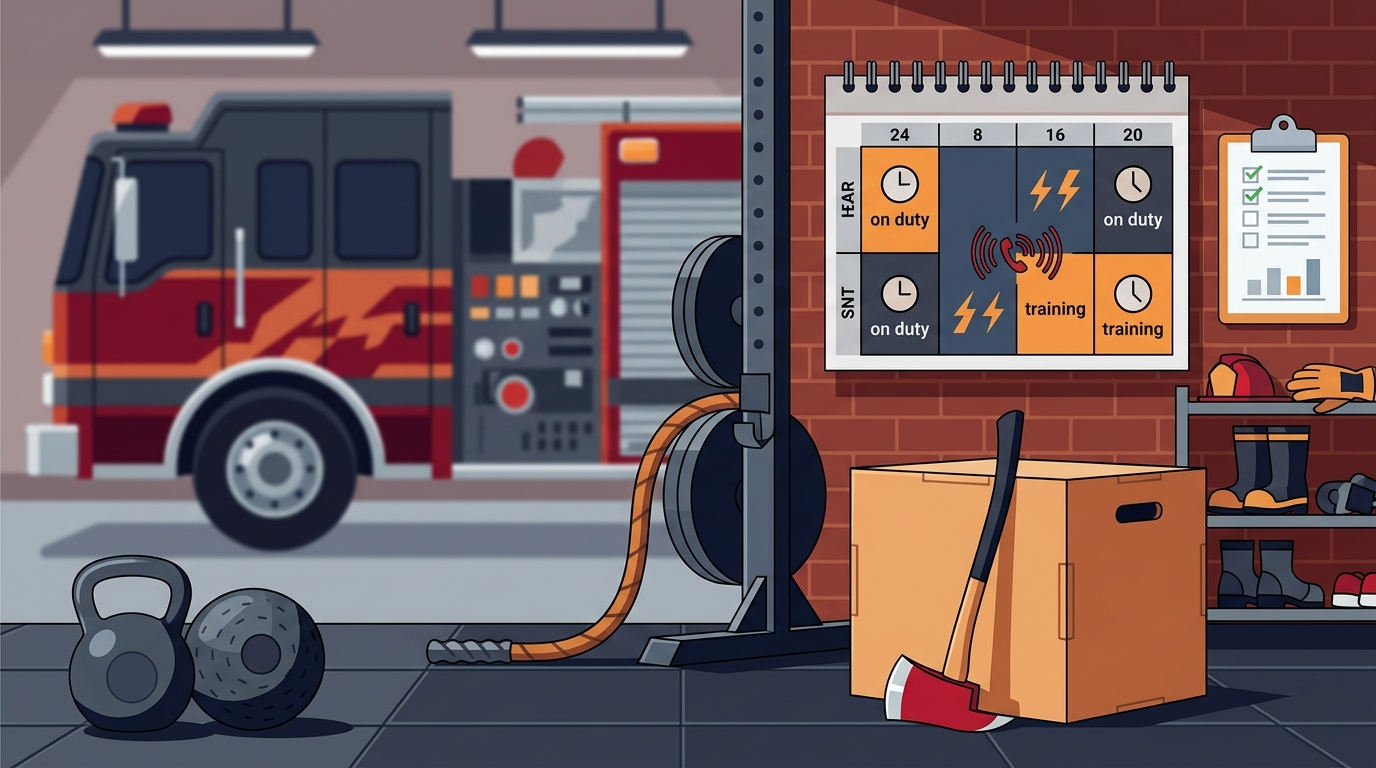
Sleep is the foundation of recovery. Firefighters often struggle to sleep during the day after a night shift. Training programs must account for this by scheduling workouts at times that do not further disrupt sleep. High-intensity training too close to bedtime can interfere with sleep onset. Conversely, light activity during the day can help regulate the circadian rhythm. A well-designed program balances intensity with timing to protect sleep quality.
Metabolic Impact
Irregular eating patterns and sleep deprivation affect metabolism. Firefighters are at higher risk for obesity, type 2 diabetes, and cardiovascular disease. A firefighter-specific program addresses this by providing macro guidance and meal plans that fit a shift schedule. Nutrition support is not an afterthought; it is a core component of the training system. This holistic approach ensures that fitness gains are sustainable and health-positive.
Training for Call Volume
Call volume is the number of emergency responses a firefighter handles in a given period. High call volume increases physical and mental stress, leading to burnout and injury. Training for call volume means building the capacity to handle intense physical exertion while maintaining cognitive function. This requires a balance of strength, endurance, and mental resilience.
Functional Strength
Firefighters need strength for tasks like carrying hoses, lifting victims, and climbing ladders. Functional strength training focuses on movements that mimic job demands. Exercises like deadlifts, squats, and carries build the specific muscle groups used on the fireground. This type of training improves performance and reduces injury risk. It is more effective than isolated bodybuilding exercises for job readiness.
Cardiovascular Endurance
Cardiovascular endurance is the ability of the heart and lungs to supply oxygen to working muscles during sustained activity. Firefighters need this to perform during long calls and to recover quickly between tasks. Running, rowing, and kettlebell circuits build the aerobic base required for the job. A program that includes regular cardio sessions ensures you can handle the physical demands of a busy shift without gassing out.
Nutrition and Recovery Strategies
Macro Guidance
Active Recovery
Recovery is not just about rest; it is about active strategies to reduce soreness and improve mobility. Mobility work, stretching, and foam rolling are essential for firefighters who spend long hours in PPE. A program that includes mobility routines helps prevent chronic pain and injury. This proactive approach to recovery ensures you stay fit for duty and fit for life.
Program Comparison
Choosing the right program depends on your specific needs and schedule. The table below compares key features of different types of fitness programs for firefighters.
| Shift Schedule Adaptation | Fixed daily schedule | Flexible, shift-aware programming |
| Call Volume Consideration | Not addressed | High-intensity intervals and endurance |
| Nutrition Support | General advice | Customized macro guidance and meal plans |
| Community Support | General gym community | Private first responder community |
| Coaching Model | Self-guided or generic coach | 1:1 transformation coach with weekly check-ins |
Key Takeaways
- Firefighter-specific programs account for shift work and call volume, unlike generic fitness plans.
- Shift work disrupts sleep and metabolism, requiring a tailored approach to training and nutrition.
- Functional strength and cardiovascular endurance are the core components of job readiness.
- Active recovery strategies like mobility work help prevent chronic pain and injury.
- Everyday Heroes Fitness offers a proven system with customized programming and guaranteed results.
Frequently Asked Questions
Do firefighter fitness programs account for 24-hour shifts?
Yes, specialized programs like Everyday Heroes Fitness are designed around 24-hour shifts. They provide flexible programming that adapts to your on and off days, ensuring you can train effectively without disrupting your sleep.
How does call volume affect training?
What is the best type of exercise for firefighters?
Functional strength and cardiovascular endurance are the most important. Exercises like deadlifts, squats, and running mimic the demands of the job. These movements build the specific muscles and energy systems needed for emergency response.
Can I follow a generic gym program as a firefighter?
Generic programs often fail because they do not account for shift work and call volume. They may lead to burnout or injury. A firefighter-specific program is more effective because it is tailored to the unique demands of the job.
How important is nutrition for firefighter fitness?
Nutrition is critical. Irregular eating patterns can lead to weight gain and poor performance. A structured nutrition plan with macro guidance helps you maintain energy levels and manage weight, supporting both fitness and health.
What is the role of community in a firefighter fitness program?
Community provides accountability and support. Training with other first responders who understand your challenges can improve adherence and motivation. A private community helps you stay connected and motivated, even when your schedule is chaotic.
Conclusion
Firefighter-specific fitness programs are essential for managing the unique demands of shift work and call volume. These programs provide the structure, support, and customization needed to stay fit for duty and fit for life. Everyday Heroes Fitness offers a proven system built by first responders, for first responders. If you are ready to regain your strength, confidence, and drive, apply for coaching today and join the 1,000+ first responders who have transformed their health and career.