

Common Training Mistakes First Responders Make and How to Fix Them
First responders face unique physical demands that standard gym routines rarely address. According to data from the National Institute for Occupational Safety and Health, occupational injuries among firefighters and EMS personnel remain a critical concern, with over 60,000 injuries reported annually in the United States alone. These injuries often stem not from a lack of effort, but from flawed training methodologies that ignore the specific biomechanics of the job. Correcting these errors is not just about aesthetics; it is about survival, longevity, and operational readiness. This guide breaks down the most frequent training pitfalls and provides the exact corrections needed to build a resilient, duty-ready physique.
Mistake 1: Ignoring Mobility for Mass
Many first responders enter the gym with a bodybuilding mindset. They prioritize heavy lifting to build size, assuming that muscle mass equals functional strength. This approach often leads to tight hips, restricted shoulder mobility, and a stiff thoracic spine. When you are dragging a victim through a smoke-filled hallway or climbing ladders in full gear, range of motion is your most valuable asset.
Mobility is the ability to move a joint actively through its full range of motion. Without it, heavy lifting becomes a recipe for injury. The correction is simple: integrate dynamic stretching before every session and dedicated mobility work afterward. Focus on ankle dorsiflexion, hip flexor stretches, and thoracic spine rotations. These movements counteract the static postures required during long shifts and the repetitive twisting motions of firefighting.
At Everyday Heroes Fitness, we emphasize that functional fitness is the capacity to perform daily tasks with efficiency and without injury. By prioritizing mobility, you ensure that your strength can be applied effectively in the field. Our free training guides include specific mobility routines designed for first responders to address these exact limitations.
Mistake 2: Neglecting the Posterior Chain
The posterior chain includes the glutes, hamstrings, and lower back. These muscle groups are the engines of human movement. Yet, many first responders focus excessively on their chest, shoulders, and quads. This imbalance creates a forward-pulling force on the spine, leading to chronic lower back pain and poor posture.
The posterior chain is the group of muscles along the back of the body responsible for extension and power generation. When this chain is weak, the lower back compensates for the lack of glute and hamstring power, leading to strain during heavy lifts or physical interventions. To correct this, you must prioritize exercises like deadlifts, hip thrusts, and kettlebell swings.
Our online coaching program specifically targets these areas with customized programming that ensures balanced development. By strengthening the posterior chain, you build a protective corset for your spine, allowing you to lift heavy objects, such as a firefighter in full gear, with greater safety and efficiency.
Mistake 3: Poor Nutrition Timing
Shift work disrupts circadian rhythms, making nutrition a complex challenge. Many first responders skip meals during shifts or rely on fast food due to convenience. This leads to energy crashes, poor recovery, and increased body fat. The mistake is not just what you eat, but when you eat it relative to your training and sleep cycles.
Nutrition timing refers to the strategic consumption of nutrients to optimize energy levels and recovery. For first responders, this means aligning your meals with your shift schedule. If you work nights, you need a substantial meal before your shift and a lighter, easily digestible meal after. If you train, you must consume protein and carbohydrates within a few hours of your workout to repair muscle tissue.
Our coaching members receive macro guidance and meal plans tailored to their specific shift patterns. This ensures that you have the fuel to perform at your peak during critical incidents and the nutrients needed to recover effectively. Proper nutrition is not optional; it is the foundation of operational readiness.
Mistake 4: Inconsistent Recovery Protocols
First responders often view rest as laziness. They believe that more training equals better performance. However, the body adapts and grows stronger during rest, not during training. Without adequate recovery, you enter a state of overtraining, which increases injury risk and decreases cognitive function.
Recovery is the physiological process by which the body repairs itself and adapts to training stress. This includes sleep, active recovery, and stress management. For first responders, sleep is particularly challenging due to irregular schedules. To correct this, prioritize sleep hygiene by creating a dark, cool environment for daytime sleep. Incorporate active recovery days with light cardio or yoga to promote blood flow without adding stress.
Our private community provides weekly group calls where we discuss recovery strategies and mental health. This support system helps members stay accountable to their rest protocols, ensuring that they are physically and mentally prepared for the demands of the job.
Mistake 5: Skipping CPAT Specificity
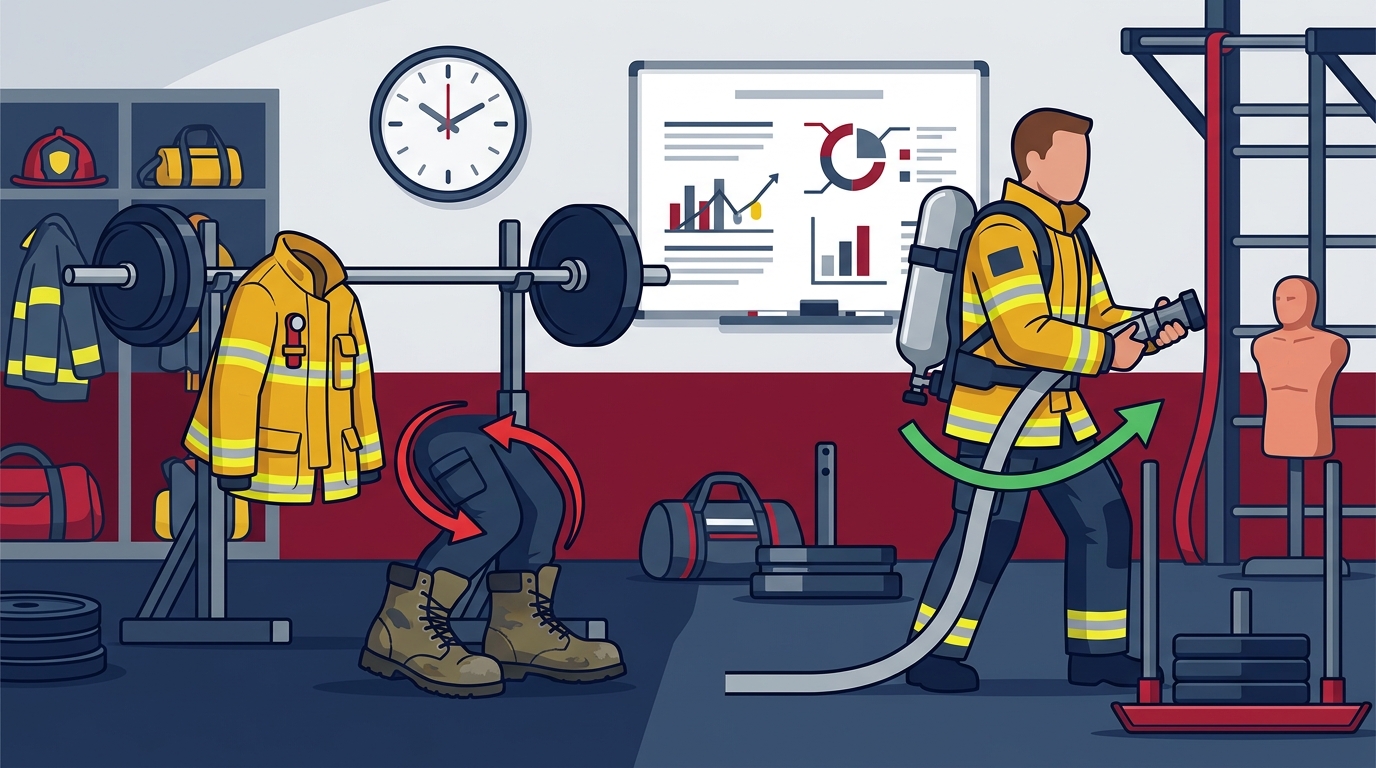
The Candidate Physical Ability Test (CPAT) is a rigorous assessment for firefighters. Many first responders train in the gym but fail to translate that strength to the specific movements of the CPAT. They might be strong in the squat but struggle with the stair climb or hose drag. This lack of specificity is a common and costly mistake.
CPAT specificity refers to training the exact movements and energy systems required for the physical test. To correct this, you must incorporate job-specific drills into your routine. Practice dragging dummies, climbing stairs with weight, and simulating hose drags. These exercises build the unique endurance and strength needed to pass the CPAT and perform on the fireground.
Our CPAT prep programs are designed to mimic the demands of the test. By training with specificity, you build the confidence and capability to pass the CPAT and excel in your career. This targeted approach ensures that every minute in the gym contributes directly to your operational performance.
Comparing Training Approaches for First Responders
Understanding the differences between various training methodologies can help you choose the right path for your goals. The table below outlines the key distinctions between general fitness, bodybuilding, and functional first responder training.
| Training Type | Primary Focus | Typical Exercises | Best For |
|---|---|---|---|
| General Fitness | Overall health and weight management | Cardio, basic strength circuits | Beginners or general health maintenance |
| Bodybuilding | Muscle hypertrophy and aesthetics | Isolation lifts, high volume | Competitive athletes or aesthetic goals |
| Functional First Responder | Job-specific strength and endurance | Compound lifts, CPAT drills, mobility | First responders seeking operational readiness |
As noted by the National Institute for Occupational Safety and Health, occupational safety is paramount. Choosing a training method that aligns with your job demands is crucial for long-term health. Our resources page offers free guides to help you start your journey toward functional fitness.
Key Takeaways
- Mobility is critical: Prioritize dynamic stretching and joint health to prevent injury and maintain range of motion.
- Strengthen the posterior chain: Focus on glutes, hamstrings, and lower back to protect the spine and generate power.
- Time your nutrition: Align your meals with your shift schedule to optimize energy and recovery.
- Recover intentionally: Treat rest as part of your training, not a break from it.
- Train specifically: Incorporate CPAT drills and job-specific movements to ensure functional strength.
- Join a community: Connect with other first responders for accountability and support.
- Seek expert guidance: Work with coaches who understand the unique demands of first responder fitness.
Frequently Asked Questions
What is the most common injury among first responders?
Lower back pain is the most common injury, often resulting from poor lifting mechanics and a weak posterior chain. Strengthening the glutes and hamstrings can significantly reduce this risk.
How often should first responders train?
Most first responders benefit from 3-4 days of structured training per week, combined with daily mobility work. This balance allows for adequate stimulus while ensuring proper recovery.
Is cardio important for first responders?
Yes, cardiovascular endurance is vital for sustained performance during incidents. Incorporate both steady-state cardio and high-intensity interval training to build a robust aerobic base.
How can I improve my CPAT score?
Practice the specific events of the CPAT regularly. Focus on technique, pacing, and job-specific strength. Our CPAT prep programs provide structured guidance for this purpose.
What is the best nutrition strategy for shift workers?
Consistency is key. Eat regular meals aligned with your shift, prioritize protein for muscle repair, and stay hydrated. Our coaching program offers personalized meal plans for shift workers.
Can I train at home without a gym?
Absolutely. Many effective first responder workouts can be done with minimal equipment, such as kettlebells and resistance bands. Our free training guides include home-based routines.
Why is mobility training necessary?
Mobility training prevents stiffness and injury by maintaining joint health. It ensures that you can move freely and efficiently during physical tasks, which is essential for first responders.
Ready to Transform Your Fitness?
Stop making common training mistakes and start building a body that is fit for duty. Join the 1,000+ first responders who have regained their strength, confidence, and drive through our proven system. Our online coaching program provides customized programming, expert guidance, and a supportive community to help you achieve your goals. Apply for coaching today and take the first step toward a healthier, more resilient future.