

Firefighting is one of the most physically punishing professions on the planet. Between hauling charged hose lines up stairwells, forcing entry through doors, and dragging unconscious victims to safety—all while wearing roughly 50 pounds of protective gear—generic gym routines simply won't cut it. Whether you're preparing for the fire academy, training for the Candidate Physical Ability Test (CPAT), or staying mission-ready as a career firefighter, you need a program built around the real demands of the fireground.
This guide walks you through exactly how to identify, evaluate, and commit to a firefighter-specific fitness program that keeps you safe, strong, and effective on every call.
Why Firefighters Need Specialized Fitness Programs
A standard bodybuilding split or casual jogging plan doesn't address the unique movement patterns firefighters face daily. The job demands a blend of aerobic endurance, anaerobic power, functional strength, core stability, and mental toughness—often all within a single incident.
The Physical Reality of the Job
Firefighters must perform strenuous physical activities for extended durations in heated environments while carrying significant extra load. Turnout gear and a self-contained breathing apparatus (SCBA) alone weigh about 50 pounds, adding enormous stress and heat to the body. This means any effective training program must simulate or account for load-bearing work under fatigue.
Why General Fitness Falls Short
Training specificity matters enormously. As the Las Vegas Fire & Rescue academy training guidelines note, running or cycling may improve cardiorespiratory fitness, but it won't necessarily improve your firefighting performance. It is critical to train the muscles and movement patterns that will specifically be used for fighting fires and performing on-scene work tasks.
Step 1: Assess Your Current Fitness Level
Before selecting any program, you need an honest baseline. Skipping this step is one of the most common mistakes aspiring and active firefighters make.
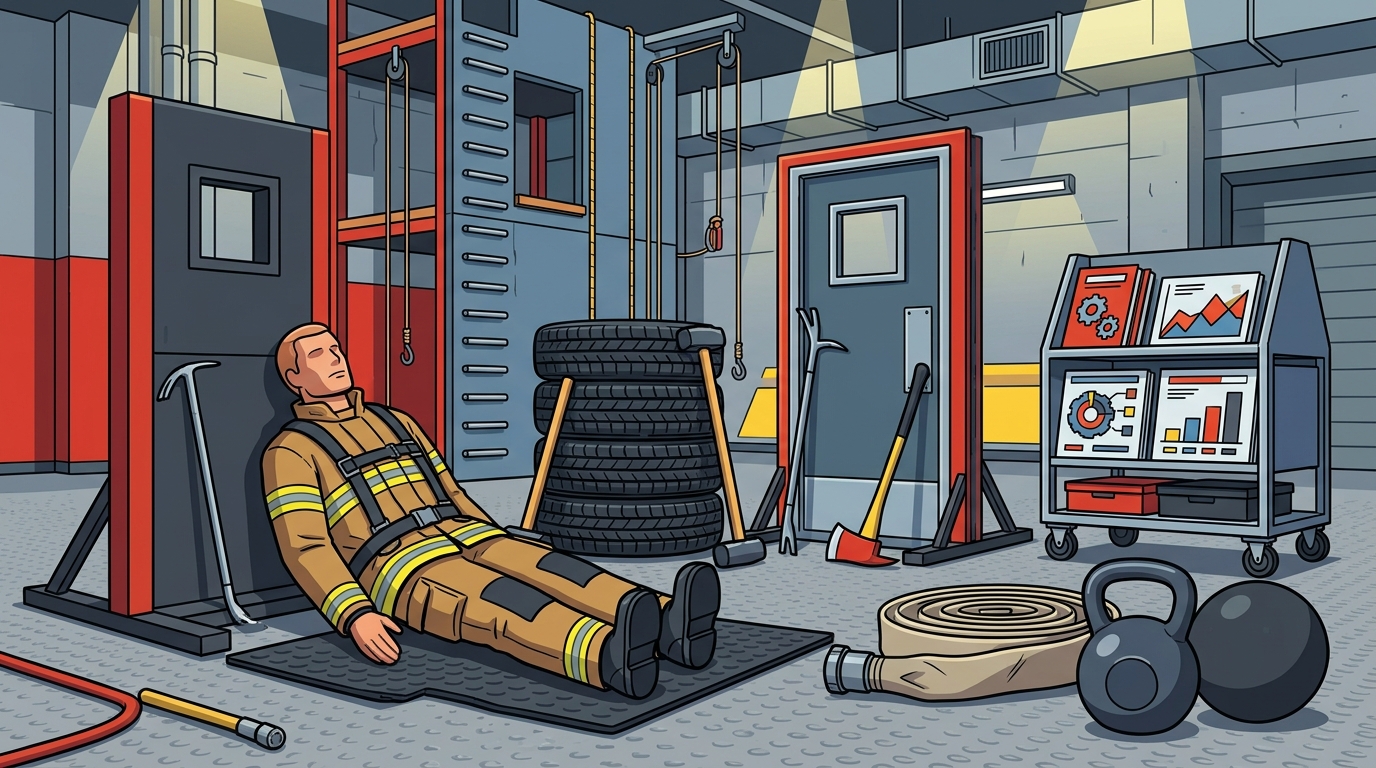
Run a Self-Assessment
A practical starting self-assessment should include:
- 1.5-Mile Timed Run: Aim to complete it in 12–14 minutes or better as a minimum aerobic baseline.
- Push-Up Test: Max reps in two minutes to gauge upper-body muscular endurance.
- Bodyweight Squat Test: Assess lower-body endurance and mobility.
- Plank Hold: Measure core stability—aim for at least 90 seconds.
Use these results to determine your starting fitness level so you can pick a program at the right intensity. Many pre-academy fitness plans offer two distinct tracks based on self-assessment results, ensuring you're challenged but not overwhelmed.
Set SMART Goals
Before starting a physical training program, write specific, measurable goals with target dates. If you approach a goal date without reaching the target, be flexible—evaluate whether the goal was too aggressive, and modify it to remain realistic rather than abandoning training entirely.
Step 2: Understand the Core Components of a Firefighter Program
An effective firefighter fitness program addresses five interconnected pillars. Any program missing one or more of these should be a red flag.
1. Aerobic Endurance
Sustained cardiovascular capacity is essential for extended fireground operations. Zone 2 cardio (60–70% of max heart rate) forms the aerobic base, while longer runs of up to three miles build the stamina needed for multi-hour incidents. Aerobic training includes any continuous exercise—running, cycling, swimming—that elevates heart rate over a sustained period.
2. Anaerobic Power and Interval Training
Firefighting is characterized by repeated high-intensity bursts—breaching a wall, climbing stairs under load, dragging a victim. High-intensity interval training (HIIT) and sprint work develop the anaerobic system needed for these explosive tasks. Interval training—alternating running and walking at set distances—is one of the best methods for developing both aerobic and anaerobic fitness simultaneously.
3. Functional Strength
This means compound, multi-joint exercises that mirror fireground tasks: deadlifts, farmer's carries, sledgehammer swings, sled pulls, and overhead presses. Exercises like weighted lunges, farmer's walks with kettlebells or sandbags, and cable woodchops directly prepare you for CPAT events and real-world scenarios like forcible entry, equipment carrying, and victim rescue.
4. Core Stability
A strong core is crucial for preventing injuries during physically demanding tasks. Every pulling, carrying, dragging, and climbing motion on the fireground originates from or is stabilized by the core. Effective core work goes beyond crunches to include anti-rotation exercises like Pallof presses, plank variations, and ab rollouts.
5. Flexibility and Recovery
Practicing flexibility can improve performance, decrease the risk of injuries, and promote recovery. Incorporate yoga, dynamic stretching before sessions, and static stretching afterward. Active recovery days featuring hiking, swimming, or light cycling at low intensity prevent overtraining while maintaining movement quality.
Step 3: Choose the Right Program Type
There is no single best program—only the right program for your current situation. Here are the main categories to consider.
CPAT Preparation Programs
If you're entering the hiring process, the CPAT is likely your first major physical hurdle. The CPAT is a standardized test used by fire departments nationwide, consisting of eight continuous events—stair climb, hose drag, equipment carry, ladder raise and extension, forcible entry, search, rescue, and ceiling breach and pull. The entire course must be completed in a maximum of 10 minutes and 20 seconds while wearing a 50-pound weighted vest.
Dedicated CPAT prep programs typically run 4–6 weeks. Quality programs include task-specific drills like stair climbing with added weight, hose dragging simulations, and weighted equipment carries rather than just general gym exercises. Some fire departments, like the Austin Fire Department, offer free optional CPAT preparation programs (such as their FireFit program) that allow candidates to train with experienced fitness staff.
Pre-Academy Fitness Plans
These are phased programs that progressively build your capacity over 8–12 weeks. A well-structured pre-academy plan typically follows three phases:
- Phase I: Establish an aerobic base and build core strength.
- Phase II: Improve aerobic endurance and build muscular endurance.
- Phase III: Challenge aerobic capacity and continue muscular endurance development.
Each phase builds on the previous one, and the progressive structure prevents injury while ensuring you arrive at the academy already fit.
Career Firefighter Maintenance Programs
For active-duty firefighters, training must accommodate shift schedules (often 24/48 or 48/96 rotations), station equipment availability, and the reality that you might get called out mid-workout. Programs designed for career firefighters emphasize maintaining consistent fitness because detraining occurs quickly if a regular exercise program lapses. Due to the nature of the job, a firefighter must always be physically ready to handle any situation.
Online and App-Based Programs
Companies like Mountain Tactical Institute (MTI) offer periodized, mission-specific firefighter plans that automatically scale to your fitness level based on assessment results. These digital programs are convenient for shift workers and allow you to print weekly sessions for the station gym.
Step 4: Evaluate Program Quality—A Checklist
Not all firefighter fitness programs are created equal. Use this checklist before committing time and money:
| Quality Indicator | What to Look For |
|---|---|
| Task Specificity | Exercises that mimic stair climbing, hose dragging, ladder work, forcible entry, and victim rescue |
| Progressive Overload | Structured progression in volume, intensity, or load week over week |
| Periodization | Distinct training phases with different objectives (base → endurance → peak) |
| Load-Bearing Training | Weighted vest work or equivalent to simulate turnout gear and SCBA |
| Credentialed Design | Created or reviewed by certified trainers, kinesiologists, or experienced fire service professionals |
| Individualization | Multiple tracks or scaling options based on fitness level |
| Recovery Programming | Scheduled rest days, mobility work, and active recovery sessions |
Step 5: Supplement Your Program with Fireground Simulations
No matter how good your gym program is, nothing fully replaces practicing actual firefighting movements. If possible, incorporate these task-specific drills:
- Stair Climbing Under Load: Use a StepMill with a weighted vest, or find a parking garage or stadium. Practice climbing at a rate of roughly one step per second for three continuous minutes with an additional 25 pounds on your shoulders.
- Sledgehammer Strikes: Swing a 10-pound sledgehammer against a tire to build the rotational power needed for forcible entry.
- Sled Pulls and Dummy Drags: Simulate victim rescue by dragging a heavy sled or sandbag backward over 50–100 feet.
- Farmer's Carries: Walk set distances carrying differently weighted kettlebells or dumbbells to prepare for equipment carries.
- Rope Hand-Over-Hand Pulls: Attach a weighted bag to a rope and practice pulling it hand over hand to simulate ladder extension and ceiling breach events.
Step 6: Nutrition and Hydration as Force Multipliers
Training is only half the equation. Your body can't build the strength and endurance you need without proper fuel.
Firefighter Nutrition Principles
- Prioritize lean proteins from poultry, fish, beans, lentils, or tofu to support muscle repair and growth.
- Eat plenty of vegetables, nuts, seeds, and some fruit.
- Minimize starch and eliminate added sugar where possible.
- Keep caloric intake at levels that support exercise demands without adding excess body fat.
Hydration
Water supports numerous body functions from digestion to temperature regulation. Aim for 8–10 glasses daily, and increase intake significantly on training days or in hot conditions. Dehydration undermines performance and recovery faster than almost any other variable.
Step 7: Know the Standards You're Training Toward
Understanding the official benchmarks gives your training a clear target.
CPAT Standards
The CPAT was developed by the IAFF/IAFC Wellness-Fitness Task Force and is a pass/fail test based on a validated maximum total time of 10 minutes and 20 seconds across eight events. Candidates wear a 50-pound vest throughout all events, with an additional 25 pounds added for the stair climb via two 12.5-pound shoulder weights.
NFPA 1580 Annual Fitness Requirements
For career firefighters, NFPA 1580 (which consolidated the former NFPA 1582) establishes annual fitness evaluation requirements. Aerobic capacity testing requires firefighters to meet or exceed the 35th percentile compared to the general population. Aerobic capacity requirements are now adjusted for age and biological sex, with specific thresholds that trigger restriction from essential job tasks if not met.
Department-Specific Tests
Some departments use their own fitness assessments. The Firefighter Physical Fitness Test (FPFT), for example, was modeled after the U.S. Army Combat Fitness Test and validated through third-party research to better reflect fireground demands. In 2024, the Boise Fire Department officially adopted the FPFT as part of their hiring process, and other departments are following suit. Always check your target department's specific requirements.
Where to Find Firefighter Fitness Programs
Here are concrete starting points to find a program that fits your needs:
- Your Target Fire Department: Many departments publish free pre-academy and CPAT prep guides. Austin, Portland, El Paso, and Las Vegas all offer publicly available training plans.
- First Responder Center for Excellence (FRCE): Offers the Fire Recruit 40-Day Fitness Program, an online program designed to build the fitness, strength, stamina, and healthy habits needed for academy readiness.
- Mountain Tactical Institute (MTI): Offers paid, periodized CPAT and firefighter-specific plans that scale to your level.
- Firehouse Strength & Conditioning: Provides FPFT-specific training resources and programming for departments and individuals.
- Stew Smith Fitness: Long-established resource for tactical fitness with dedicated CPAT preparation ebooks and plans.
- Local CPAT Administrators: Some licensed CPAT testing sites, like NMCPAT in New Mexico, offer multi-week preparation programs with access to the actual CPAT course and equipment.
- Certified Personal Trainers: Seek trainers with tactical strength and conditioning (TSAC) certification from the NSCA, or those with fire service backgrounds.
Key Takeaways
- Firefighter fitness requires specificity—train movements and energy systems that mirror actual fireground demands, not just general gym work.
- Always start with a self-assessment and set SMART goals before choosing a program.
- A quality program addresses five pillars: aerobic endurance, anaerobic power, functional strength, core stability, and flexibility/recovery.
- CPAT prep programs should include task-specific drills (stair climbing, hose dragging, sledgehammer strikes) and weighted vest work.
- Pre-academy plans should be phased and progressive—building from aerobic base to peak performance over 8–12 weeks.
- Many fire departments offer free preparation resources—always check your target department's website first.
- Nutrition and hydration are non-negotiable components of any firefighter fitness plan.
- Know your target standards (CPAT, NFPA 1580, or department-specific tests) and train to exceed them.
Frequently Asked Questions
How long should I train before taking the CPAT?
Give yourself a minimum of six weeks of dedicated, structured training before test day. If you're starting from a lower fitness baseline, 8–12 weeks is more realistic. Quality CPAT prep programs range from 4 to 6 weeks but assume a moderate starting fitness level.
Can I prepare for the firefighter fitness test at home without a gym?
Yes, many foundational exercises—push-ups, bodyweight squats, planks, running, stair climbing—require no equipment. However, you'll eventually need access to a weighted vest, a StepMill or staircase, and basic resistance training equipment to properly simulate the demands of the CPAT and fireground work.
What is the CPAT and how is it scored?
The CPAT (Candidate Physical Ability Test) is a standardized physical test used by fire departments across the country. It consists of eight continuous events including stair climb, hose drag, equipment carry, ladder raise/extension, forcible entry, search, rescue, and ceiling breach/pull. It is a pass/fail test with a maximum completion time of 10 minutes and 20 seconds.
How is firefighter fitness different from military fitness?
While both require high levels of endurance and strength, firefighter fitness emphasizes load-bearing work in extreme heat, short-duration high-intensity bursts, and task-specific movements like climbing, dragging, and swinging tools. Military fitness tends to emphasize longer-duration endurance events like rucking and running. Some newer firefighter tests, like the FPFT, were actually modeled after the Army Combat Fitness Test but adapted for fireground-specific demands.
Do I need a personal trainer for firefighter fitness?
A trainer isn't strictly required, especially with the many free resources available from fire departments and organizations like the FRCE. However, involving a qualified fitness professional can help develop correct technique, prevent injuries, and create individualized programming—particularly valuable if you have specific weaknesses to address.
What fitness standards do career firefighters have to maintain?
Under NFPA 1580, career firefighters undergo annual fitness evaluations including aerobic capacity testing. Requirements are adjusted for age and biological sex. Some departments also conduct annual physical agility tests or use the FPFT as an ongoing performance baseline throughout a firefighter's career.