
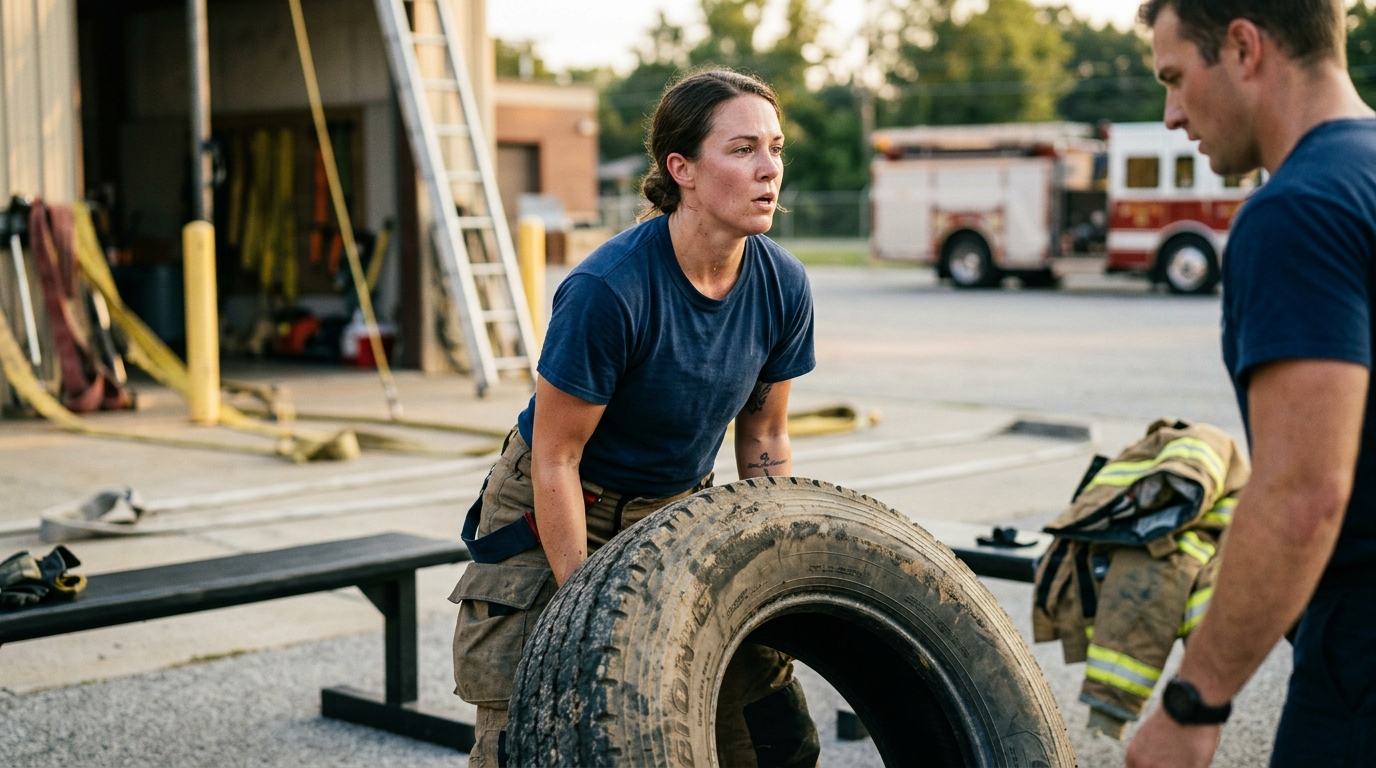
First responders face physical demands that most gym-goers never encounter: dragging hose lines, climbing ladders under load, performing rescues in extreme heat, and sprinting between calls after hours of sedentary downtime. Cardiovascular disease accounts for 45% of all on-duty firefighter fatalities in the United States, according to research published in the New England Journal of Medicine. Building job-specific strength and endurance is not optional; it is a career-saving investment. This guide breaks down exactly how first responders can train smarter, stay resilient, and perform when it matters most.
Why Job-Specific Fitness Matters for First Responders
Firefighters and EMS personnel operate under extreme physiological stress. During a 30-minute simulated fire operation, studies have recorded maximal heart rates reaching 177 beats per minute with core temperature rising nearly 1°C. Add 50 or more pounds of turnout gear, and the cardiovascular load becomes enormous.
Functional fitness is a training approach that mimics real-world movement patterns. It is a proven method for building the strength, endurance, and mobility first responders need on every shift. Without a deliberate program, fitness declines steadily over a career as most of a first responder's shift time is sedentary in nature.
Functional Strength Training Fundamentals
Tactical strength and conditioning is the discipline of preparing operators for unpredictable, high-intensity physical tasks. Unlike bodybuilding, it prioritizes compound, multi-joint movements that translate directly to the fireground.
Key Movement Patterns
Focus on pushing, pulling, squatting, hinging, and carrying. Exercises like deadlifts closely replicate casualty extraction mechanics, while loaded carries simulate hose advancement. The Firefighter Kettlebell Foundations program is an excellent entry point for mastering these patterns with a single piece of equipment.
Progressive Overload and Periodization
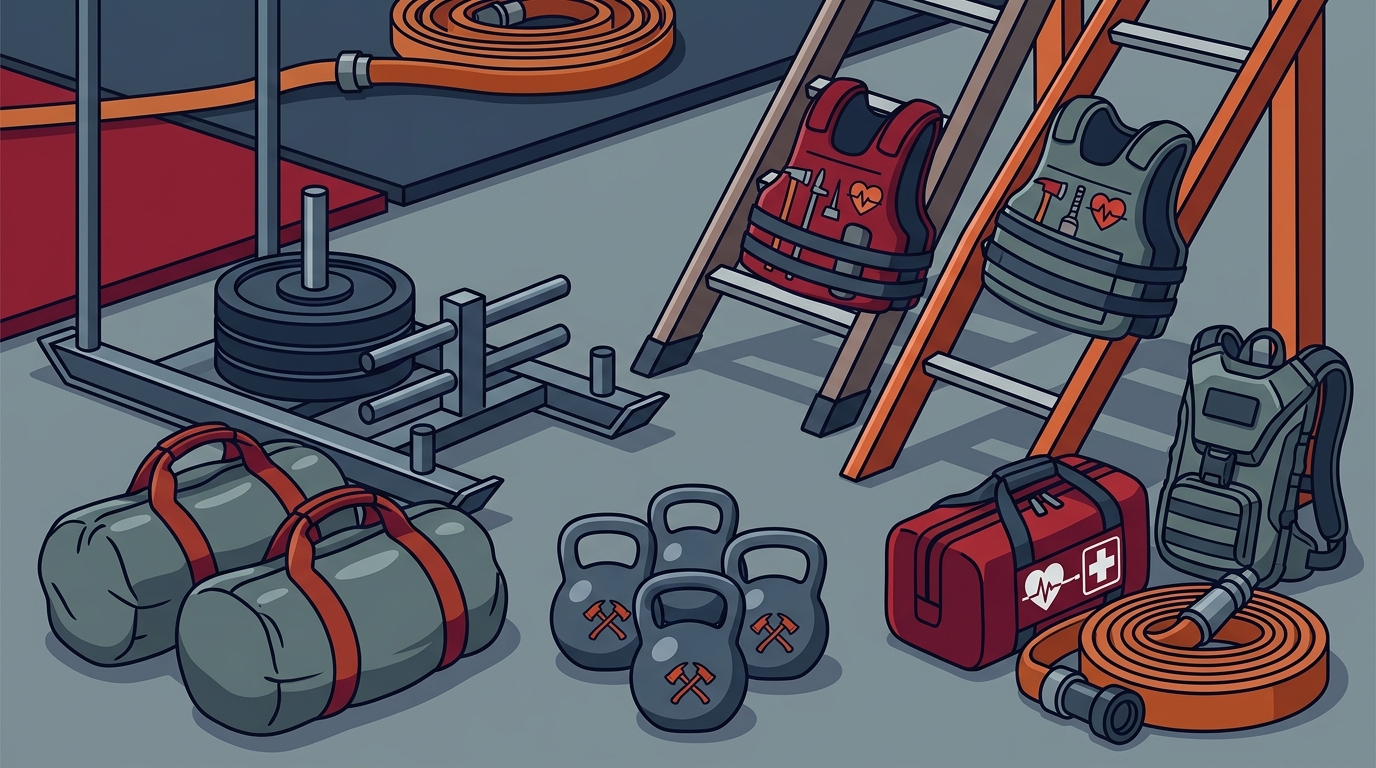
Sound periodization is non-negotiable. Training should progress from building a base of stability and movement quality, then layering on strength, and finally developing power. Jumping straight to high-intensity work without a foundation increases injury risk, especially for first responders returning after time away from the gym.
Core Strength Priority
Nearly 50% of firefighters will injure their back during their career, and low back pain is the number one reason firefighters retire early. Programs must target the glutes, hips, hamstrings, and deep abdominal stabilizers rather than chasing aesthetic "six-pack" goals. The 4-Week Functional First Responder Training Program addresses these areas directly.
Building Endurance and Work Capacity
Endurance for first responders goes beyond steady-state jogging. Work capacity is the ability to sustain high-output effort across repeated, unpredictable tasks. Interval training, circuit-based conditioning, and loaded carries build this capacity far more effectively than long, slow runs alone.
That said, aerobic base fitness still matters. A strong aerobic engine helps you recover between bursts of exertion and keeps your heart healthy over a 25-year career. The Zero to Hero 10K Running Program offers a structured progression for first responders building cardiovascular endurance from the ground up.
| Training Type | Example | Primary Benefit | Recommended Frequency |
|---|---|---|---|
| Strength Training | Deadlifts, squats, rows | Muscular force production | 3-4 days/week |
| High-Intensity Intervals | Assault bike sprints, sled pushes | Anaerobic work capacity | 2-3 days/week |
| Steady-State Cardio | Running, cycling, rowing | Aerobic base and recovery | 2-3 days/week |
| Loaded Carries | Farmer walks, sandbag carries | Grip and trunk endurance | 2 days/week |
| Mobility Work | Dynamic stretching, foam rolling | Injury prevention | Daily |
Mobility and Recovery Strategies
Training hard without recovering properly is a recipe for injury. First responders deal with disrupted sleep, high cortisol, and repetitive physical tasks that create chronic tightness in the hips, shoulders, and thoracic spine.
Active warm-ups before every session prepare the body for movement by boosting heart rate, blood flow, and core temperature. Post-shift or post-training, targeted stretching and soft-tissue work maintain range of motion. Explore the First Responder Stretching and Mobility Program for guided routines you can do at the station or at home.
Nutrition for Shift Workers
Unreliable meal times, firehouse comfort food, and stress-driven eating create a perfect storm for weight gain and metabolic issues. The CDC and the International Association of Fire Fighters both advocate for lifestyle modifications including healthier eating habits to reduce cardiovascular risk in firefighters.
Practical strategies include meal prepping proteins and vegetables for each shift rotation, keeping portable snacks on the rig, and prioritizing hydration. The Everyday Heroes online coaching program includes personalized nutrition guidance alongside training so you can address both sides of the equation.
Sample Weekly Training Program
Below is a simplified template for a first responder training week. Adjust volume and intensity based on your shift schedule and current fitness level.
| Day | Focus | Session Length |
|---|---|---|
| Monday | Upper-body strength (push/pull) + core | 35-45 min |
| Tuesday | Interval conditioning (assault bike or sled) | 20-30 min |
| Wednesday | Lower-body strength (squat/hinge) + carries | 35-45 min |
| Thursday | Active recovery: mobility and light cardio | 20-30 min |
| Friday | Full-body functional circuit | 30-40 min |
| Saturday | Steady-state aerobic session (run or row) | 30-45 min |
| Sunday | Rest or light stretching | As needed |
Sessions of 30 to 45 minutes are realistic for shift workers and deliver meaningful results when performed consistently. As Dr. Brent Alvar has noted, even 15 minutes of daily exercise creates meaningful benefit when you stay committed.
Key Takeaways
- Cardiovascular disease causes 45% of on-duty firefighter deaths, making fitness a life-or-death priority.
- Functional, compound movements like deadlifts, carries, and rows transfer directly to fireground tasks.
- Periodized programming that builds a base before adding intensity reduces injury risk.
- Core and back strength deserve dedicated attention since low back injuries are the top cause of early retirement in firefighters.
- Interval conditioning and steady-state cardio together build the work capacity first responders need.
- Mobility and recovery work must be daily habits, not afterthoughts.
- Nutrition and hydration are force multipliers that amplify every training session.
Frequently Asked Questions
What is functional fitness for first responders?
Functional fitness is a training methodology that uses exercises mimicking real-world movement patterns such as pushing, pulling, lifting, and carrying. For first responders, it builds the specific physical qualities needed on the job.
How often should firefighters train per week?
Most experts recommend three to five training sessions per week, combining strength work, conditioning, and mobility. Even two to three sessions deliver significant benefits for first responders working demanding shift schedules.
Can I train effectively at the fire station?
Yes. Many effective programs require minimal equipment such as kettlebells, pull-up bars, and resistance bands. The Firefighter Kettlebell Foundations program is designed for exactly this scenario.
Why is cardiovascular training important for firefighters?
Firefighters work at near-maximal heart rates while wearing heavy protective equipment. A strong aerobic base improves recovery between exertion bursts and reduces the long-term risk of cardiovascular disease, which is the leading cause of on-duty firefighter deaths.
What role does nutrition play in first responder fitness?
Nutrition directly affects energy levels, body composition, recovery speed, and cardiovascular health. Shift work creates unique challenges around meal timing and food quality that require deliberate planning.
How do I avoid injury when starting a fitness program?
Start with a foundational phase focused on movement quality and stability before progressing to heavier loads or higher intensity. Working with a coach who understands tactical athlete demands, like those at Everyday Heroes Fitness, significantly reduces injury risk.
Is strength training or cardio more important for first responders?
Both are essential. Strength enables you to perform physically demanding tasks like victim rescue and forcible entry. Cardiovascular conditioning allows you to sustain performance and recover quickly. A balanced program addresses both.
Get Started With a Program Built for the Job
You took an oath to serve your community. Staying fit for duty honors that commitment every single day. Everyday Heroes Fitness has helped over 1,000 first responders regain their strength, confidence, and drive through a system built specifically for the demands of the job.
Ready to take the first step? Explore the Everyday Heroes online coaching program and get a training and nutrition plan designed around your shift schedule, your goals, and your life. Or grab a free resource to start training today.