
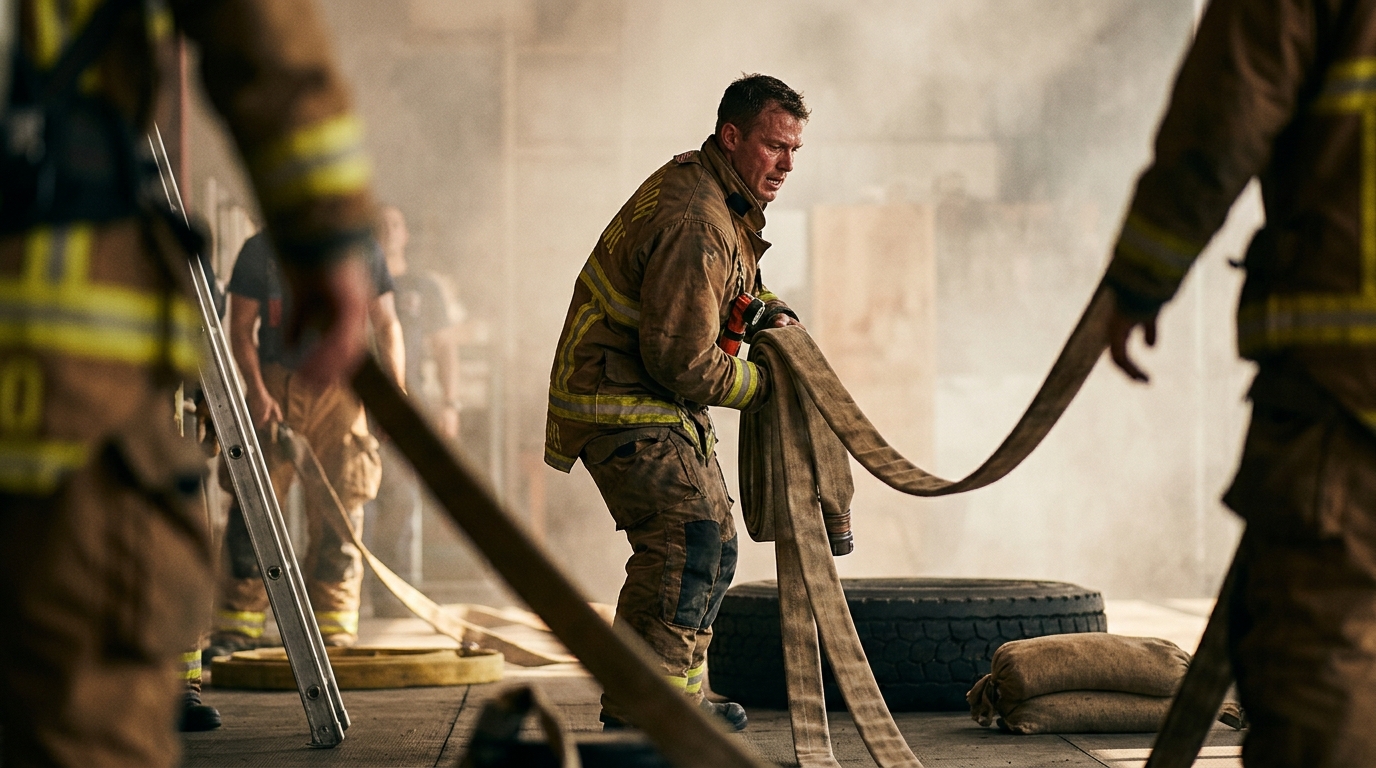
Firefighting is one of the most physically demanding professions in the world. The average firefighter must carry over 50 pounds of gear while navigating unstable terrain, climbing ladders, and forcing entry into burning structures. According to the National Fire Protection Association, physical fitness is a critical component of job performance and longevity in the fire service. This guide details the most effective exercises to build the functional strength and cardiovascular endurance required for the fireground.
Functional Movements Over Isolation
Traditional bodybuilding routines often focus on isolated muscle groups, such as bicep curls or leg extensions. While these exercises can build muscle, they do not translate well to the chaotic environment of a fireground. Functional fitness is the practice of training movements rather than muscles. This approach mimics the multi-planar demands of firefighting.
The most effective exercises for firefighters are compound movements that engage multiple joint systems simultaneously. Squats, deadlifts, and overhead presses form the foundation of any firefighter strength program. These lifts build the raw power needed to drag victims, break doors, and carry heavy equipment.
However, raw power must be paired with stability. Everyday Heroes Fitness emphasizes functional first responder training that integrates these compound lifts with dynamic stability drills. This ensures that the strength you build is usable under fatigue and stress.
Core Stability and Anti-Rotation
The core is not just about having visible abs. In firefighting, the core acts as the central hub for transferring force between the upper and lower body. When you are lifting a heavy hose line or carrying a victim over your shoulder, your core must resist unwanted movement to protect the spine.
Anti-rotation exercises are critical for spinal health. These movements challenge the core to prevent rotation or lateral flexion while external forces are applied. Examples include pallof presses, single-arm carries, and farmer walks.
Firefighters often suffer from lower back pain due to repetitive bending and twisting. Strengthening the core through anti-rotation drills creates a natural corset of muscle that supports the lumbar spine during heavy loads. This is a key component of the firefighter kettlebell foundations program, which teaches proper load distribution.
Cardiovascular Endurance for Shift Work
Firefighting is an anaerobic sport performed in a hypoxic environment. You may spend hours waiting for a call, followed by minutes of maximal exertion. This pattern requires a unique type of cardiovascular conditioning known as anaerobic capacity.
Long-distance running alone is insufficient for this purpose. While it builds a base, it does not prepare the heart for the sudden spikes in intensity required during a fire. High-Intensity Interval Training (HIIT) is the most effective method for building this specific endurance.
Simulations such as stair climbing with weight vests, battle ropes, and sled pushes mimic the heart rate demands of active fire suppression. These exercises improve the body's ability to recover quickly between bursts of effort. This recovery capacity is vital for maintaining situational awareness during long shifts.
Grip Strength and Tool Handling
Grip strength is often overlooked in general fitness but is paramount for firefighters. You must be able to hold onto ladders, wrenches, hose nozzles, and victims for extended periods. Weak grip leads to premature fatigue in the forearms, which can compromise the entire kinetic chain.
Grip strength is a strong predictor of overall functional longevity. Exercises such as dead hangs, farmer's carries, and thick-bar lifts directly target the forearm musculature and hand strength. These exercises improve the neural connection between the brain and the muscles, allowing for more efficient force production.
Everyday Heroes Fitness integrates grip work into every session to ensure that firefighters do not become the "weak link" in their team. Strong hands mean better control of tools and safer operations on the fireground.
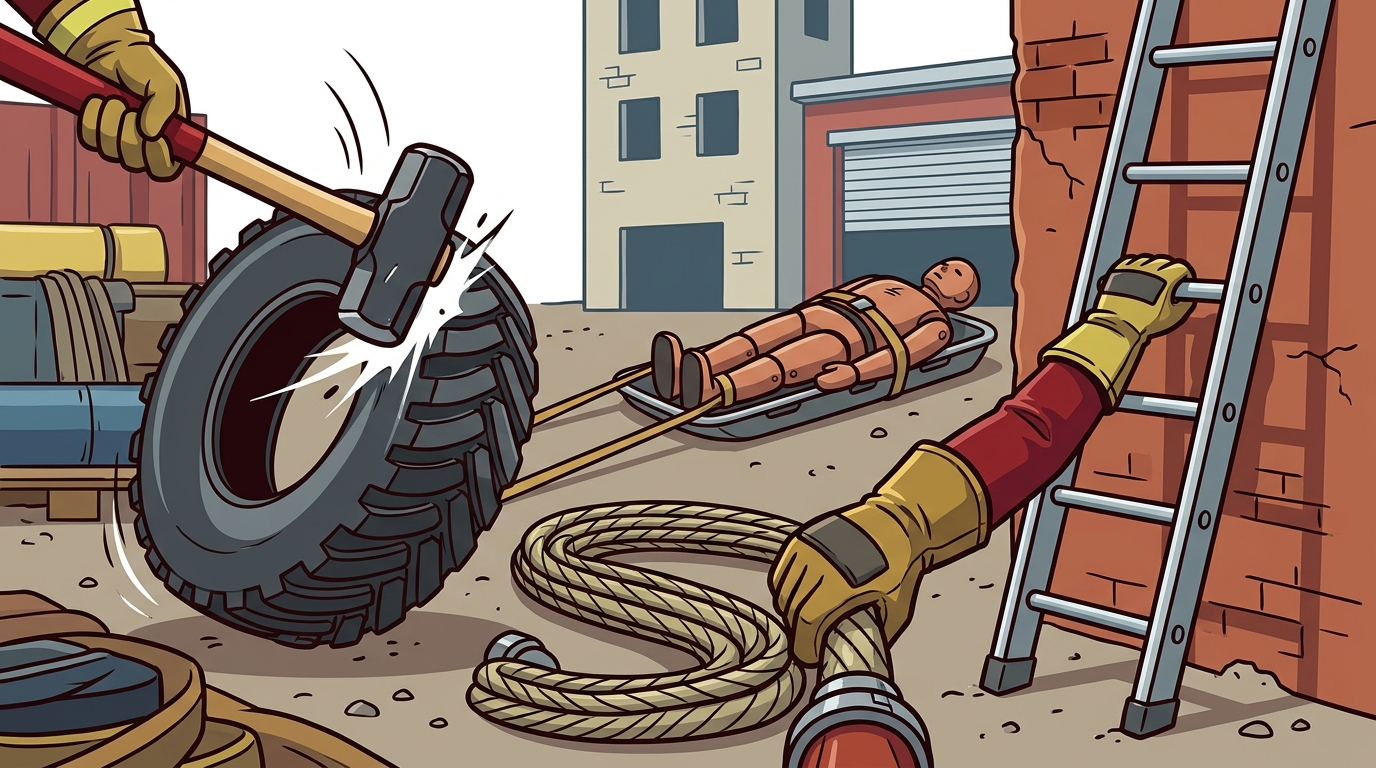
Mobility and Injury Prevention
Strength without mobility is dangerous. Firefighters frequently operate in awkward positions, such as crawling under debris or reaching overhead while on a ladder. Limited range of motion increases the risk of muscle tears and joint injuries.
Dynamic stretching before training and static stretching after training are essential habits. Focus areas should include the hips, shoulders, and thoracic spine. Tight hips restrict squat depth, while tight shoulders limit overhead stability.
Incorporating mobility drills into your daily routine helps maintain joint health and reduces the stiffness associated with wearing heavy turnout gear. This proactive approach to physical maintenance is a cornerstone of the online coaching program offered by Everyday Heroes Fitness.
Comparing Training Approaches
Not all training programs are created equal. Below is a comparison of common fitness approaches and their relevance to firefighter performance.
| Training Approach | Primary Focus | Relevance to Firefighting | Pros and Cons |
|---|---|---|---|
| Functional First Responder Training | Movement patterns and load carriage | High | Directly mimics job demands. Requires specific equipment. |
| Traditional Bodybuilding | Muscle hypertrophy and isolation | Low | Builds size but not necessarily strength or endurance. High injury risk. |
| Kettlebell Foundations | Grip, core, and explosive power | Very High | Efficient use of time. Excellent for functional strength. Limited cardio component. |
| Long-Distance Running | Aerobic base | Medium | Good for general health. Does not prepare for anaerobic bursts. |
Key Takeaways
- Functional Over Isolation: Prioritize compound lifts like squats and deadlifts over machine-based exercises to build usable strength.
- Core Stability: Anti-rotation exercises protect the spine and improve force transfer during heavy loads.
- Anaerobic Conditioning: HIIT and weighted stair climbing better simulate the physiological demands of fire suppression than steady-state cardio.
- Grip Strength: Strong forearms are essential for tool handling and safety on the fireground.
- Mobility Matters: Regular stretching prevents injuries caused by operating in awkward positions within heavy gear.
- Specialized Coaching: Generic fitness advice often fails first responders. Specialized programs address the unique stressors of the job.
- Consistency: Regular training is more important than intensity. Building a habit ensures long-term readiness.
Frequently Asked Questions
What is the most important exercise for firefighters?
The deadlift is often considered the most important exercise because it builds the posterior chain, which is used for lifting, carrying, and pulling heavy objects. It also strengthens the grip and core simultaneously.
How often should firefighters train for strength?
Most experts recommend strength training two to three times per week. This frequency allows for adequate recovery while providing sufficient stimulus for adaptation. Cardiovascular conditioning can be performed more frequently.
Is kettlebell training effective for firefighters?
Yes, kettlebell training is highly effective. It improves grip strength, core stability, and explosive power in a time-efficient manner. The firefighter kettlebell foundations program is designed specifically for this purpose.
Why do generic fitness programs fail first responders?
Generic programs often lack the specific functional movements and anaerobic conditioning required for the job. They may also ignore the unique schedule and stressors of shift work, leading to burnout or injury.
What is the role of nutrition in firefighter fitness?
Nutrition fuels performance and aids recovery. Firefighters need adequate protein for muscle repair and complex carbohydrates for energy. Proper hydration is also critical, especially in hot environments.
Can online coaching help firefighters?
Yes, online coaching provides personalized guidance and accountability. It allows firefighters to train effectively regardless of their location or schedule. The online coaching program offers tailored plans for first responders.
How does shift work affect fitness training?
Shift work disrupts circadian rhythms and can lead to fatigue. Training schedules must be flexible to accommodate varying sleep patterns and recovery needs. Consistency is key to overcoming these challenges.
Start Your Transformation
Firefighting demands more than just good intentions. It requires a rigorous, science-backed approach to physical preparation. Everyday Heroes Fitness provides the tools, coaching, and community you need to become the strongest, most resilient version of yourself.
Join the 4-Week Functional First Responder Training Program today. Take the first step toward a career defined by strength, confidence, and readiness. Apply for coaching now and discover how fit for duty, fit for life, you can truly be.