
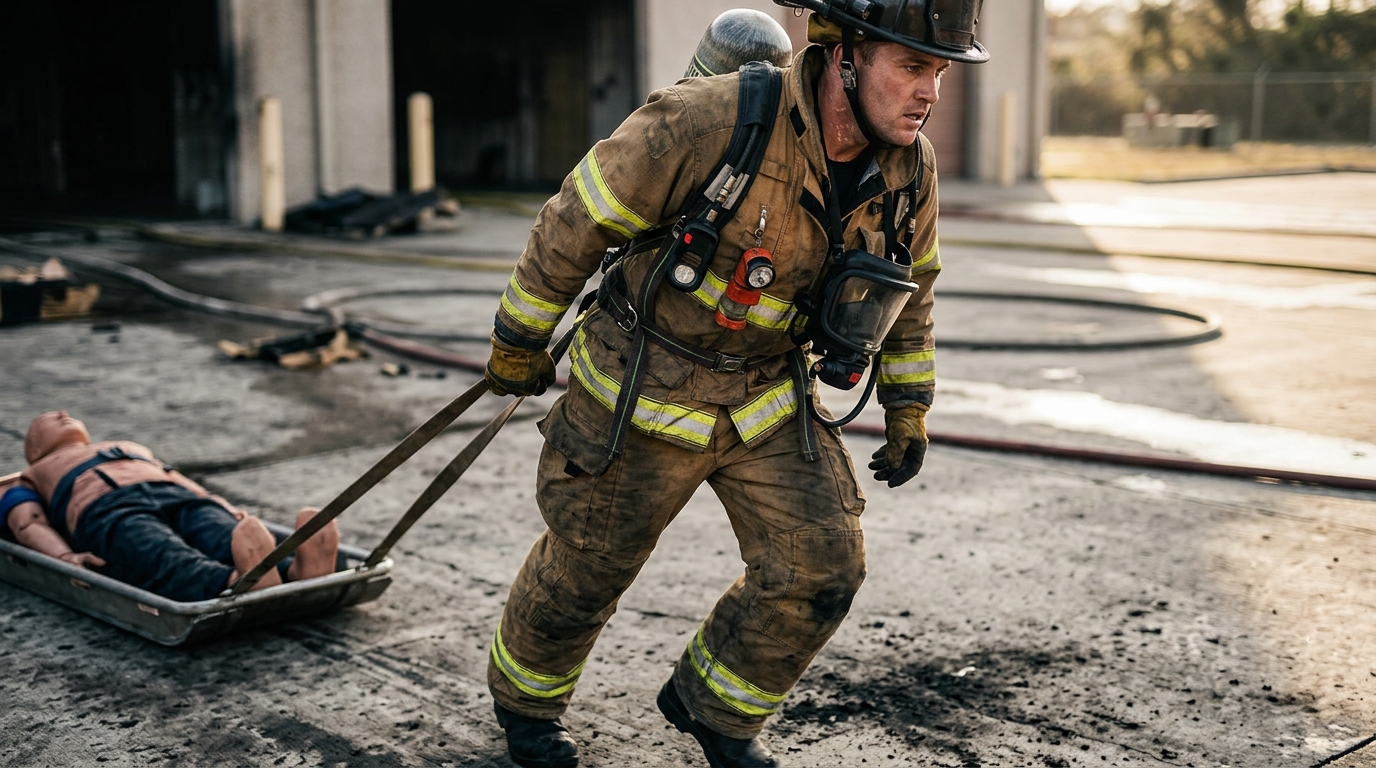
First responders face physical demands that exceed standard fitness benchmarks by significant margins. According to data from the National Institute for Occupational Safety and Health, the average firefighter must be capable of carrying over 100 pounds of gear while navigating complex terrain, a requirement that dictates specific strength training protocols. Generic gym routines fail to address the unique biomechanical stresses of emergency response, making job-specific conditioning a non-negotiable component of professional readiness. This guide outlines the critical criteria for building functional strength that translates directly to life-saving performance. (Free Training Guides for)
Functional Movement Patterns Over Isolation
Traditional bodybuilding splits focus on isolating specific muscles for aesthetic purposes. This approach is fundamentally flawed for first responders who require integrated muscle recruitment. Functional fitness is the practice of training muscles to work together to prepare for real-life activities. When a firefighter drags a victim or a paramedic lifts a heavy stretcher, multiple muscle groups must fire in unison.
Training should prioritize compound movements such as deadlifts, squats, and overhead presses. These exercises mimic the multi-joint actions required on the fireground. For example, the deadlift builds the posterior chain strength necessary for lifting heavy objects from the floor without spinal injury. Isolation exercises like bicep curls offer minimal transfer to these high-stakes scenarios.
Everyday Heroes Fitness emphasizes customized programming that mirrors these demands. By focusing on compound lifts, responders build the raw power needed for heavy rescue operations. This method ensures that strength gains are not just visible in the mirror but are usable in the field. The goal is to create a body that is resilient, powerful, and ready for unpredictable physical challenges.
Aligning Training with CPAT Standards
The Candidate Physical Ability Test (CPAT) serves as the universal standard for firefighter hiring in the United States. Passing this test requires more than just general fitness; it demands specific endurance and strength profiles. The CPAT includes tasks such as the stair climb, hose drag, forcible entry, and rescue drag. Each task tests a different aspect of physical preparedness.
Training for the CPAT requires a structured approach that simulates these exact movements. For instance, the hose drag mimics the pulling motion of a deadlift, while the stair climb tests cardiovascular endurance under load. Responders who train specifically for these events see higher pass rates and greater confidence during the actual assessment. CPAT prep is not just about passing a test; it is about ensuring operational readiness.
Everyday Heroes Fitness offers specialized CPAT prep programs designed to address these specific hurdles. These programs break down each event and provide targeted drills to improve efficiency and endurance. By aligning training with CPAT standards, firefighters can ensure they meet the rigorous physical requirements of their profession. This alignment reduces the risk of injury during the test and improves overall job performance.
Adapting to Shift Work and Recovery
First responders often work 24-hour shifts, which disrupts normal circadian rhythms and impacts recovery. This irregular schedule makes consistent training challenging but also highlights the need for efficient workouts. Recovery is the process by which the body repairs itself after physical stress, leading to adaptation and strength gains. Without adequate recovery, training can lead to overtraining and increased injury risk.
Training programs must account for sleep patterns and energy levels. Shorter, high-intensity workouts may be more effective on days with limited sleep. Conversely, longer, lower-intensity sessions might be better suited for days with ample rest. Listening to the body and adjusting training volume accordingly is crucial for long-term success.
Everyday Heroes Fitness provides weekly 1:1 check-ins to help responders navigate these challenges. Coaches adjust programming based on the individual's shift schedule and recovery status. This personalized approach ensures that training remains effective regardless of external factors. By prioritizing recovery, responders can maintain high performance levels throughout their careers.
Core Stability for Injury Prevention
The core is the center of power for all human movement. For first responders, a strong core is essential for protecting the spine during heavy lifting and dynamic movements. Core stability refers to the ability of the muscles around the spine and pelvis to maintain proper alignment during activity. Weak core muscles can lead to poor posture and increased risk of lower back injuries.
Training should include exercises that challenge stability from multiple angles. Planks, pallof presses, and rotational movements are excellent for building this resilience. These exercises teach the core to brace against external forces, a skill that is vital when carrying heavy gear or navigating uneven terrain.
By integrating core work into every session, responders build a foundation that supports all other movements. This focus on stability reduces the likelihood of chronic pain and keeps firefighters on the line longer. It is a proactive measure that pays dividends in both health and career longevity.
Cardiovascular Endurance for On-Scene Tasks
Physical exertion in emergency situations is often anaerobic, meaning it requires short bursts of high energy. However, the duration of these events can vary widely, requiring a blend of aerobic and anaerobic conditioning. Cardiovascular endurance is the ability of the heart and lungs to supply oxygen to the muscles during sustained physical activity. This capacity is critical for maintaining performance during long incidents.
Training should include both high-intensity interval training (HIIT) and steady-state cardio. HIIT mimics the stop-start nature of emergency response, while steady-state cardio builds the base endurance needed for prolonged efforts. This combination ensures that responders are prepared for any physical demand they may encounter.
Everyday Heroes Fitness includes mobility and conditioning work in its programs to address these needs. By improving cardiovascular health, responders can recover faster between tasks and maintain mental clarity under stress. This level of fitness is not just about performance; it is about survival.
Comparing Training Methodologies
Choosing the right training approach is critical for first responders. Different methodologies offer varying benefits and drawbacks. The table below compares common training styles against the specific needs of first responders.
| Training Method | Primary Focus | Relevance to First Responders | Pros | Cons |
|---|---|---|---|---|
| Functional Fitness | Multi-joint movements | High | Direct transfer to job tasks | Requires proper form coaching |
| Bodybuilding | Muscle isolation | Low | Aesthetic improvements | Limited functional application |
| Powerlifting | Maximal strength | Medium | Increases raw power | Lacks endurance component |
| Marathon Training | Aerobic endurance | Medium | Builds cardiovascular base | Misses anaerobic demands |
As shown, functional fitness offers the best balance of strength, endurance, and mobility for first responders. While powerlifting builds strength, it lacks the endurance component. Marathon training builds endurance but misses the strength demands. A hybrid approach, guided by experts, is often the most effective path.
Key Takeaways
- Functional fitness is defined as training muscles to work together for real-life activities, ensuring direct transfer to job tasks.
- Over 1,000 first responders have used Everyday Heroes Fitness to regain strength and confidence through customized programming.
- CPAT prep requires specific training for events like the stair climb and hose drag to ensure pass rates and operational readiness.
- Core stability is the ability of spinal muscles to maintain alignment, crucial for preventing lower back injuries during heavy lifting.
- Cardiovascular endurance allows the heart and lungs to supply oxygen during sustained activity, vital for long incident management.
- Shift work adaptation involves adjusting training volume based on sleep patterns to prevent overtraining and injury.
- Everyday Heroes Fitness offers a private community and weekly group calls to support first responders in their fitness journey.
Frequently Asked Questions
What is the most important muscle group for firefighters?
The posterior chain, including the glutes, hamstrings, and lower back, is critical for lifting and carrying heavy loads safely.
How often should first responders train?
Training frequency depends on shift schedules, but 3-4 days per week of focused functional training is typically recommended for optimal results.
Is cardio training necessary for firefighters?
Yes, cardiovascular endurance is essential for maintaining performance during prolonged emergency responses and rapid physical exertion.
What is CPAT prep?
CPAT prep is specialized training designed to prepare candidates for the physical demands of the Candidate Physical Ability Test.
Can online coaching help first responders?
Yes, online coaching provides customized programming and expert guidance tailored to the unique demands of first responder jobs.
How does shift work affect fitness?
Shift work disrupts sleep and recovery, requiring adjusted training volumes and increased focus on nutrition and rest.
What is functional fitness?
Functional fitness is the practice of training muscles to work together to prepare for real-life activities and job-specific tasks.
Start Your Transformation
Don't let generic fitness routines compromise your readiness. Join the community of first responders who have transformed their physical capabilities with Everyday Heroes Fitness. Our program is built specifically for the demands of your job, offering customized programming, macro guidance, and expert coaching. Apply for coaching today and take the first step toward becoming the strongest, most resilient version of yourself.