
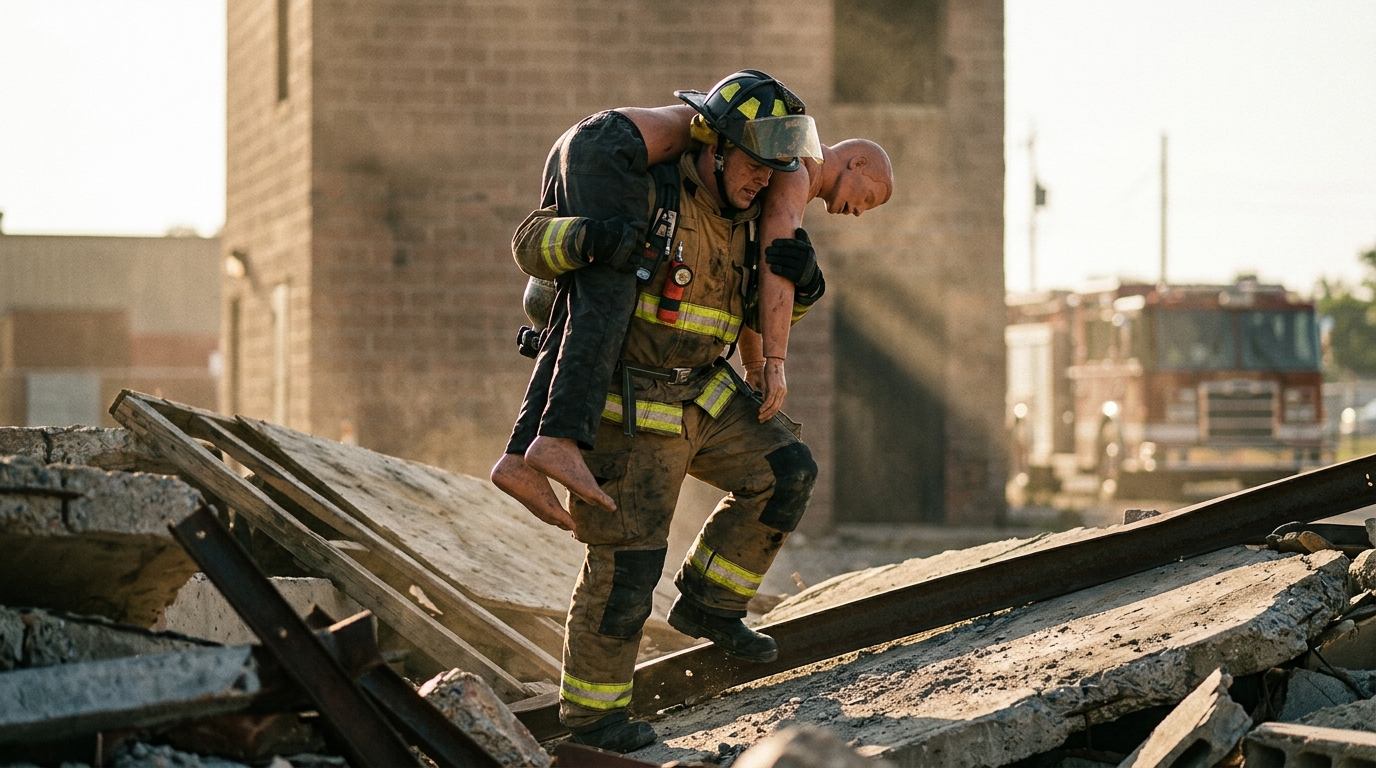
How Firefighters Transform Job Performance Through Real-World Strength Scenarios
Physical readiness is not merely an aesthetic goal for first responders. It is a critical operational requirement that dictates survival rates and mission success. According to the National Fire Protection Association, the majority of firefighter line-of-duty injuries occur during non-fire emergencies, often stemming from overexertion or strain during heavy physical tasks. This data highlights a crucial reality: traditional gym workouts rarely replicate the chaotic, heavy, and awkward demands of the fireground. Bridging the gap between sterile weightlifting and dynamic emergency response requires a specialized approach to functional fitness that prioritizes real-world strength scenarios. (Online Coaching for Firefighters)
Understanding the Functional Demands of the Fireground
Firefighting is one of the most physically demanding professions in existence. The job requires a unique blend of maximal strength, anaerobic power, and sustained aerobic capacity. Functional fitness is the ability to perform daily tasks and emergency responses with efficiency and safety. Unlike bodybuilding, which focuses on isolated muscle hypertrophy, functional training mimics the multi-planar movements firefighters encounter on scene.
Consider the scenario of forcing entry into a burning structure. This action involves pushing heavy doors, navigating uneven terrain, and maintaining balance while wearing 60 pounds of Personal Protective Equipment (PPE). A firefighter who has only trained in a linear, seated machine environment often lacks the stabilizer muscle engagement required for these tasks. This disconnect leads to premature fatigue and increased injury risk. The body must be trained to generate force from the ground up, transferring power through the core to the extremities.
Everyday Heroes Fitness addresses this gap by designing programs that mirror the physiological stress of the job. Their approach recognizes that strength without endurance is useless in a prolonged rescue, and endurance without strength is insufficient for heavy lifting. The integration of these elements creates a resilient athlete capable of handling the unpredictable nature of emergency services.
Key Strength Movements for On-Scene Success
To transform job performance, firefighters must focus on compound movements that engage multiple muscle groups simultaneously. These exercises build the foundational strength needed for heavy lifting and pushing. Functional strength training involves multi-joint exercises that improve coordination and power output.
1. The Deadlift and Hinge Patterns
The deadlift is paramount for firefighters. It directly translates to lifting heavy victims, equipment, or debris. Proper hinge mechanics protect the lower back, which is the most common site of injury in the fire service. By strengthening the posterior chain, including the glutes, hamstrings, and erector spinae, firefighters can lift heavier loads with less strain on the spine.
2. Overhead Pressing and Carries
Forcing entry, carrying hoses, and rescuing victims often require overhead stability. The overhead press builds shoulder girdle strength, while loaded carries (such as farmer's walks or suitcase carries) build grip strength and core stability. Grip strength is particularly critical, as fatigue in the hands can compromise the ability to hold onto tools or victims. A firefighter with strong forearms and a stable core can maintain control in chaotic environments.
3. Single-Leg Stability
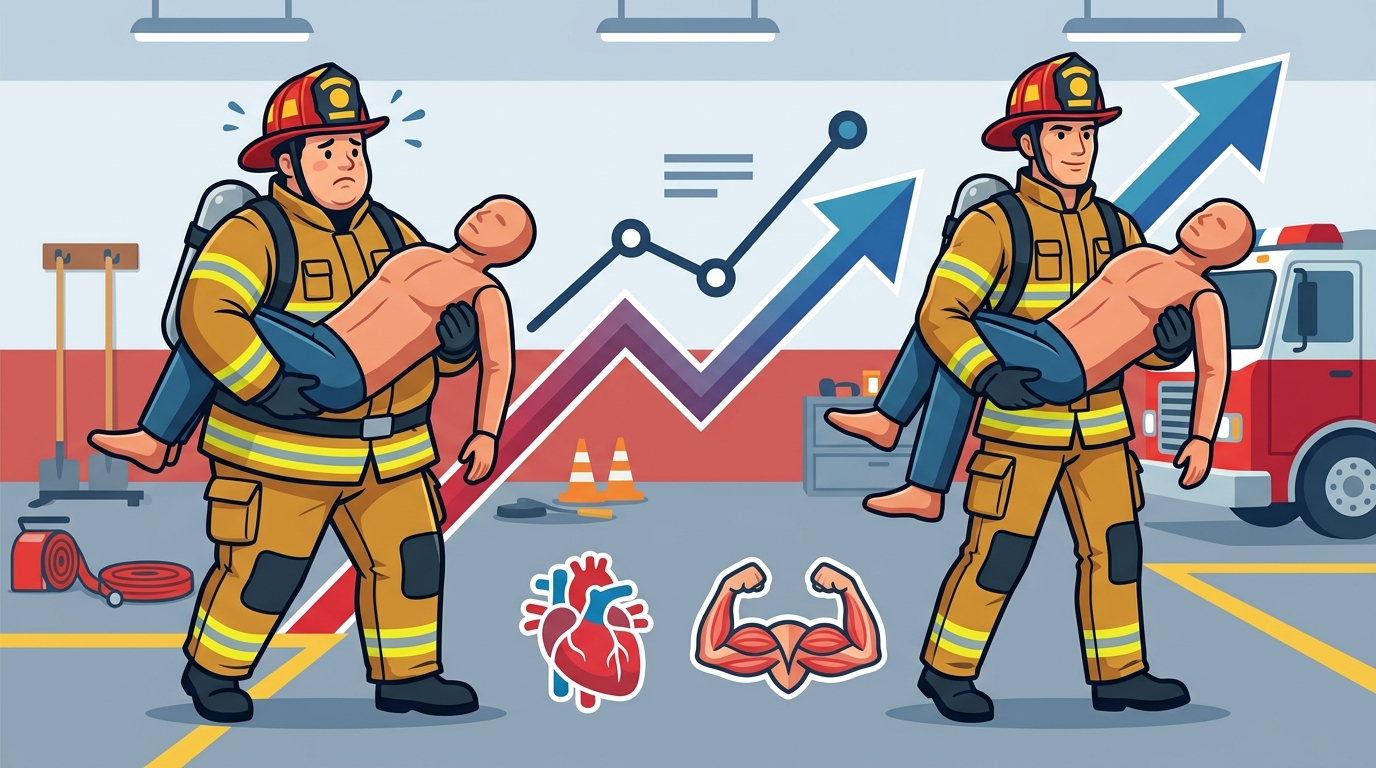
Fireground conditions are rarely level. Stairs, rubble, and uneven floors require exceptional balance. Single-leg exercises, such as Bulgarian split squats or single-leg deadlifts, correct muscular imbalances and improve proprioception. This type of training ensures that a firefighter can maintain footing and generate force even when the ground beneath them is unstable.
Cardiovascular Endurance and Shift Readiness
Strength alone does not guarantee performance. The ability to sustain high-intensity effort over time is equally vital. Firefighters often engage in bursts of extreme exertion followed by periods of relative inactivity, only to be called out again. This pattern demands a robust aerobic base to facilitate rapid recovery between incidents.
Cardiovascular endurance is the capacity of the heart and lungs to supply oxygen to working muscles during sustained physical activity. For first responders, this means being able to climb multiple flights of stairs with a full air tank without reaching maximal heart rate zones prematurely. Low aerobic fitness leads to quicker onset of fatigue, which impairs decision-making and increases the risk of heat stress.
Training for this requires a mix of Zone 2 steady-state cardio for base building and high-intensity interval training (HIIT) to simulate the stress of an alarm. HIIT protocols, such as sprint intervals or circuit training with heavy loads, prepare the body to handle the sudden spikes in heart rate and lactate production common in emergency responses. This dual approach ensures that firefighters are not only strong but also resilient.
Mobility and Injury Prevention Strategies
Long-term career longevity depends on mobility. The repetitive nature of firefighting, combined with the weight of PPE, can lead to restricted movement patterns and chronic pain. Mobility refers to the active range of motion available at a joint, which is essential for efficient movement and injury prevention.
Key areas of focus include the hips, thoracic spine, and ankles. Tight hips can limit squat depth and increase lower back strain. Limited thoracic rotation can impair overhead reaching and twisting motions. Ankle mobility is crucial for maintaining balance and reducing knee stress during lunges or stair climbing. Incorporating dynamic stretching and mobility drills into daily routines can mitigate these risks.
Everyday Heroes Fitness emphasizes mobility as a core component of their coaching program. Their resources include specific guides for at-home routines that target these critical areas. By addressing mobility deficits early, firefighters can prevent the cumulative wear and tear that often leads to early retirement or chronic disability. This proactive approach to body maintenance is as important as the strength training itself.
Training Program Comparison for First Responders
Choosing the right training path is critical for achieving specific performance goals. Below is a comparison of common training approaches for firefighters, highlighting how specialized coaching differs from generic fitness programs.
| Training Approach | Primary Focus | Relevance to Firefighting | Limitations |
|---|---|---|---|
| Generic Gym Workout | General health or aesthetics | Low. Often lacks specific functional carryover. | Does not address shift schedules or PPE weight. |
| Bodybuilding Split | Muscle hypertrophy | Medium. Builds strength but may reduce mobility. | Can lead to muscle imbalances if not balanced with cardio. |
| Specialized First Responder Coaching | Functional strength, endurance, and mobility | High. Mimics job demands and includes CPAT prep. | Requires commitment and structured guidance. |
| Self-Directed Online Plans | Variable | Medium. Depends on the quality of the plan. | Lacks personalized feedback and accountability. |
As seen in the table, specialized coaching offers the highest relevance to firefighting duties. Programs like those offered by Everyday Heroes Fitness are built specifically for the unique demands of the job. They include CPAT (Candidate Physical Ability Test) preparation, which is essential for those looking to join the service or maintain their fitness standards. The inclusion of macro guidance and meal planning further supports recovery and performance, aspects often overlooked in generic fitness plans.
Key Takeaways
- Functional Fitness is Essential: Training must mimic the multi-planar, heavy-load demands of the fireground to be effective.
- Strength Without Endurance is Insufficient: A robust aerobic base is required for rapid recovery between high-intensity incidents.
- Mobility Prevents Injury: Targeted mobility work for hips, thoracic spine, and ankles reduces long-term wear and tear.
- Specialized Coaching Yields Results: Programs designed for first responders, such as those from Everyday Heroes Fitness, address specific job demands.
- CPAT Preparation is Critical: Regular practice of test-specific movements ensures readiness for physical assessments.
- Nutrition Supports Performance: Macro guidance and meal planning are vital for recovery and sustained energy levels.
- Community Provides Accountability: Access to a private community of first responders enhances motivation and adherence to training protocols.
Frequently Asked Questions
How does functional fitness differ from traditional weightlifting?
Functional fitness focuses on movements that translate directly to real-world tasks, such as lifting, pushing, and pulling in unstable environments. Traditional weightlifting often isolates muscles in controlled, linear paths that do not fully engage the stabilizer muscles needed for emergency response.
What is the CPAT and why is it important?
The Candidate Physical Ability Test (CPAT) is a standardized physical assessment used by many fire departments to ensure candidates meet the minimum physical requirements of the job. Passing the CPAT requires specific endurance and strength that general fitness does not guarantee.
Can I train for firefighting fitness while working full shifts?
Yes, but it requires efficient programming. Programs designed for first responders, like those from Everyday Heroes Fitness, are built around shift schedules to maximize results in minimal time. Consistency and proper recovery are key to balancing work and training.
How does PPE weight affect training needs?
Wearing 60+ pounds of PPE significantly increases the metabolic cost of movement. Training must include loaded carries and endurance work to simulate this burden, ensuring that firefighters do not gas out quickly when fully geared up.
What role does mobility play in firefighter health?
Mobility ensures that joints can move through their full range of motion, reducing the risk of strains and tears. It also improves movement efficiency, allowing firefighters to perform tasks with less energy expenditure and less wear on the body.
Why is nutrition important for first responders?
Nutrition fuels high-intensity efforts and aids in recovery. Proper macro guidance helps maintain body composition, energy levels, and immune function, which are critical for firefighters who often face irregular eating schedules and high stress.
How does Everyday Heroes Fitness support firefighters?
Everyday Heroes Fitness provides online coaching specifically for first responders. Their program includes customized programming, 1:1 check-ins, macro guidance, and access to a private community, all designed to improve job performance and overall health.
Take the Next Step in Your Fitness Journey
Transforming your job performance requires more than just showing up to the gym. It demands a strategic, specialized approach that respects the unique physiology of the fire service. If you are ready to regain your strength, confidence, and drive, consider joining a program built for your reality. Apply for coaching today and join the 1,000+ first responders who have transformed their careers through functional fitness. Visit the resources page to access free training guides and start building your foundation now.