
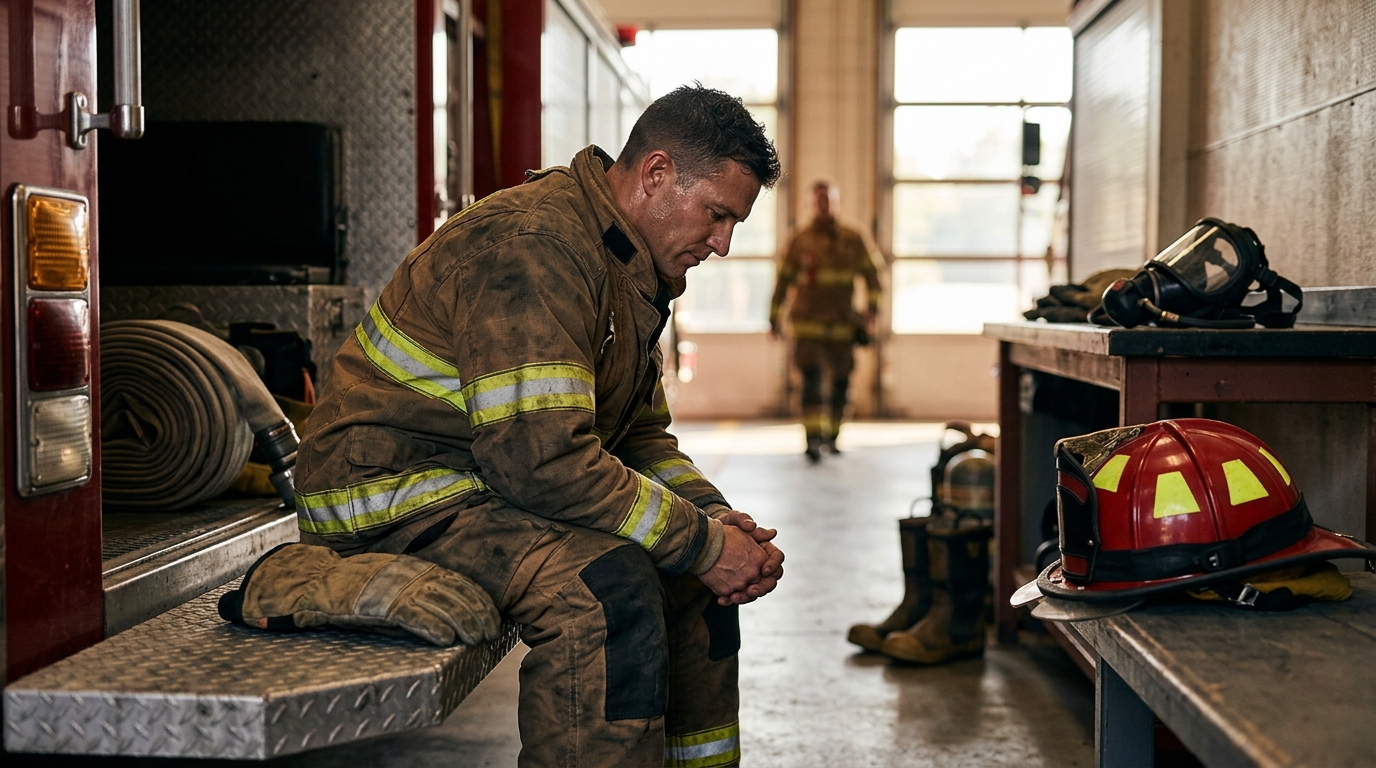
Firefighting is one of the most physically demanding professions on the planet. From hauling charged hose lines up stairwells to performing victim rescues in zero-visibility conditions, every shift can place extraordinary demands on the body. Choosing the right fitness program isn't a matter of preference — it's a matter of safety, career longevity, and community protection.
This guide walks you through the critical factors every firefighter, recruit, or department wellness coordinator should evaluate before committing to a training program.
Why Program Selection Matters for Firefighters
A generic gym routine won't cut it for someone who may need to climb 18 stories carrying 35 pounds of extra weight at a moment's notice. Research from the NSCA's Tactical Strength and Conditioning (TSAC) Report shows that many firefighters across the United States may not be meeting the recommended fitness levels based on the cardiovascular and metabolic demands of the occupation. The consequences are stark: elevated rates of cardiovascular incidents, on-duty injuries, and shortened careers.
Studies have found that nearly 70 percent of firefighters are either overweight or obese — conditions that elevate cardiovascular disease risk and impair mobility on the fireground. For every one-unit increase in BMI, job disability has been shown to increase by five percent. Choosing a purpose-built fitness program is the single most impactful step a firefighter can take to counteract these risks.
Understand the Physical Demands First
Before evaluating any program, you need to clearly understand what firefighting actually requires of the body. Firefighters must be able to perform strenuous physical activities for extended durations in heated environments. Turnout gear and a Self-Contained Breathing Apparatus (SCBA) alone weigh approximately 50 pounds, adding significant thermal and physical stress with every movement.
Common fireground tasks that your fitness program must prepare you for include:
- Stair climbing under load (often 9–18 stories with 35–45 lb hose bundles)
- Hose advancement and charged-line operations
- Forcible entry using heavy tools
- Victim rescue drags and carries
- Ladder raises and extensions
- Operating above-ground on rooftops and scaffolding
The nature of these tasks means firefighting is best described as a series of high-intensity bursts followed by short recovery periods. Your program needs to train both the explosive effort and the recovery capacity.
Prioritize Functional, Job-Specific Training
One of the most common mistakes aspiring and active firefighters make is training like a bodybuilder. Isolated exercises like bicep curls and leg extensions don't prepare you for functional tasks like hose drags or ladder raises. A quality firefighter fitness program should focus on functional training that simulates real-world job demands.
Exercises with high transfer to the fireground include:
- Deadlifts — develop lower back and leg strength for lifting heavy equipment
- Sled pushes and pulls — mimic the physical demands of hose drags and victim rescues
- Farmer's carries — improve grip strength and endurance for carrying tools
- Weighted step-ups — enhance stair-climbing endurance in full gear
- Tire flips — engage full-body power and explosive strength
- Planks and woodchoppers — strengthen the core for lifting and carrying
The specificity of training principle is essential here: adaptations are specific to the movements and energy systems you actually train. Running or cycling alone may improve cardiorespiratory fitness, but they won't build the grip strength, trunk stability, or loaded-carry endurance that firefighting demands.
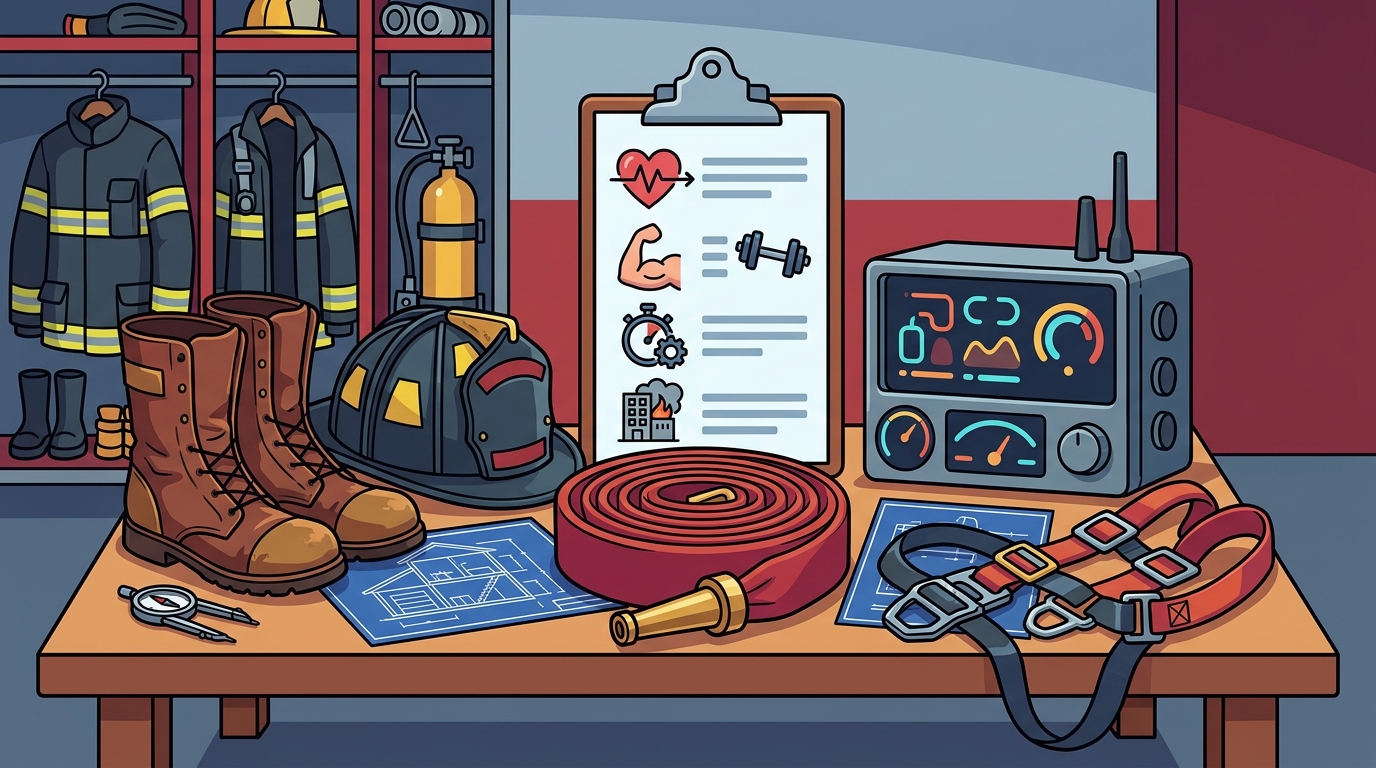
The Five Pillars of a Complete Firefighter Fitness Program
When evaluating any program, check that it addresses all five of these pillars concurrently. A well-structured training program should focus on developing multiple qualities simultaneously rather than isolating one attribute at a time.
1. Cardiovascular Endurance
Aerobic capacity is a vital test of a firefighter's ability to meet the rigors of the job. Your program should include both steady-state cardio (sustained runs, rowing, cycling) and high-intensity interval training. The combination prepares you for sustained operations and the acute bursts of effort that characterize emergency scenes.
2. Muscular Strength
The high demands of firefighting require a high degree of muscular fitness. Look for programs that incorporate compound barbell movements (squats, deadlifts, overhead press, bent-over rows), progressive overload, and periodization. Bunker gear, SCBA, and rescue equipment can total loads up to 75 pounds — your strength training must prepare you to move and operate under that burden.
3. Core Stability and Trunk Strength
Building trunk stability, muscular strength, and endurance is essential for maintaining proper form during physically demanding tasks, reducing the overall strain on joints and ligaments. Core training for firefighters should include anti-rotation, anti-extension, and loaded-carry exercises — not just sit-ups.
4. Flexibility and Mobility
Flexibility work is critically important for firefighters whose duties involve restrictive areas, slippery or unsafe conditions, awkward loads, and requirements for rapid movement. Close to half of the injuries experienced by firefighters are musculoskeletal in nature, and poor movement quality may be related to an increased risk of experiencing these injuries. Look for programs that include dedicated mobility sessions, not just a cursory five-minute warm-up.
5. Body Composition Management
Body composition — the ratio of body fat to lean mass — directly impacts performance and health outcomes. From a physical performance standpoint, excess body fat acts like carrying extra dead weight on every call. A good program pairs training with nutritional guidance to help firefighters reach and maintain a healthy composition throughout their careers.
Alignment with NFPA Standards and CPAT Requirements
Any serious firefighter fitness program should be built with awareness of the industry benchmarks that govern the profession.
NFPA 1582 / NFPA 1580
The National Fire Protection Association has established standards for comprehensive occupational medical programs. Under the updated NFPA 1580, baseline and annual fitness testing is required for all firefighters. The standard includes evaluation of aerobic capacity, muscular strength, endurance, and joint mobility. Firefighter aerobic capacity requirements are now adjusted for age and biological sex, reflecting the reality that cardiopulmonary fitness levels vary across demographics.
Candidate Physical Ability Test (CPAT)
Many departments require the IAFF/IAFC Candidate Physical Ability Test as part of the hiring process. The CPAT consists of eight continuous events requiring applicants to walk 85 feet between each station. Events include stair climbing, hose drags, equipment carries, ladder raises, forcible entry, search navigation, victim rescue, and ceiling breach/pull. Your program should periodize specific CPAT preparation blocks if you're in a pre-hire phase.
Firefighter Physical Fitness Test (FPFT)
A newer assessment modeled after the U.S. Army Combat Fitness Test, the FPFT was designed to better reflect the demands of the fireground and to reduce injuries during academy training. Departments like Boise Fire adopted it in 2024, and more are following. If your department uses or is considering the FPFT, ensure your program trains the qualities it measures: strength, power, trunk stability, work capacity, and the ability to recover on the move.
Injury Prevention and Movement Quality
The best firefighter fitness program is one that keeps you on the job — not sidelined. Ensuring firefighters engage in regular strength and conditioning programs targeting vulnerable areas such as the back, upper extremities, and lower extremities can significantly reduce injury risks.
Key injury-prevention features to look for in a program:
- Functional Movement Screen (FMS) integration — This tool can be used to assess the effectiveness that physical training programs have on flexibility and movement quality among firefighters and other tactical athletes.
- Progressive loading protocols — Injuries often occur when volume or intensity increases too quickly. Look for structured periodization.
- Emphasis on proper technique — Programs should prioritize form over speed to prevent injury and ensure proper muscular engagement.
- Dedicated recovery programming — Mobility work, foam rolling, and active recovery days should be built into the training schedule, not treated as optional extras.
Weak muscles and muscle imbalance — where the front of the body is significantly stronger than the back — are responsible for a high percentage of injuries in physically demanding jobs like firefighting. A balanced program addresses both anterior and posterior chain development.
Scheduling Around Shift Work
Firefighters don't work nine-to-five. A 24/48 or 48/96 rotation creates unique scheduling challenges that a cookie-cutter program can't accommodate. Here's what to consider:
- On-shift training windows: The program should include workouts that can be performed in a firehouse gym with available equipment. Many firehouses have basic equipment such as dumbbells and treadmills, though these are often insufficient for comprehensive strength and conditioning programs. Advocate for barbells, squat racks, kettlebells, rowers, and air bikes.
- Detraining prevention: Detraining occurs if a firefighter does not maintain a regular exercise program. Since the need to perform demanding tasks may arise at any time, programs must be sustainable year-round — not just pre-assessment cramming.
- Constant readiness design: Urban and full-time wildland firefighters don't have an off-season. Look for programs that cycle intensity and emphasis — from strength to endurance to core work — to prevent burnout while maintaining progress.
The ideal program should offer four to five training sessions per week, incorporating a mix of strength, conditioning, and flexibility work, with enough flexibility to shift sessions around unpredictable call volumes.
Nutrition and Recovery Integration
A program that ignores nutrition is incomplete. Proper nutrition fuels firefighters for the demanding work they face every day and supports muscle recovery and overall health.
Look for programs that provide guidance on:
- Lean protein intake for muscle repair — chicken, fish, eggs, and plant-based options like lentils
- Complex carbohydrates for sustained energy — brown rice, oats, quinoa, sweet potatoes
- Healthy fats for inflammation control — avocados, nuts, seeds, olive oil
- Hydration protocols — especially critical during long shifts and extreme conditions. Firefighters should replenish electrolytes regularly to prevent dehydration and fatigue.
Sleep optimization is equally important. Disrupted sleep from overnight calls degrades recovery and cognitive function. Programs that acknowledge this reality and adjust training volume on post-shift days demonstrate an understanding of the tactical athlete's life.
Mental Resilience and Stress Management
Physical conditioning alone isn't enough. Preparing for the psychological demands of firefighting is as important as physical conditioning. Effective programs incorporate or at least acknowledge:
- Stress management techniques and coping strategies
- Peer support and critical incident stress management resources
- Training exercises that build confidence and decision-making under fatigue
- Mental toughness development through progressive physical challenges
Firehouse culture matters here too. When fitness is treated as a standard job requirement rather than a personal goal, it becomes integrated into the firehouse's daily routine. This cultural shift leads to improvements in overall health, morale, and job performance.
Red Flags: What to Avoid in a Firefighter Fitness Program
Not every program marketed to firefighters is worth your time or money. Watch out for these warning signs:
- No periodization: Programs that prescribe the same workouts month after month will lead to plateaus and overuse injuries.
- Ignoring cardiovascular conditioning: Strength is important, but firefighters also need cardiovascular capacity. A strength-only program leaves a critical gap.
- No mobility or flexibility component: Skipping recovery and mobility work increases injury risk and undermines overall performance.
- Generic programming: If the program wasn't designed with fireground tasks in mind, it probably won't prepare you for them. Circuit training alone may be an appropriate stimulus for some firefighter tasks but not all — it should be paired with higher-intensity cardiovascular work.
- No coaching access: Many firefighters lack the knowledge or experience to develop adequate strength and conditioning programs on their own. Look for programs that provide access to certified strength and conditioning coaches who understand the unique physical demands of firefighting.
- Neglecting grip strength: Many candidates fail equipment-based events due to weak forearms. A credible program includes farmer's carries, dead hangs, and towel pull-ups.
Key Takeaways
- Choose programs built around the specificity principle — training must mirror the actual physical demands of firefighting, not general fitness.
- Verify that the program addresses all five pillars: cardiovascular endurance, muscular strength, core stability, flexibility, and body composition.
- Ensure alignment with relevant standards like NFPA 1580, CPAT, or the FPFT depending on your department's requirements.
- Prioritize injury prevention through movement screening, progressive loading, and dedicated recovery sessions.
- Select programs designed for shift-work schedules that maintain year-round readiness without burnout.
- Look for integrated nutrition guidance and mental resilience components — not just workout sheets.
- Avoid generic programs lacking periodization, coaching support, or functional training specificity.
Frequently Asked Questions
How many days per week should a firefighter train?
Most experts recommend four to five training sessions per week, incorporating a mix of strength, conditioning, and flexibility work. The exact distribution should account for shift schedules and recovery needs.
Is CrossFit a good fitness program for firefighters?
CrossFit develops general fitness, but it may not provide the task-specific periodization firefighters need. Circuit-style training can approximate some firefighter tasks, but research indicates it should be periodized with additional emphasis on higher-intensity cardiovascular exercise to fully prepare for fireground demands.
What fitness standards do firefighters need to meet?
Standards vary by department, but the most widely referenced include the CPAT (Candidate Physical Ability Test), NFPA 1580 medical and fitness requirements, and the newer FPFT (Firefighter Physical Fitness Test). Under NFPA 1580, baseline and annual fitness testing is required for all firefighters, covering aerobic capacity, muscular strength, endurance, and joint mobility.
How important is flexibility for firefighters?
Extremely important. Close to half of firefighter injuries are musculoskeletal in nature, and poor movement quality is linked to increased injury risk. Flexibility training reduces injury risk, improves physical efficiency, enhances neuromuscular coordination, and promotes better balance and posture.
Can I prepare for the fire academy with a home gym?
Yes, provided you have the right equipment. At minimum, you need a barbell, squat rack, pull-up bar, kettlebells, and access to stairs or a stair-climbing machine. Weighted step-ups, farmer's carries, deadlifts, and interval running can all be performed with basic equipment. Proficiency in squats, deadlifts, overhead press, and bent-over rows is particularly helpful before starting the academy.
Why do firefighters need specialized fitness programs instead of general ones?
Firefighting requires a unique combination of strength, endurance, agility, and mental toughness performed under extreme heat, restricted visibility, and heavy loads. The specificity of training principle means adaptations are specific to the movements you practice. A program built around bodybuilding or distance running alone won't develop the grip strength, loaded-carry capacity, and anaerobic power that the fireground demands.