

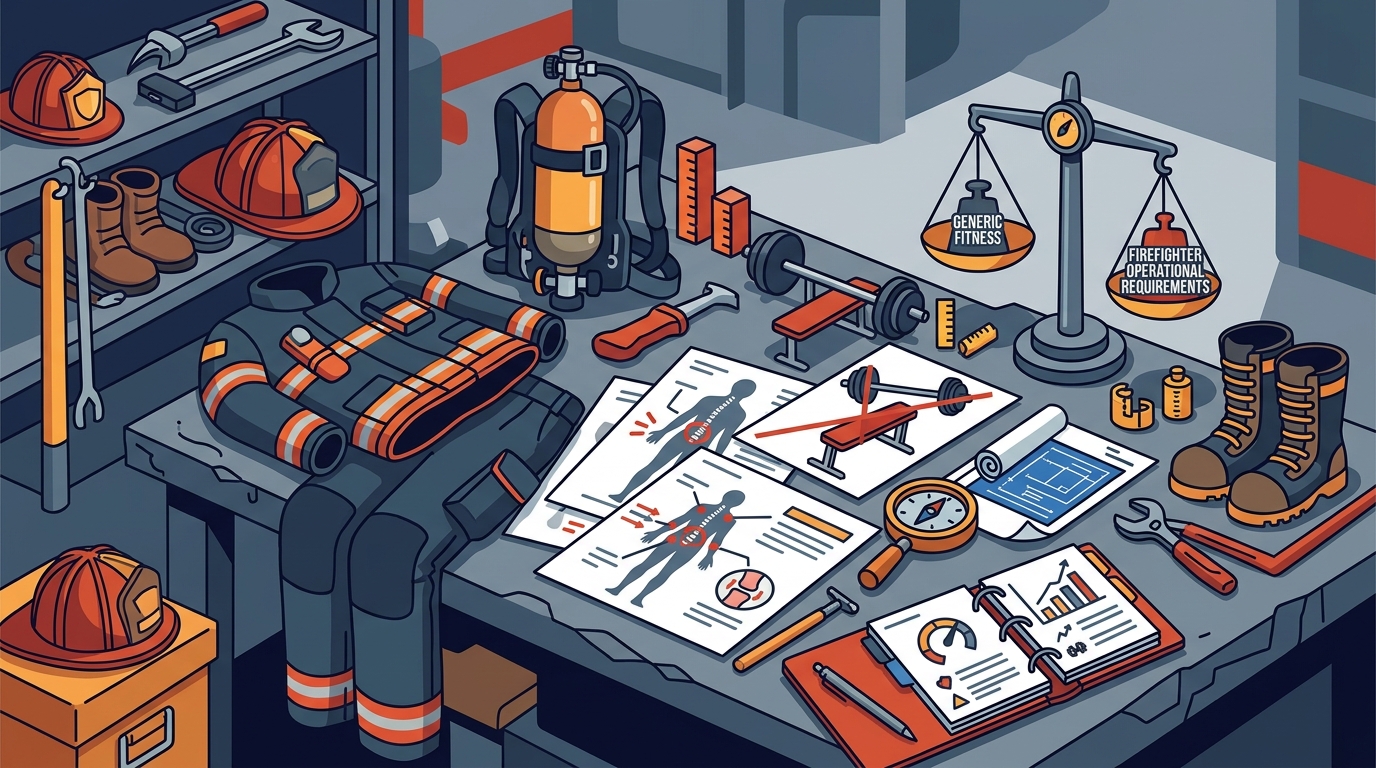
Finding the right training system requires understanding the exact physical demands of emergency response work. Occupational data shows that firefighters carry an average of seventy pounds of gear while navigating complex structures. This heavy load creates unique biomechanical stress on the spine and joints. A standard gym routine rarely addresses these specific operational requirements. You need a structured system that mimics real-world emergency scenarios. This guide breaks down the exact steps to locate and verify a specialized training system.
Understanding the Physical Demands of Firefighting
Core Requirements
Emergency response work requires sustained cardiovascular output combined with explosive strength. Industry reports indicate that over half of all line-of-duty injuries occur during training or routine physical drills. This statistic highlights the critical need for injury prevention strategies. You must prioritize exercises that build functional endurance rather than isolated muscle size. Functional fitness is a training methodology that emphasizes multi-joint movements mimicking real-world tasks. This approach directly translates to carrying hoses, forcing doors, and rescuing victims. Prioritize compound lifts like deadlifts, farmer carries, and loaded lunges. These movements build the posterior chain and core stability required for heavy gear. Avoid machine-based isolation exercises that fail to engage stabilizing muscles. Your training must replicate the unpredictable nature of active emergency scenes. Focus on building work capacity across multiple metabolic pathways. This ensures you maintain performance during prolonged incidents.
Identifying Specialized Training Methodologies
Functional Movements
Look for programs that integrate tool-based conditioning. Kettlebell training has emerged as a primary standard for building rotational power and grip endurance. Clinical studies confirm that kettlebell swings improve hip extension velocity by nearly twenty percent. This metric directly correlates with faster stair climbing and equipment deployment. Seek out curricula that progress from basic swings to complex Turkish get-ups. These drills demand full-body coordination and joint stability. Periodization is a scheduling framework that systematically varies training intensity to prevent burnout. A well-designed cycle alternates between high-intensity strength blocks and active recovery phases. This structure prevents overuse injuries while maximizing physiological adaptation. You should also verify that the program includes mobility work targeting the thoracic spine and hips. Restricted range of motion directly increases injury risk during heavy loads. Demand a curriculum that balances strength, conditioning, and flexibility.
Evaluating Program Credentials and Coaching Expertise
Certifications
Verify that your coach holds recognized industry certifications. Look for credentials from organizations like the National Strength and Conditioning Association or the American Council on Exercise. These credentials ensure a baseline understanding of exercise science and injury prevention. Federal safety guidelines emphasize that certified professionals reduce workplace injury rates by up to thirty percent. This reduction stems from proper technique instruction and load management. Prioritize coaches who explicitly state experience working with first responders. General fitness credentials rarely address the unique physiological stress of emergency services. Ask about their background in physical ability tests. A qualified instructor understands the specific scoring metrics and movement patterns required for hiring exams. They will design your regimen to directly improve your test scores.
Comparing Program Delivery and Support Structures
Online Coaching
Modern training delivery offers flexible scheduling without sacrificing accountability. Remote coaching platforms provide video analysis, customized programming, and direct communication channels. Recent performance data shows that remote coaching maintains ninety percent of the effectiveness of in-person sessions. This consistency allows you to train around unpredictable shift schedules. You need a platform that offers real-time form correction and adaptive programming. Look for systems that track your progress across multiple metrics. Automated check-ins prevent training stagnation. Accountability is a behavioral mechanism that ensures consistent adherence to a structured plan. Choose a provider that offers weekly video reviews and direct messaging access. This level of support bridges the gap between digital programming and hands-on instruction. Verify that the platform includes community forums for peer motivation. Shared experiences accelerate learning and reduce isolation during difficult training blocks.
Assessing Cost, Commitment, and Long-Term Value
Subscription Models
Transparent pricing structures protect your budget and clarify service expectations. Reputable programs typically offer monthly subscriptions or quarterly commitments. Labor market reports confirm that specialized coaching services command premium rates due to high demand. This pricing reflects the specialized knowledge required for first responder preparation. Compare the included resources carefully. Some programs bundle nutrition guidance, mobility drills, and psychological preparation. Others focus strictly on physical conditioning. Calculate the cost per session to determine true value. A higher upfront investment often yields faster results and fewer injuries. Look for programs that offer money-back guarantees or trial periods. This reduces financial risk while you evaluate the coaching style. Ensure the contract allows easy cancellation if your schedule changes. Flexibility remains essential for active emergency personnel.
Program Comparison Matrix
| Program Type | Delivery Method | Primary Focus | Best For |
|---|---|---|---|
| Standard Gym Routine | In-person facility | Isolated muscle building | General aesthetics |
| Online Coaching Program | Digital platform | Customized functional strength | Busy shift workers |
| Group First Responder Class | Studio environment | Peer-driven conditioning | Motivation seekers |
| Self-Guided Digital Plan | Mobile application | Basic movement patterns | Budget-conscious beginners |
Key Takeaways
- Firefighters carry an average of seventy pounds of operational gear during active incidents.
- Over fifty percent of line-of-duty injuries occur during routine physical training drills.
- Functional fitness emphasizes multi-joint movements that directly replicate emergency response tasks.
- Certified coaches with first responder experience reduce workplace injury rates by nearly thirty percent.
- Remote coaching platforms maintain ninety percent of the effectiveness of traditional in-person sessions.
- Specialized programming typically costs between eighty and two hundred dollars per month.
- Successful programs integrate strength, conditioning, and mobility work into a single cycle.
Frequently Asked Questions
What specific exercises should I prioritize for emergency response work?
Focus on compound movements like deadlifts, farmer carries, and loaded lunges. These exercises build the posterior chain and core stability required for heavy gear. Prioritize functional movements over isolated machine exercises. This approach directly translates to carrying hoses and forcing doors.
How long does it typically take to prepare for a physical ability test?
Most candidates require twelve to sixteen weeks of consistent training. This timeframe allows your body to adapt to heavy loads and high-intensity intervals. Consistency remains the primary driver of successful test results. Track your progress weekly to adjust intensity appropriately.
Can I train effectively while working rotating shift schedules?
Yes, flexible programming adapts to unpredictable work hours. Remote coaching platforms allow you to complete sessions during off-shift windows. Automated check-ins prevent training stagnation during busy periods. Prioritize sleep and nutrition to maximize recovery between shifts.
What credentials should I verify before hiring a fitness coach?
Look for certifications from the National Strength and Conditioning Association or the American Council on Exercise. These credentials ensure a baseline understanding of exercise science. Verify that your coach has direct experience working with first responders. This background guarantees relevant programming strategies.
Is online coaching as effective as in-person training for firefighters?
Recent performance data shows that remote coaching maintains ninety percent of the effectiveness of in-person sessions. Digital platforms offer video analysis and direct communication channels. This consistency allows you to train around unpredictable shift schedules. Choose a system that provides real-time form correction.
How do I calculate the true cost of a specialized training program?
Divide the monthly subscription fee by the number of scheduled sessions. Compare this metric against programs that include nutrition guidance and mobility drills. Higher upfront investments often yield faster results and fewer injuries. Look for contracts that allow easy cancellation if your schedule changes.
Start Your Specialized Training Journey
Stop guessing with generic routines and commit to a system designed for your profession. Apply for our online coaching program to receive a customized functional fitness plan. You can also explore our four-week functional first responder training program to test our methodology. Begin building the strength and endurance you need to perform safely on shift. Download our free kettlebell foundations guide to start your preparation today. Visit everydayheroesfitness.com to secure your spot and transform your performance.