
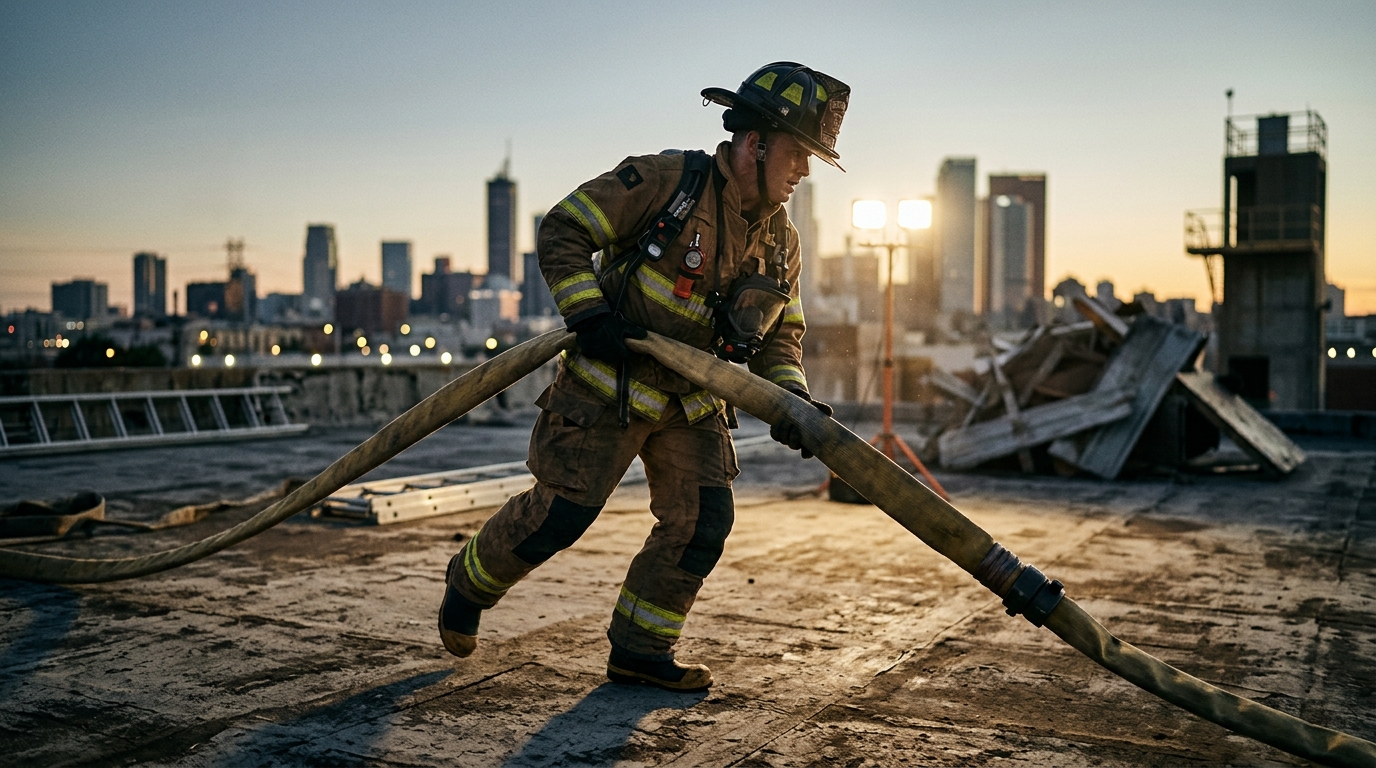
Firefighting is one of the most physically demanding professions in the world. The average firefighter carries over 50 pounds of gear while navigating unstable terrain, climbing ladders, and dragging heavy hoses. According to the National Institute for Occupational Safety and Health, physical fitness is the single most critical factor in preventing on-duty injuries and ensuring operational readiness. This guide details the specific functional movements that build the resilience required for the job.
Functional Movement Basics
Traditional bodybuilding routines often fail firefighters because they isolate muscles rather than training them as a cohesive unit. Functional fitness focuses on multi-joint movements that mimic the physical demands of the fireground. These exercises improve coordination, balance, and power output simultaneously.
Functional fitness is the practice of training muscles to work together to prepare for real-life activities. For a firefighter, this means moving heavy objects, climbing stairs, and maintaining posture under load. The goal is not just aesthetic muscle growth but operational capability.
Key components of functional training include:
- Compound Movements: Exercises like squats and deadlifts engage multiple muscle groups, maximizing efficiency.
- Unilateral Training: Single-leg or single-arm exercises correct imbalances caused by carrying gear on one side.
- Rotational Power: Twisting motions are essential for dragging hoses and breaking through doors.
By prioritizing these movements, firefighters can reduce the risk of lower back injuries, which are among the most common occupational hazards. The Online Coaching Program provides structured guidance on mastering these complex patterns safely.
Kettlebell Foundations
The kettlebell is arguably the most versatile tool for firefighter conditioning. Its offset center of gravity forces the body to stabilize itself during every repetition, building deep core strength and grip endurance. This is directly applicable to holding heavy axes or managing high-pressure hose lines.
Kettlebell training is a method of strength conditioning that utilizes weighted balls with handles to develop explosive power and muscular endurance. Unlike barbells, kettlebells allow for dynamic, swinging motions that generate significant cardiovascular benefits while building strength.
Essential kettlebell exercises for firefighters include:
- The Swing: Develops hip hinge mechanics and posterior chain power. This mimics the explosive movement needed to lift heavy debris.
- The Clean and Press: Combines a pull with an overhead press, building shoulder stability and upper body strength.
- The Turkish Get-Up: A complex movement that improves shoulder mobility, core stability, and body awareness.
For those new to this equipment, the Firefighter Kettlebell Foundations program offers a free 4-day plan to master the basics. This ensures proper form before progressing to heavier loads.
Core and Stability
A strong core is not just about having visible abs. It is about creating a rigid cylinder of muscle that protects the spine during heavy lifting and awkward movements. Firefighters often lift in non-ergonomic positions, making core stability a matter of career longevity.
Core stability is the ability of the muscles surrounding the spine and pelvis to maintain structural integrity under load. This prevents the spine from collapsing or twisting excessively, which is a primary cause of herniated discs in first responders.
Effective core exercises for this demographic include:
- Plank Variations: Front planks, side planks, and weighted planks build isometric strength.
- Farmer’s Carries: Walking with heavy weights in each hand builds grip strength, trap density, and core rigidity.
- Pallof Press: An anti-rotation exercise that teaches the core to resist twisting forces.
These exercises are often integrated into the 4-Week Functional First Responder Training Program to ensure balanced development. Consistency in core training leads to noticeable improvements in daily life and on the fireground.
Cardiovascular Endurance
Firefighting is an anaerobic sport. It involves bursts of extreme exertion followed by periods of relative rest. Traditional long-distance running does not adequately prepare the heart and lungs for this specific energy system. Instead, high-intensity interval training (HIIT) is superior.
High-intensity interval training is a cardiovascular exercise strategy alternating short periods of intense anaerobic exercise with less intense recovery periods. This mimics the stop-start nature of fire suppression operations.
Recommended cardio protocols include:
- Rowing Machine Sprints: Engages the entire body and builds lung capacity without joint impact.
- Stair Climbing: Simulates the physical demand of climbing ladders and navigating multi-story buildings.
- Battle Ropes: Provides upper body endurance and mental toughness through continuous, rhythmic movement.
According to data from the International Association of Fire Fighters, maintaining a high VO2 max is correlated with a lower risk of cardiovascular events during active duty. Integrating these intervals into your weekly routine is essential for peak performance.
Program Comparison
Choosing the right training path depends on your current fitness level, time availability, and specific goals. Below is a comparison of the primary options available through Everyday Heroes Fitness.
| Program Type | Best For | Key Benefit | Commitment Level |
|---|---|---|---|
| Kettlebell Foundations | Beginners | Learn proper form with a versatile tool | 4 Days (Free) |
| 4-Week Functional Program | Intermediate | Rapid strength and weight loss gains | 4 Weeks |
| Online Coaching | Advanced | Personalized accountability and progression | Ongoing |
Each program is designed to build upon the previous one. Starting with the free foundations ensures you have the mechanical knowledge to succeed in the more intense 4-week program. Long-term success often requires the personalized feedback found in the coaching program.
Key Takeaways
- Functional Over Isolation: Multi-joint movements like squats and swings are more effective for firefighter readiness than machine-based exercises.
- Kettlebell Versatility: The kettlebell is the #1 tool for building functional strength, grip endurance, and core stability simultaneously.
- Core Rigidity: Anti-rotation exercises and carries protect the spine from the heavy loads and awkward positions common in firefighting.
- Anaerobic Conditioning: HIIT and stair climbing better prepare the cardiovascular system for the bursts of exertion required on the fireground.
- Proven Results: Over 1,000 first responders have used the Everyday Heroes system to regain strength and confidence.
- Specialized Programming: General fitness programs often fail firefighters because they do not account for the unique physical demands of the job.
- Accessibility: Effective training does not require a commercial gym. The Kettlebell Foundations program can be done anywhere.
Frequently Asked Questions
What is the best exercise for firefighter grip strength?
The Farmer’s Carry is widely considered the most effective exercise for grip strength. It forces the forearms and hands to maintain a tight hold on heavy weights while the body stabilizes, directly translating to holding hose lines and tools.
How often should firefighters train for functional fitness?
Most successful first responders train 3 to 4 times per week. This frequency allows for sufficient stimulus to build strength while providing adequate recovery time to prevent overuse injuries. Consistency is more important than intensity in the early stages.
Is kettlebell training safe for firefighters with back pain?
When performed with correct form, kettlebell training can actually alleviate back pain by strengthening the posterior chain and core. However, it is crucial to start with the Firefighter Kettlebell Foundations program to ensure proper hip hinge mechanics before adding load.
What is the difference between functional fitness and bodybuilding?
Bodybuilding focuses on isolating specific muscles for aesthetic purposes. Functional fitness focuses on training movement patterns that improve performance in real-world tasks. For firefighters, functional fitness leads to better job performance and injury prevention.
Can I do these exercises at home without a gym?
Yes. The Kettlebell Foundations program and the 4-week functional program are designed to be performed with minimal equipment. A single kettlebell and a pull-up bar are often sufficient for effective training.
How long does it take to see results from functional training?
Most participants in the 4-Week Functional First Responder Training Program report noticeable improvements in energy levels and strength within the first month. Significant body composition changes typically occur after 8 to 12 weeks of consistent training.
Why is core stability important for firefighters?
Core stability protects the spine during heavy lifting and awkward movements. A strong core acts as a natural weight belt, reducing the load on the lower back and preventing the most common occupational injury among first responders.
What is the role of cardiovascular endurance in firefighting?
Cardiovascular endurance allows firefighters to sustain high levels of exertion for extended periods. This is critical for tasks like search and rescue, where fatigue can lead to poor decision-making and increased risk of injury.
Start Your Transformation
Don't let fatigue or injury hold you back from performing at your peak. The Online Coaching Program is designed to help you regain your strength, confidence, and drive. Join the community of first responders who have transformed their lives through functional fitness. Apply for coaching today and take the first step toward a healthier, more resilient career.