
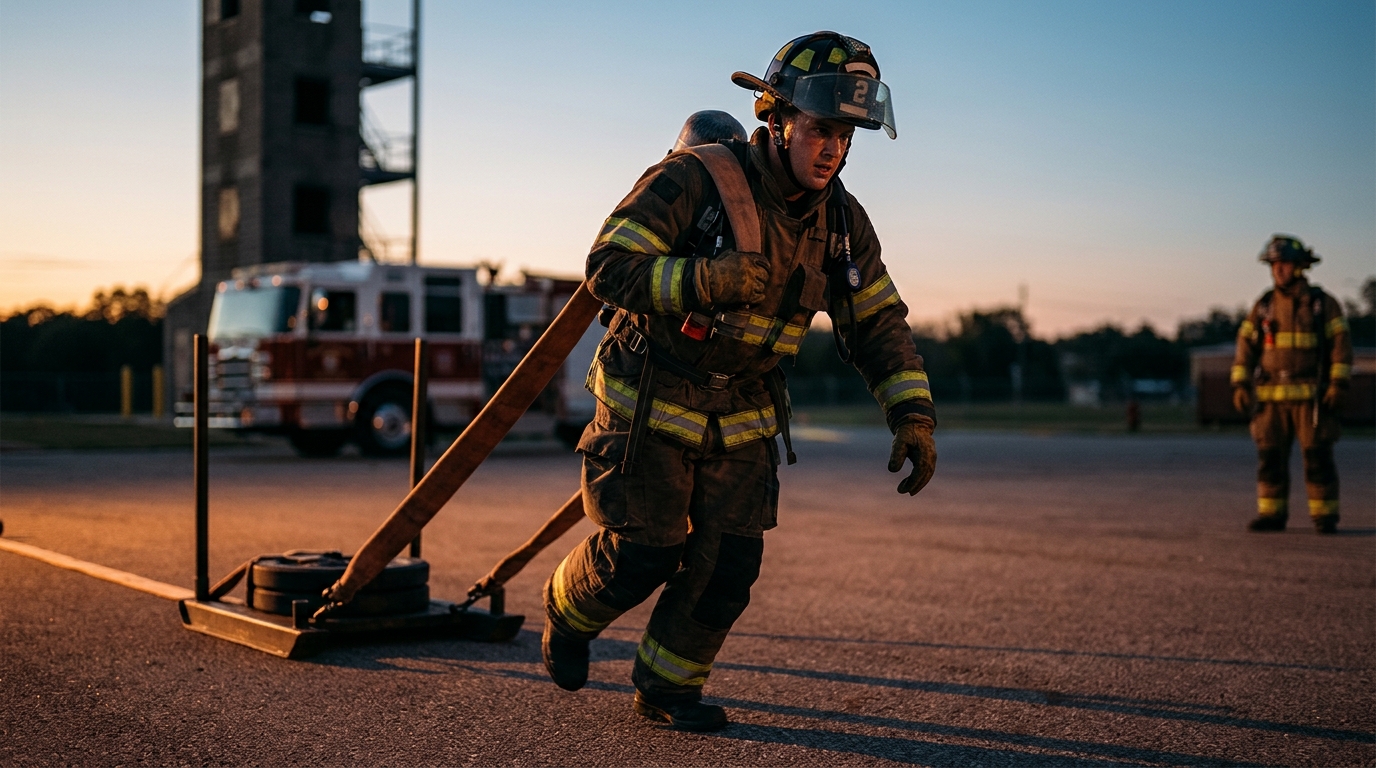
Firefighting is one of the most physically demanding professions in the world. The average firefighter must carry over 50 pounds of gear while navigating unstable terrain, climbing ladders, and dragging heavy hoses. According to the National Fire Protection Association, physical fitness is directly linked to job performance and injury prevention. This guide details the specific exercises that build the functional strength and cardiovascular endurance required for the job.
Functional Movements Over Isolation
Traditional bodybuilding routines often focus on isolated muscle groups. This approach fails to prepare firefighters for the chaotic reality of a fireground. Functional fitness prioritizes multi-joint movements that mimic the physical demands of the job. These exercises improve coordination, balance, and overall power output.
Compound lifts are the foundation of this approach. They engage multiple muscle groups simultaneously, leading to greater hormonal responses and calorie burn. For firefighters, the goal is not just aesthetic muscle but usable strength.
Deadlifts and Squats
The deadlift is arguably the most important lift for first responders. It strengthens the posterior chain, which includes the glutes, hamstrings, and lower back. This is the exact muscle group used when lifting heavy equipment or rescuing a victim. Squats build the leg strength necessary for climbing stairs and ladders while carrying heavy loads.
Proper form is critical. A weak lower back is a common injury site for firefighters. Strengthening the posterior chain reduces this risk significantly. The deadlift teaches the body to generate force from the ground up, a skill used in almost every physical task on the fireground.
Overhead Presses
Firefighters frequently need to lift objects above their heads. This could be a victim, a piece of debris, or a hose line. The overhead press builds the shoulder stability and tricep strength required for these tasks. It also improves core engagement because the body must stabilize the weight against gravity.
Weak shoulders lead to injuries. By strengthening the rotator cuff and deltoids through progressive overload, firefighters can perform overhead tasks with greater confidence and less fatigue.
The Kettlebell Advantage
Kettlebells have become a staple in firefighter training programs. They offer a unique combination of strength and cardiovascular conditioning in a single tool. The offset center of mass requires the body to stabilize the weight, engaging the core and stabilizer muscles more than traditional dumbbells.
Everyday Heroes Fitness offers a FREE Kettlebell Foundations Program designed specifically for first responders. This program teaches the proper mechanics of the kettlebell swing, which is a primary exercise for building explosive hip power.
The Kettlebell Swing
The kettlebell swing is a ballistic movement that builds explosive power in the hips. It mimics the hip-hinge motion used in lifting heavy objects. This exercise improves cardiovascular endurance because it keeps the heart rate elevated while building strength. It is a time-efficient exercise that delivers maximum results.
Research indicates that kettlebell training can improve aerobic and anaerobic capacity. This dual benefit makes it ideal for firefighters who need to sustain high energy output for extended periods. The swing also strengthens the grip, which is essential for holding hoses and tools.
Goblet Squats and Cleans
Goblet squats teach proper squat mechanics while engaging the core. They are safer for beginners than barbell squats because the weight is held in front of the chest. This promotes an upright torso and reduces stress on the lower back. Cleans are another powerful exercise that builds full-body coordination and power.
These movements are scalable. Firefighters of all fitness levels can benefit from kettlebell training. The 4-Week Functional First Responder Training Program incorporates these movements to build a solid foundation of strength.
Cardiovascular Endurance for the Job
Strength alone is not enough. Firefighters must have the cardiovascular endurance to perform tasks for long periods. The job requires bursts of high-intensity effort followed by periods of relative inactivity. Training must reflect this pattern.
High-Intensity Interval Training (HIIT) is the most effective method for building this type of endurance. It mimics the work-to-rest ratios found in firefighting. Short bursts of intense activity followed by brief recovery periods prepare the body for the unpredictable nature of the job.
Stair Climbing and Rucking
Stair climbing is a direct simulation of climbing ladders and stairs in a burning building. It builds leg strength and cardiovascular capacity simultaneously. Adding weight through a weighted vest or backpack increases the specificity of the training.
Rucking, or walking with a weighted backpack, is another effective tool. It builds endurance while strengthening the legs, core, and shoulders. This exercise is low-impact compared to running, making it sustainable for long-term training. It also prepares the body for carrying heavy gear over long distances.
Rowing and Assault Bikes
Rowing machines and assault bikes provide excellent cardiovascular conditioning without the impact of running. They engage the entire body, making them highly efficient for calorie burn and endurance building. The rhythmic nature of rowing also helps develop mental toughness and pacing strategies.
These tools are often available in commercial gyms and fire stations. Incorporating them into weekly training routines ensures a well-rounded fitness profile. Consistency is key to building the aerobic base required for the job.
Core Stability and Injury Prevention
A strong core is essential for protecting the spine during heavy lifting. The core includes the abs, obliques, and lower back muscles. These muscles work together to stabilize the torso and transfer force between the upper and lower body.
Traditional crunches are not sufficient for firefighter training. They do not engage the core in a functional way. Instead, firefighters should focus on anti-rotation and stability exercises that challenge the core under load.
Planks and Pallof Presses
Planks build isometric strength in the core. They teach the body to resist extension and maintain a neutral spine. This is crucial for preventing lower back injuries during lifting. Pallof presses add an anti-rotation component, which is highly specific to the twisting motions often encountered on the fireground.
These exercises are simple but effective. They can be performed anywhere with minimal equipment. Incorporating them into warm-ups or cool-downs ensures consistent core engagement.
Farmer Carries
Farmer carries build grip strength, shoulder stability, and core endurance. Holding heavy weights in each hand while walking forces the core to stabilize the body. This exercise mimics carrying heavy equipment or victims. It also improves posture and reduces the risk of injury.
The farmer carry is a practical exercise that translates directly to job tasks. It builds the dense, functional muscle tissue that firefighters need. Regular practice of this exercise can significantly improve overall work capacity.
Comparing Training Approaches
Choosing the right training program is critical for success. Different approaches offer varying benefits depending on the firefighter's current fitness level and goals. Below is a comparison of common training methods.
| Training Method | Primary Benefit | Best For | Equipment Needed |
|---|---|---|---|
| Online Coaching | Personalized Accountability | Busy Professionals | Gym Access |
| Kettlebell Foundations | Functional Strength | Beginners | 1-2 Kettlebells |
| HIIT Circuits | Cardiovascular Endurance | Intermediate | Minimal |
| Strength Training | Maximal Force | Advanced | Barbells/Dumbbells |
Each method has its place in a comprehensive training plan. A balanced approach that combines strength, endurance, and mobility is ideal. The Everyday Heroes Fitness program integrates these elements to create a holistic fitness solution for first responders.
Key Takeaways
- Functional movements like deadlifts and squats build the posterior chain strength essential for lifting heavy loads.
- Kettlebell swings improve explosive hip power and cardiovascular endurance simultaneously.
- High-Intensity Interval Training (HIIT) mimics the work-to-rest ratios of firefighting.
- Core stability exercises like planks and farmer carries protect the spine and improve grip strength.
- Overhead presses build the shoulder stability needed for lifting victims and equipment.
- Rucking and stair climbing simulate the physical demands of climbing ladders and stairs.
- Personalized coaching ensures proper form and accountability for consistent progress.
Frequently Asked Questions
What is the most important exercise for firefighters?
The deadlift is often considered the most important exercise because it strengthens the posterior chain, which is used in almost every physical task on the fireground.
How often should firefighters train?
Firefighters should aim for three to four strength training sessions per week, combined with two to three cardiovascular sessions. Consistency is more important than intensity.
Can kettlebells replace traditional weights?
Kettlebells are excellent for functional strength and endurance but may not provide the same maximal strength gains as heavy barbell training. A combination of both is ideal.
What is the best cardio for firefighters?
High-Intensity Interval Training (HIIT) is the most effective because it mimics the bursts of effort required during firefighting. Stair climbing is also highly specific.
How does core training prevent injury?
A strong core stabilizes the spine during heavy lifting, reducing the risk of lower back injuries. It also improves balance and coordination.
Is online coaching effective for firefighters?
Yes, online coaching provides personalized programming and accountability, which are crucial for busy first responders. It allows for flexibility while ensuring proper form.
What is the role of grip strength in firefighting?
Grip strength is essential for holding hoses, tools, and victims. Exercises like farmer carries and deadlifts significantly improve grip endurance.
How long does it take to see results?
Most firefighters see noticeable improvements in strength and endurance within four to six weeks of consistent training. Long-term results require ongoing commitment.
Start Your Transformation
Improving your fitness as a firefighter is not just about looking good. It is about staying safe, performing better, and enjoying a longer career. The exercises outlined in this guide provide a proven path to achieving your goals. Join the community of first responders who have transformed their lives through functional fitness.
Take the first step today. Apply for the Online Coaching Program and get personalized guidance from Coach Mitch. Visit the Everyday Heroes Fitness homepage to learn more about our mission and services. Your body is your most important tool. Treat it with the respect it deserves.