

First responders face physical demands that exceed standard athletic requirements. According to the National Institute for Occupational Safety and Health, firefighters must be capable of performing strenuous tasks while wearing heavy protective gear. This guide outlines the exact functional fitness strategies used by over 6,000 first responders to regain their strength and confidence. We will explore the specific physiological adaptations needed for duty, the critical role of kettlebell training, and how to structure a program that guarantees results without causing injury.
Why Standard Training Fails First Responders
Most fitness programs are designed for aesthetics or general health. They rarely account for the chaotic, heavy, and unpredictable nature of emergency response. First responders need strength that translates directly to carrying victims, forcing doors, and climbing stairs in full turnout gear. Standard bodybuilding routines often neglect posterior chain development and grip strength, which are critical for job performance.
Furthermore, the mental toll of the job often leads to inconsistent training habits. Many firefighters struggle to find the drive to train after long shifts. This is where a structured, purpose-built system becomes essential. It removes the guesswork and provides a clear path to physical readiness. The goal is not just to look fit but to be fit for duty and fit for life.
The Basics of Functional Strength
Functional fitness is defined as the ability to perform real-world tasks efficiently and safely. For first responders, this means developing power in multi-planar movements. It is not enough to lift heavy weights in a controlled gym environment. You must be able to generate force while unstable, tired, and under pressure.
Key components of functional strength include:
- Grip Strength: Essential for dragging hoses and rescuing individuals.
- Core Stability: Protects the spine during heavy lifts and awkward movements.
- Posterior Chain Power: Drives the hip extension needed for jumping, climbing, and sprinting.
By focusing on these areas, you build a resilient body that can withstand the rigors of the job. This approach also helps prevent the chronic back pain that plagues many veterans in the field.
Kettlebell Foundations for Firefighters
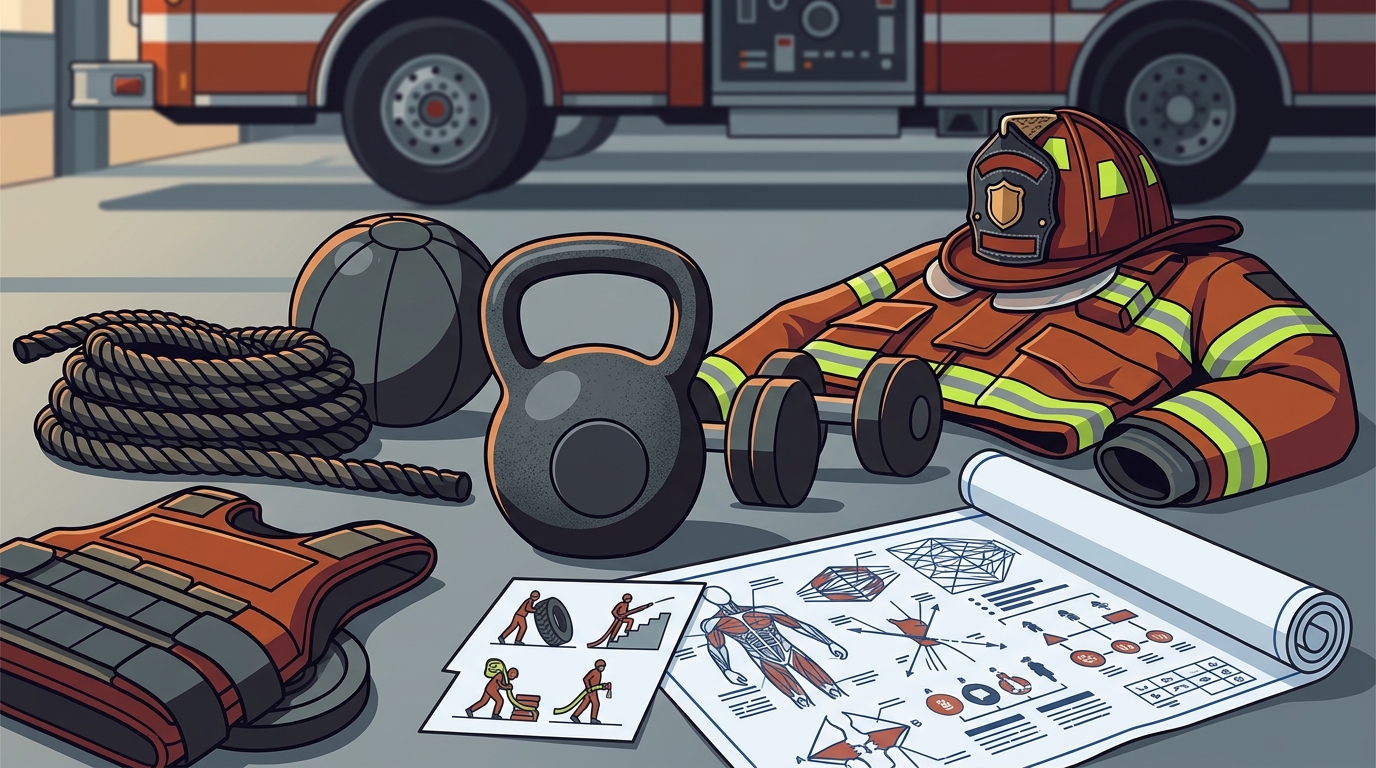
The kettlebell is the number one tool for functional firefighter strength. Its unique center of mass forces your body to stabilize itself during every movement. This creates a high level of muscular engagement that dumbbells or barbells cannot replicate. A free 4-day plan can help you unlock the full potential of this tool.
Why Kettlebells Work
Kettlebell training improves both strength and endurance simultaneously. The ballistic movements, such as swings and cleans, elevate the heart rate while building explosive power. This mimics the burst of energy required during an emergency response. It is a time-efficient way to train that respects the busy schedules of first responders.
Essential Movements
Mastering the basic swings, squats, and presses is crucial. These movements build the foundational strength needed for more complex tasks. They also improve mobility and joint health, which is vital for longevity in the profession. Consistency with these basics yields better results than chasing complex, unproven trends.
Building Duty-Specific Endurance
Cardiovascular endurance for first responders is different from running a marathon. It requires anaerobic capacity and the ability to recover quickly between bursts of intense activity. This is often referred to as work capacity. It is the ability to perform high-intensity tasks repeatedly without a significant drop in performance.
Training should include intervals that simulate the stress of a call. This might involve heavy carries, stair climbs, or circuit training with minimal rest. The goal is to condition your body to handle the physiological spike of an emergency. This type of training also helps manage stress and improve mental resilience.
The Role of Recovery
Recovery is just as important as training. First responders often suffer from sleep deprivation and high stress levels. Proper nutrition, hydration, and rest days are essential for adaptation. Ignoring recovery leads to burnout and increased risk of injury. A balanced approach ensures long-term health and performance.
Comparing Training Approaches
Choosing the right training method is critical for success. Below is a comparison of common approaches for first responders.
| Training Method | Primary Benefit | Best For | Limitations |
|---|---|---|---|
| Kettlebell Foundations | Functional strength and grip | Building a resilient base | Requires proper technique |
| Online Coaching | Personalized accountability | Long-term transformation | Requires self-discipline |
| Standard Gym Routine | General health | Beginners | Lacks job specificity |
| Calisthenics | Bodyweight control | Portability | Hard to scale load |
Key Takeaways
- Over 6,000 firefighters have used functional training to improve their on and off-shift performance.
- Kettlebells are the primary tool for developing functional strength due to their unique balance requirements.
- Functional fitness is defined as the ability to perform real-world tasks efficiently and safely.
- Standard bodybuilding routines often neglect the posterior chain and grip strength needed for duty.
- Endurance for first responders requires anaerobic capacity and quick recovery between bursts of activity.
- Online coaching provides accountability and personalized plans for consistent progress.
- Recovery and nutrition are critical for managing the high stress of the job.
Frequently Asked Questions
How long does it take to see results in functional fitness?
Most first responders see significant improvements in strength and endurance within 4 to 8 weeks of consistent training. The 4-week functional first responder training program is designed to kickstart this process with guaranteed results.
Do I need a gym membership to train like a firefighter?
No, many effective functional exercises can be done with minimal equipment. Kettlebells are portable and versatile, making them ideal for home or station gyms. The free kettlebell foundations program provides guidance for minimal equipment setups.
What is the best way to improve grip strength?
Heavy carries, deadlifts, and kettlebell swings are excellent for building grip strength. These exercises mimic the demands of dragging hoses and rescuing victims. Consistent practice with these movements will lead to noticeable improvements.
Can I train while working full-time shifts?
Yes, functional training is designed to be time-efficient. Short, high-intensity sessions can be completed in 30 to 45 minutes. The key is consistency and following a structured plan like the online coaching program.
How does functional fitness prevent injury?
By strengthening the muscles and connective tissues used in daily tasks, functional fitness improves joint stability and resilience. This reduces the risk of strains and sprains during emergency responses. It also helps correct muscular imbalances caused by sitting or wearing heavy gear.
Is kettlebell training safe for beginners?
Yes, when taught correctly. The kettlebell foundations program focuses on proper form and progressive overload to ensure safety. Starting with lighter weights and mastering technique is essential.
What is the difference between strength and endurance?
Strength is the ability to exert force, while endurance is the ability to sustain activity over time. First responders need both. Functional fitness combines these elements to create a well-rounded athlete ready for any challenge.
Start Your Transformation
Don't let the demands of the job compromise your health. Join the community of first responders who have regained their strength and confidence. Apply for coaching today and start your journey to being fit for duty and fit for life. Visit Everyday Heroes Fitness to learn more about our proven system.