
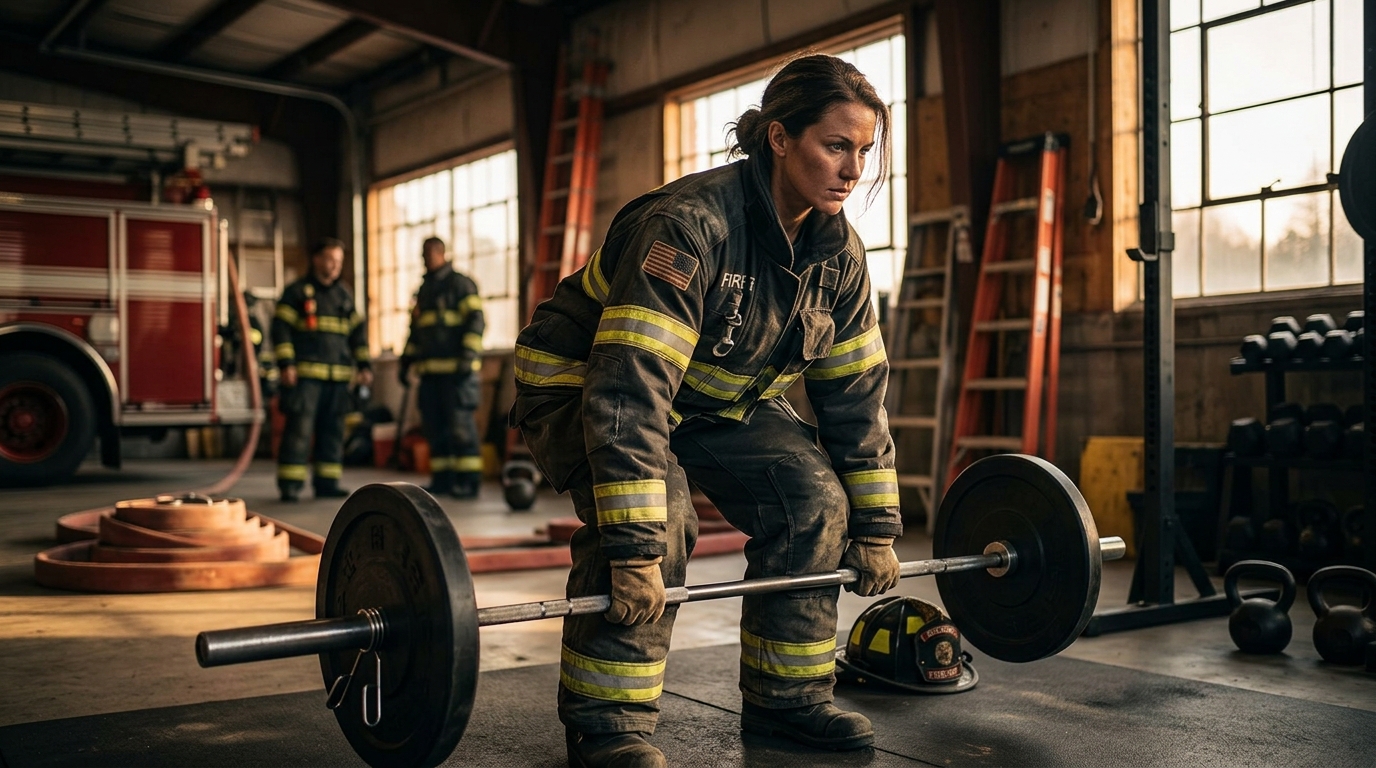
Firefighting is one of the most physically demanding professions in the world. The job requires a unique blend of raw power, cardiovascular stamina, and muscular endurance to perform tasks like dragging heavy hoses, climbing ladders, and rescuing victims in zero-visibility conditions. According to the National Institute for Occupational Safety and Health, physical fitness is directly correlated with reduced injury rates and improved job performance among first responders. This guide details the most effective exercises to build the functional strength needed for the job.
Functional Movements Over Isolation
Traditional bodybuilding routines often focus on isolating specific muscle groups. While this builds aesthetic muscle, it does not necessarily translate to the chaotic environment of a fireground. Functional fitness is the practice of training your body to perform real-world tasks efficiently and safely. For firefighters, this means prioritizing compound movements that engage multiple muscle groups simultaneously.
Compound exercises mimic the physical demands of the job. When you are lifting a victim or carrying a heavy piece of equipment, your body must work as a unified system. Isolation exercises like bicep curls do not prepare you for the coordinated effort required to drag a charged hose line across a floor. By focusing on full-body movements, you build the connective tissue strength and neuromuscular coordination necessary for high-stress situations.
Key functional movements include squats, deadlifts, and overhead presses. These exercises build the foundational strength needed for lifting and carrying. They also improve bone density and joint stability, which is critical for long-term health in a high-impact profession. The goal is not just to lift heavy weights in the gym, but to apply that strength effectively when it matters most.
The Kettlebell Advantage
Kettlebells have become a staple in firefighter training programs for good reason. They offer a unique combination of strength and endurance training in a single tool. Kettlebell training is a method of exercise that uses weighted balls with handles to develop explosive power and cardiovascular fitness. The offset center of gravity in a kettlebell forces your stabilizer muscles to work harder than with traditional dumbbells or barbells.
Exercises like the kettlebell swing are particularly effective for firefighters. The swing targets the posterior chain, which includes the glutes, hamstrings, and lower back. This is the same muscle group used when lifting heavy objects from the ground. By strengthening these muscles, you reduce the risk of lower back injuries, which are common among first responders. The dynamic nature of the swing also elevates the heart rate, providing a cardiovascular benefit alongside the strength gains.
Other essential kettlebell movements include the goblet squat and the Turkish get-up. The goblet squat builds leg strength and core stability while teaching proper squat mechanics. The Turkish get-up is a complex movement that challenges balance, shoulder stability, and core strength simultaneously. It mimics the need to get up from a prone position while maintaining control of a load, a scenario that can occur during a rescue.
Cardiovascular Endurance for the Job
Strength is only half of the equation. Firefighters must also possess the cardiovascular endurance to sustain high levels of physical exertion for extended periods. Cardiovascular endurance is the ability of the heart and lungs to supply oxygen to the muscles during prolonged physical activity. Without this capacity, even the strongest firefighter will fatigue quickly, leading to poor decision-making and increased injury risk.
Interval training is one of the most effective ways to build this type of endurance. High-intensity interval training (HIIT) involves short bursts of intense activity followed by brief periods of rest. This mimics the work-to-rest ratios often found in firefighting operations. You might have a period of intense exertion while fighting a fire, followed by a brief recovery while waiting for the next call.
Steady-state cardio also has its place in a firefighter's training regimen. Long-duration activities like running, cycling, or rowing build the aerobic base necessary for recovery between bursts of activity. This base fitness allows you to perform at a higher intensity for longer periods without burning out. Combining interval training with steady-state cardio creates a well-rounded cardiovascular profile.
Core Stability and Injury Prevention
The core is the powerhouse of the body. It connects the upper and lower body, allowing force to be transferred efficiently. Core stability is the ability of the muscles surrounding the spine and pelvis to maintain proper alignment and control during movement. A strong core protects the spine from injury and improves overall balance and coordination.
Firefighters often work in awkward positions, such as kneeling, crawling, or reaching overhead. These positions place significant stress on the core muscles. By training the core to stabilize the spine in these positions, you reduce the risk of strains and sprains. Exercises like planks, bird-dogs, and Pallof presses are excellent for building this type of stability.
Planks are a simple yet effective exercise for building isometric core strength. They teach the body to resist extension and rotation, which is crucial when carrying heavy loads. Bird-dogs challenge the core to maintain stability while the limbs are in motion, mimicking the dynamic nature of firefighting tasks. Pallof presses work against rotational forces, which are common when dragging hoses or carrying equipment off-center.
Comparing Training Approaches
Choosing the right training program is essential for achieving your fitness goals. Different approaches offer varying benefits depending on your current fitness level and specific needs. The table below compares common training methods used by first responders.
| Training Method | Primary Benefit | Best For | Equipment Needed |
|---|---|---|---|
| Kettlebell Foundations | Functional strength and power | Building explosive strength | Kettlebells |
| 4-Week Functional Program (The Best Resistance) | Structured progression | Beginners to intermediates | Minimal |
| Online Coaching | Personalized accountability | Those needing guidance | Varies |
| Bodyweight Training | Accessibility and mobility | Travel or home workouts | None |
Each method has its place in a comprehensive fitness plan. Kettlebell training offers a high return on investment for functional strength. Structured programs provide a clear path forward, reducing the guesswork in training. Online coaching offers the support and accountability needed to stay consistent. Bodyweight training is a valuable tool for maintaining fitness when access to a gym is limited.
Key Takeaways
- Functional fitness is the practice of training your body to perform real-world tasks efficiently and safely.
- Kettlebell training is a method of exercise that uses weighted balls with handles to develop explosive power and cardiovascular fitness.
- Core stability is the ability of the muscles surrounding the spine and pelvis to maintain proper alignment and control during movement.
- Compound movements like squats and deadlifts build the foundational strength needed for lifting and carrying.
- Interval training mimics the work-to-rest ratios found in firefighting operations.
- Everyday Heroes Fitness has helped over 1,000 first responders regain their strength and confidence.
- The 4-week functional program is designed to help firefighters lose weight and build strength.
Frequently Asked Questions
What is the most important exercise for firefighters?
There is no single most important exercise, but compound movements like deadlifts and kettlebell swings are highly effective. They build the posterior chain strength needed for lifting and carrying heavy objects.
How often should firefighters train?
Most experts recommend training three to four times per week. This allows for adequate recovery while maintaining consistent progress. Consistency is more important than intensity in the long run. (The Best Resistance)
Can I train at home without equipment?
Yes, bodyweight exercises like push-ups, squats, and planks are excellent for building strength. However, adding resistance with kettlebells or bands can significantly enhance your results.
What is functional fitness?
Functional fitness is the practice of training your body to perform real-world tasks efficiently and safely. It focuses on movements that mimic daily activities or job demands.
How does kettlebell training help firefighters?
Kettlebell training helps by developing explosive power and cardiovascular fitness simultaneously. The offset weight challenges stabilizer muscles, improving balance and coordination.
Is cardio important for firefighters?
Yes, cardiovascular endurance is crucial for sustaining high levels of exertion during emergencies. It also aids in recovery between bursts of activity.
What is the CPAT?
The Candidate Physical Ability Test (CPAT) is a standardized exam used to assess the physical abilities required for firefighting. It includes tasks like stair climbing and hose dragging.
Start Your Transformation
Improving your strength and endurance is not just about looking good. It is about performing your job safely and effectively. Everyday Heroes Fitness offers specialized programs designed for the unique demands of firefighting. Our online coaching program provides the guidance and accountability you need to succeed. Join the community of first responders who have transformed their fitness and their lives. Apply for coaching today and take the first step toward a stronger, healthier future.