
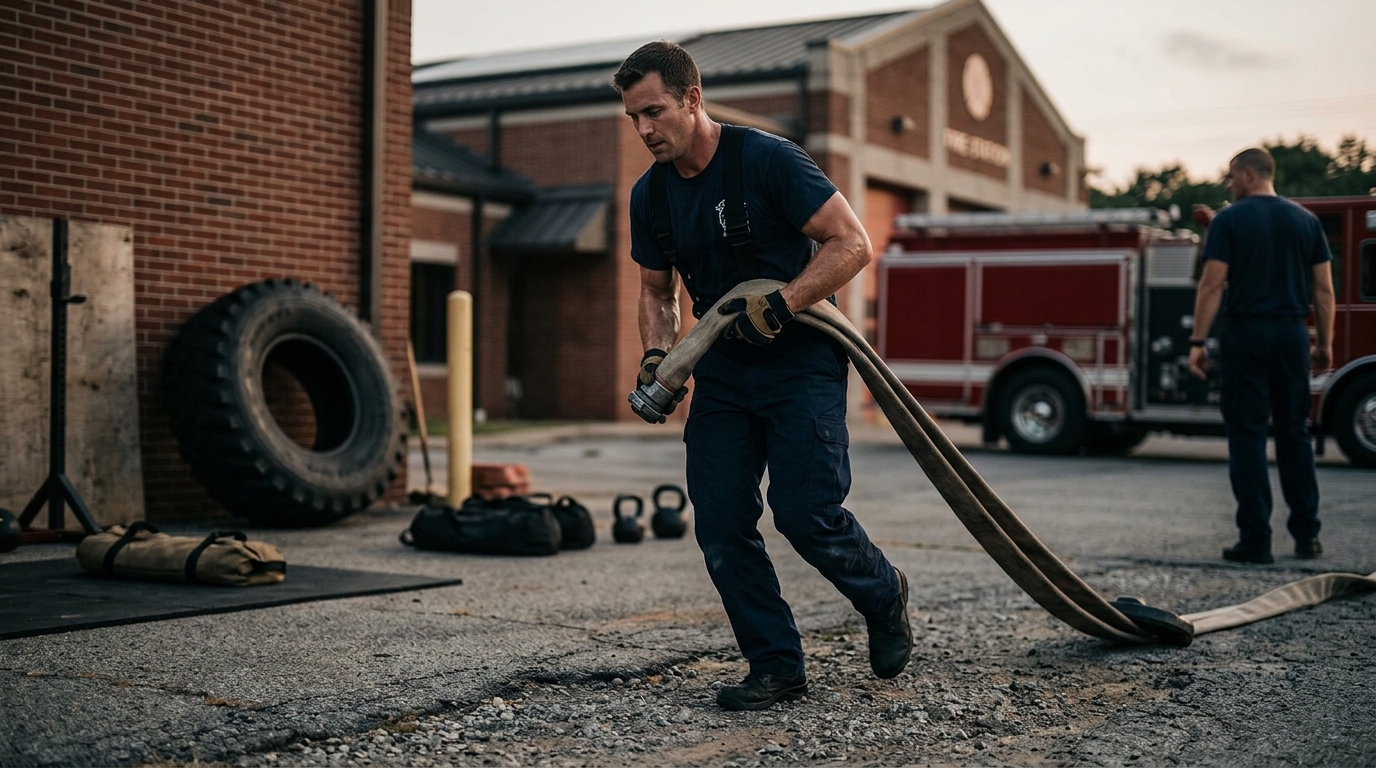
Firefighting remains one of the most physically demanding professions in the world. The job requires a unique blend of raw power, cardiovascular stamina, and muscular endurance to perform tasks like dragging hoses, climbing ladders, and rescuing victims in zero-visibility conditions. According to the National Institute for Occupational Safety and Health, physical fitness is directly correlated with reduced injury rates and improved job performance among first responders. This guide details the most effective exercises and training protocols designed specifically for the functional demands of the fire service.
Functional Strength Training Essentials
Generic gym routines often fail to prepare firefighters for the unpredictability of the fireground. Functional strength training focuses on movements that mimic real-world tasks. The primary goal is to build a body that can handle heavy loads, maintain balance under fatigue, and generate power quickly.
Deadlifts and Squats
Compound lifts are the foundation of firefighter strength. The deadlift mimics lifting heavy equipment or victims from the floor. It strengthens the posterior chain, including the glutes, hamstrings, and lower back, which are critical for safe lifting mechanics. Squats build the leg strength necessary for climbing stairs while carrying gear. These exercises must be performed with strict form to prevent injury, especially when fatigue sets in during long shifts.
Loaded Carries
Firefighters rarely lift objects in isolation. They often carry heavy loads over distance. Farmer's carries and suitcase carries simulate dragging hoses or carrying equipment up multiple flights of stairs. This exercise builds grip strength, core stability, and shoulder endurance simultaneously. A strong grip is essential for maintaining control of tools and victims in chaotic environments.
Push and Pull Mechanics
Upper body pushing and pulling strength is vital for tasks like forcing doors, breaking windows, and operating axes. Overhead presses and pull-ups are excellent for building this capacity. However, functional training also includes horizontal pushing and pulling, such as push-ups and rows, which mimic pushing victims to safety or pulling heavy debris. Balancing these movements ensures muscular symmetry and reduces the risk of shoulder injuries.

Cardiovascular Endurance for the Fireground
Cardiovascular fitness is not just about running long distances. Firefighting requires anaerobic bursts of energy followed by periods of relative rest. This type of training improves the body's ability to recover quickly between intense efforts.
High-Intensity Interval Training (HIIT)
HIIT protocols simulate the stop-and-start nature of firefighting. Short bursts of maximum effort, such as sprinting or burpees, followed by brief rest periods, improve both aerobic and anaerobic capacity. This type of training helps firefighters maintain performance during the initial attack phase of a fire and recover before the next task. Research indicates that interval training is more time-efficient and specifically beneficial for occupational fitness than steady-state cardio alone.
Stair Climbing and Step-Ups
Many fire calls require climbing multiple flights of stairs while wearing a Self-Contained Breathing Apparatus (SCBA) and full gear. Stair climbing machines or weighted step-ups build the specific leg endurance needed for this task. Adding weight to simulate gear load increases the specificity of the training. This method prepares the cardiovascular system for the heavy oxygen demand of climbing in protective clothing.
The Role of Kettlebell Training
Kettlebells have become a staple in firefighter fitness programs due to their versatility and ability to generate power. They are particularly effective for developing explosive strength and endurance simultaneously.
Kettlebell training is defined as a method of exercise using cast-iron weights with a handle to perform dynamic movements that engage multiple muscle groups. The unique center of mass of the kettlebell challenges stability and coordination in ways that traditional dumbbells cannot. Movements like swings, cleans, and snatches build posterior chain power and cardiovascular endurance. These exercises are highly efficient for improving functional fitness in a short amount of time.
For firefighters, the kettlebell swing is often considered the #1 tool for functional strength. It teaches hip hinge mechanics, which are crucial for safe lifting. It also builds the explosive hip power needed for tasks like breaching doors or moving heavy objects quickly. The rhythmic nature of kettlebell flows also helps develop mental toughness and focus under physical stress.
Core Stability and Injury Prevention
A strong core is not just about having visible abs. It is about creating a stable platform for the limbs to move from. Firefighters often work in awkward positions, requiring immense core engagement to protect the spine.
Anti-Rotation and Anti-Extension
Exercises that resist movement are often more beneficial than those that create movement. Pallof presses and plank variations teach the core to stabilize the spine against external forces. This is critical when carrying heavy loads on one side of the body or when being pushed by wind or fire dynamics. Anti-rotation exercises improve balance and reduce the risk of lower back pain, a common complaint among first responders.
Dynamic Core Work
While stability is key, dynamic core exercises also play a role. Exercises like hanging leg raises and Russian twists build the endurance of the abdominal muscles. This endurance is necessary for maintaining proper posture and breathing patterns during long, physically demanding shifts. A fatigued core leads to poor lifting mechanics and increased injury risk.
Comparing Training Approaches
Choosing the right training program depends on individual goals, current fitness levels, and access to equipment. Below is a comparison of common approaches for firefighter fitness.
| Training Approach | Primary Benefit | Best For | Equipment Needed |
|---|---|---|---|
| Functional First Responder Program | Job-specific simulation and readiness | Active firefighters preparing for CPAT | Gym access, optional gear |
| Kettlebell Foundations | Explosive power and endurance | Those seeking efficient, full-body workouts | Kettlebells |
| Online Coaching | Personalized accountability and adaptation | Individuals needing structure and guidance | Varies by plan |
| Bodyweight Calisthenics | Portability and functional strength | Training on shift or at home | None |
Key Takeaways
- Functional strength training, including deadlifts and loaded carries, is essential for mimicking fireground tasks.
- Cardiovascular endurance must include high-intensity intervals to simulate the stop-and-start nature of firefighting.
- Kettlebell training provides a unique combination of power development and endurance, making it highly effective for first responders.
- Core stability exercises that resist rotation and extension are critical for preventing lower back injuries.
- Specific programs like the 4-Week Functional First Responder Training Program offer targeted preparation for physical ability tests.
- Joining a community of peers, such as those in the Online Coaching Program, improves accountability and long-term success.
- Consistency in training is more important than intensity alone for building sustainable fitness.
Frequently Asked Questions
What is the most important exercise for firefighter strength?
The deadlift is often considered the most important exercise because it builds the posterior chain strength needed for lifting heavy objects safely. It directly translates to tasks like dragging victims or equipment.
How can I improve my cardiovascular endurance for firefighting?
High-Intensity Interval Training (HIIT) and stair climbing with weighted vests are the most effective methods. They simulate the oxygen demands and physical stress of wearing gear while climbing stairs.
Is kettlebell training safe for firefighters with back issues?
When performed with proper hip hinge mechanics, kettlebell training can actually strengthen the back and prevent injury. However, individuals with existing back issues should consult a professional before starting.
What is the CPAT and how does this training help?
The Candidate Physical Ability Test (CPAT) is the standard physical exam for firefighters. Training with functional movements and specific endurance protocols prepares candidates for the test's demands, such as the stair climb and hose drag.
How often should firefighters train?
Most effective programs recommend 3 to 4 days of strength training and 2 to 3 days of cardio per week. Rest days are crucial for recovery and injury prevention.
Can I train for firefighter fitness at home?
Yes, bodyweight exercises and kettlebell workouts can be done at home. Programs like the Firefighter Kettlebell Foundations provide accessible plans for home training.
Why is functional fitness better than bodybuilding?
Functional fitness focuses on movement patterns and endurance relevant to the job, whereas bodybuilding focuses on muscle size. Firefighters need strength and stamina, not just aesthetics, to perform their duties safely.
Start Your Transformation
Improving your strength and endurance is not just about looking good. It is about protecting yourself, your crew, and the community you serve. The demands of the fireground require a body that is ready for anything. Join the Everyday Heroes Fitness community and access proven systems designed specifically for first responders. Whether you need a quick start with the 4-Week Functional First Responder Training Program or long-term guidance through Online Coaching, the path to readiness starts here. Apply now to regain your confidence and drive.