
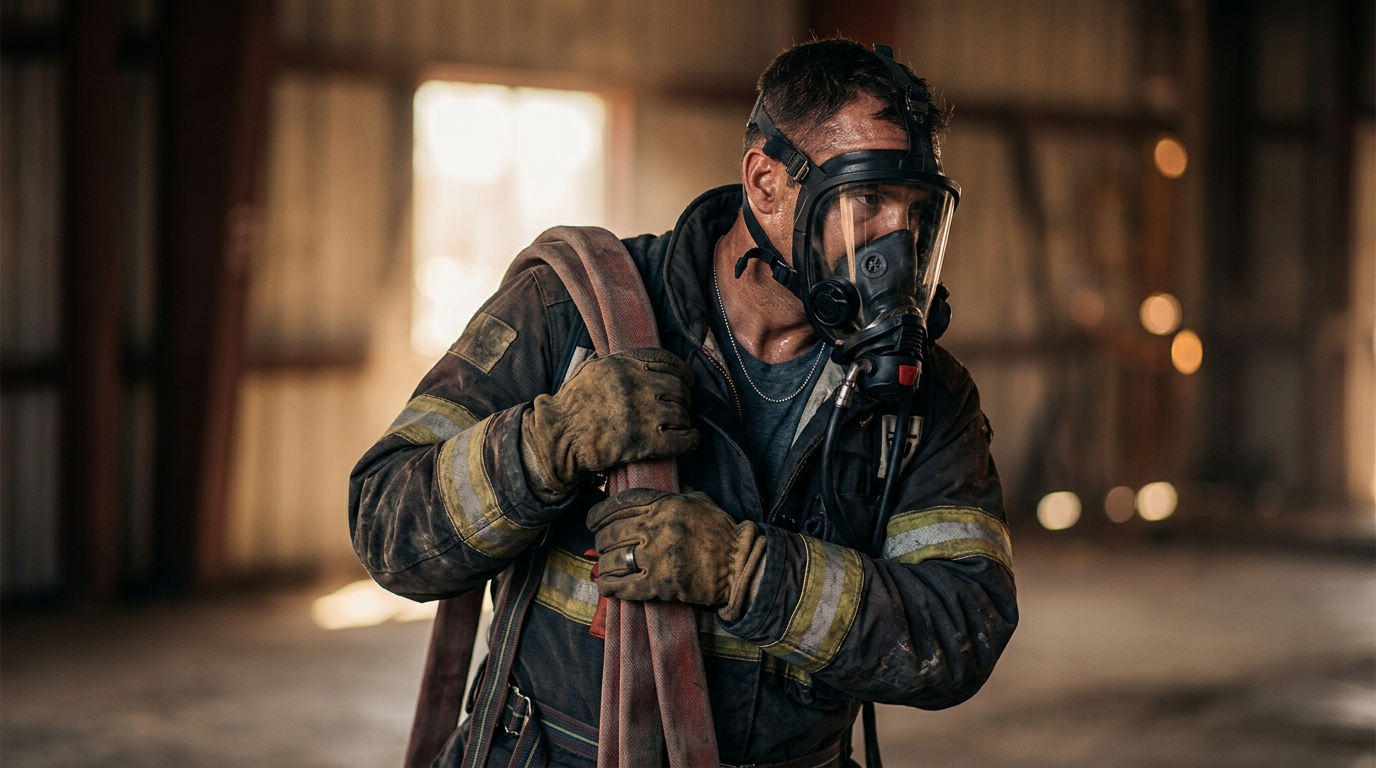
Firefighting remains one of the most physically demanding professions in the world. The average firefighter must carry over 100 pounds of gear while navigating unstable environments, often under extreme heat and stress. According to the National Fire Protection Association, physical fitness is a critical component of job performance and injury prevention. This guide explores how specialized functional training bridges the gap between gym strength and fireground readiness. (Online Coaching for Firefighters)
Why Standard Gym Training Fails Firefighters
Many firefighters enter the gym with the intention of getting stronger, yet they often find that their gains do not translate to the firehouse. This disconnect usually stems from a reliance on isolated machine exercises. Standard bodybuilding routines focus on aesthetic muscles rather than the kinetic chains required for real-world tasks.
Functional fitness is defined as the ability to perform daily or occupational tasks with efficiency and safety. For a firefighter, this means moving heavy loads, climbing stairs, and dragging hoses while wearing a self-contained breathing apparatus (SCBA). Research indicates that traditional strength training without sport-specific application can lead to muscle imbalances that increase injury risk on the job.
The core principle of firefighter fitness is not just about how much weight you can lift, but how you move it. Compound movements that engage multiple muscle groups simultaneously mimic the unpredictable nature of a fireground. This approach ensures that strength is usable, not just visible.
Functional Movements That Matter
To build a body that serves the job, training must prioritize multi-planar movements. These exercises replicate the rotational, lifting, and carrying demands of firefighting. Below are the critical movement patterns that every firefighter should master.
1. Loaded Carries
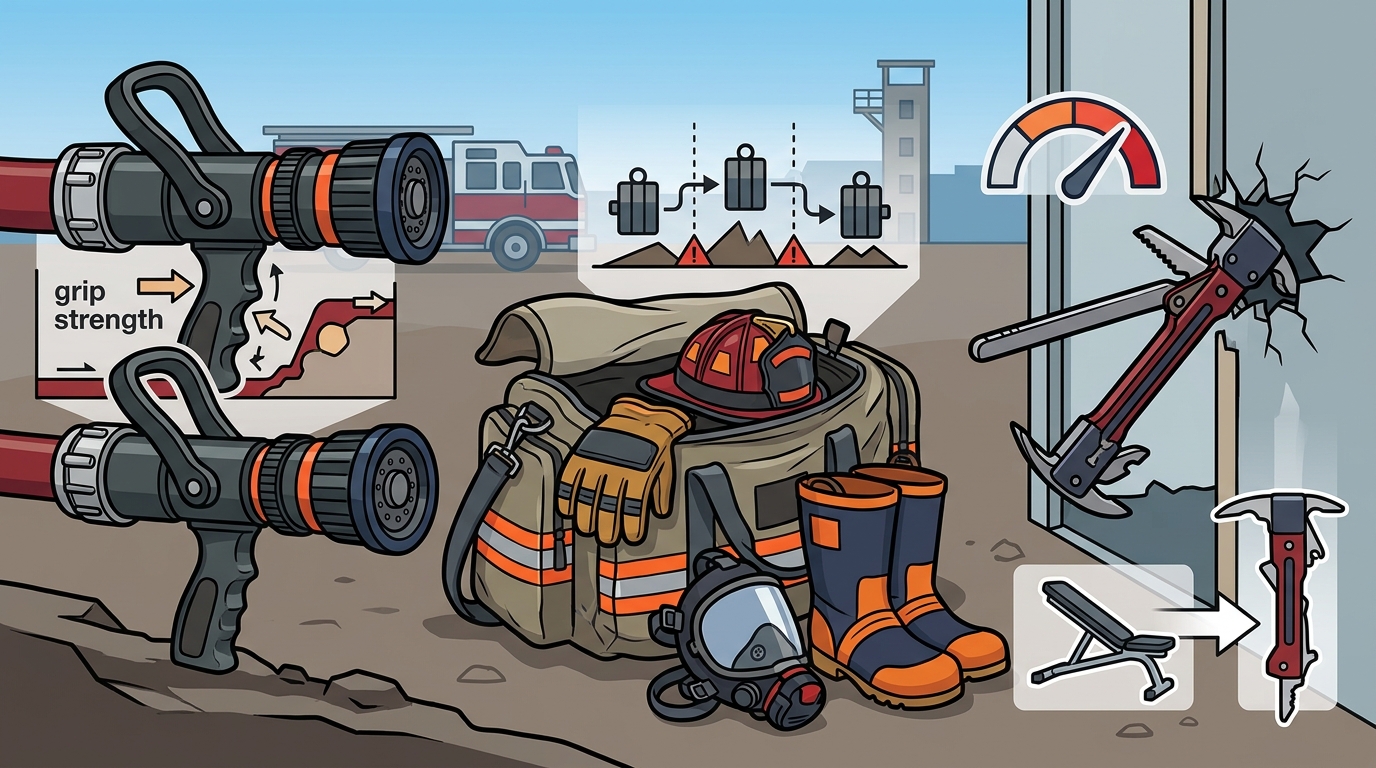
Loaded carries are perhaps the most direct translation of fireground work. Whether it is dragging a victim or carrying heavy equipment, the ability to stabilize the spine while moving under load is paramount. Farmer's walks, suitcase carries, and yoke walks build tremendous grip strength and core stability.
According to data from occupational health studies, grip strength is a significant predictor of overall functional capacity in first responders. Weak grip often leads to premature fatigue when handling hoses or tools. Incorporating heavy carries into your weekly routine ensures that your hands and forearms do not become the weak link during a critical operation.
2. Single-Leg Stability
Firefighting is rarely symmetrical. You will often be climbing uneven terrain, dragging equipment with one hand, or balancing on a ladder. Single-leg exercises like Bulgarian split squats and single-leg deadlifts address these imbalances. They force the body to stabilize itself, reducing the risk of ankle and knee injuries.
Functional fitness is defined as the capacity to execute complex physical tasks with minimal energy expenditure and maximum safety. Single-leg work enhances proprioception, which is your body's ability to sense its position in space. This is vital when navigating smoke-filled rooms or unstable structures.
3. Rotational Power
Many fireground tasks involve twisting motions, such as turning a heavy valve or swinging a sledgehammer. Rotational power training, using tools like medicine balls or kettlebells, prepares the obliques and thoracic spine for these demands. Without proper rotational strength, firefighters are more susceptible to lower back injuries.
A study published in the Journal of Strength and Conditioning Research highlights that rotational power correlates strongly with performance in tasks requiring rapid force generation. Training these muscles ensures that you can generate power quickly without compromising your structural integrity.
Cardio and Endurance for the Fireground
Strength alone is not enough. The fireground is a high-intensity interval environment. You may spend minutes of intense exertion followed by brief periods of relative rest, only to repeat the cycle. This requires a specific type of cardiovascular conditioning known as anaerobic capacity.
Standard long-distance running builds aerobic base but does not adequately prepare the body for the sudden bursts of energy required in firefighting. Instead, high-intensity interval training (HIIT) mimics the physiological stress of a call. Sprints, burpees, and rowing intervals elevate the heart rate rapidly, training the body to recover quickly between efforts.
According to the International Association of Fire Fighters, cardiovascular health is the leading factor in preventing cardiac events among firefighters. The heart is a muscle that must be trained specifically for the demands of the job. Neglecting this aspect of fitness can lead to premature fatigue and increased risk of heart strain during operations.
Integrating circuit training into your routine allows you to build both strength and endurance simultaneously. By minimizing rest periods between sets, you simulate the continuous nature of fireground work. This approach ensures that your lungs and heart can keep up with your muscles.
Nutrition and Recovery Strategies
Training is only half the equation. Nutrition and recovery are the pillars that support your physical performance. Firefighters often work irregular shifts, which can disrupt circadian rhythms and make consistent eating difficult. However, fueling the body correctly is non-negotiable for maintaining peak performance.
Protein intake is critical for muscle repair and growth. Aim for a consistent intake of lean proteins such as chicken, fish, or plant-based alternatives after every workout. Carbohydrates provide the immediate energy needed for high-intensity training, while healthy fats support hormonal health and long-term energy storage.
Hydration is equally important. Firefighters lose significant amounts of fluid through sweat, especially during training or actual calls. Dehydration impairs cognitive function and physical performance. Monitoring urine color and drinking water consistently throughout the day is a simple yet effective strategy.
Recovery includes sleep, mobility work, and active rest. Sleep is when the body repairs tissue and consolidates memory. Poor sleep quality can lead to decreased reaction times and increased injury risk. Incorporating mobility routines, such as those found in our free training guides, can help maintain joint health and prevent stiffness.
CPAT Preparation and Testing
For those looking to enter the profession or maintain their eligibility, the Candidate Physical Ability Test (CPAT) is a standard requirement. This test simulates essential job tasks and must be passed with a specific heart rate threshold. Failing the CPAT is often due to poor pacing or lack of specific conditioning rather than a lack of raw strength.
The CPAT includes events such as the stair climb, hose drag, forcible entry, and victim rescue. Each event requires a different energy system. The stair climb tests aerobic endurance, while the hose drag tests anaerobic power. A balanced training program addresses all these components.
Our online coaching program is designed specifically to prepare first responders for the CPAT. We provide customized programming that aligns with the test's demands, ensuring that you are not just fit, but test-ready. Many of our clients have successfully passed their CPAT after following our structured plans.
Understanding the scoring criteria is also vital. The CPAT is a pass/fail test, but performance matters for future promotions and job assignments. Training with the specific equipment used in the test, such as weighted vests and hose dummies, can provide a significant advantage on test day.
Key Takeaways
- Functional Over Aesthetic: Prioritize compound movements that mimic fireground tasks over isolated machine exercises.
- Loaded Carries: Incorporate heavy carries to build grip strength and core stability essential for equipment handling.
- Interval Training: Use HIIT to develop the anaerobic capacity required for sudden bursts of exertion.
- Nutrition Timing: Consume adequate protein and carbohydrates to support recovery and energy levels during irregular shifts.
- CPAT Specificity: Train with equipment similar to the CPAT to improve familiarity and performance.
- Recovery Priority: Sleep and mobility work are as important as the training itself for injury prevention.
- Community Support: Engaging with a community of first responders can provide accountability and shared knowledge.
Frequently Asked Questions
How often should a firefighter train?
Most firefighters benefit from training three to four times per week. This frequency allows for sufficient stimulus while providing adequate recovery time. Consistency is more important than volume.
What is the best type of cardio for firefighters?
High-intensity interval training (HIIT) is generally more effective than steady-state cardio because it mimics the stop-start nature of firefighting. It improves both aerobic and anaerobic systems.
How can I improve my grip strength for hose work?
Loaded carries, such as farmer's walks and dead hangs, are the most effective ways to build grip strength. Additionally, using thick-bar attachments during lifting can further challenge your forearms.
Is the CPAT the same for all departments?
While the CPAT is a standardized test used by many departments, some may have additional requirements or variations. It is always best to check with your specific department for their exact criteria.
How does nutrition impact fireground performance?
Nutrition directly impacts energy levels, recovery speed, and cognitive function. Poor nutrition can lead to fatigue and decreased reaction times, which are dangerous in high-stress environments.
Can I train at home without a gym?
Yes, many effective workouts can be done at home using bodyweight exercises and minimal equipment like kettlebells or resistance bands. Our resources page offers free guides for home training.
What is the role of mobility in firefighter fitness?
Mobility work helps maintain range of motion and prevents injuries. It is essential for counteracting the stiffness that comes from wearing heavy gear and performing repetitive movements.
How long does it take to see results from functional training?
Most individuals notice improvements in strength and endurance within four to six weeks of consistent training. Significant changes in body composition and performance may take three to six months.
Start Your Journey
Firefighting is a calling that demands the best from your body and mind. Investing in your fitness is not just about personal health; it is about ensuring you can protect your community and your brothers and sisters in arms. The gap between being fit and being fire-ready is bridged by specialized, functional training.
Everyday Heroes Fitness is dedicated to helping first responders achieve their peak performance. Our program is built by firefighters, for firefighters, ensuring that every exercise has a direct application to the job. Join over 1,000 first responders who have transformed their fitness and their careers.
Do not wait for an injury or a failed test to motivate you. Take control of your physical readiness today. Apply for coaching now and start your journey to becoming the strongest, most capable firefighter you can be.