
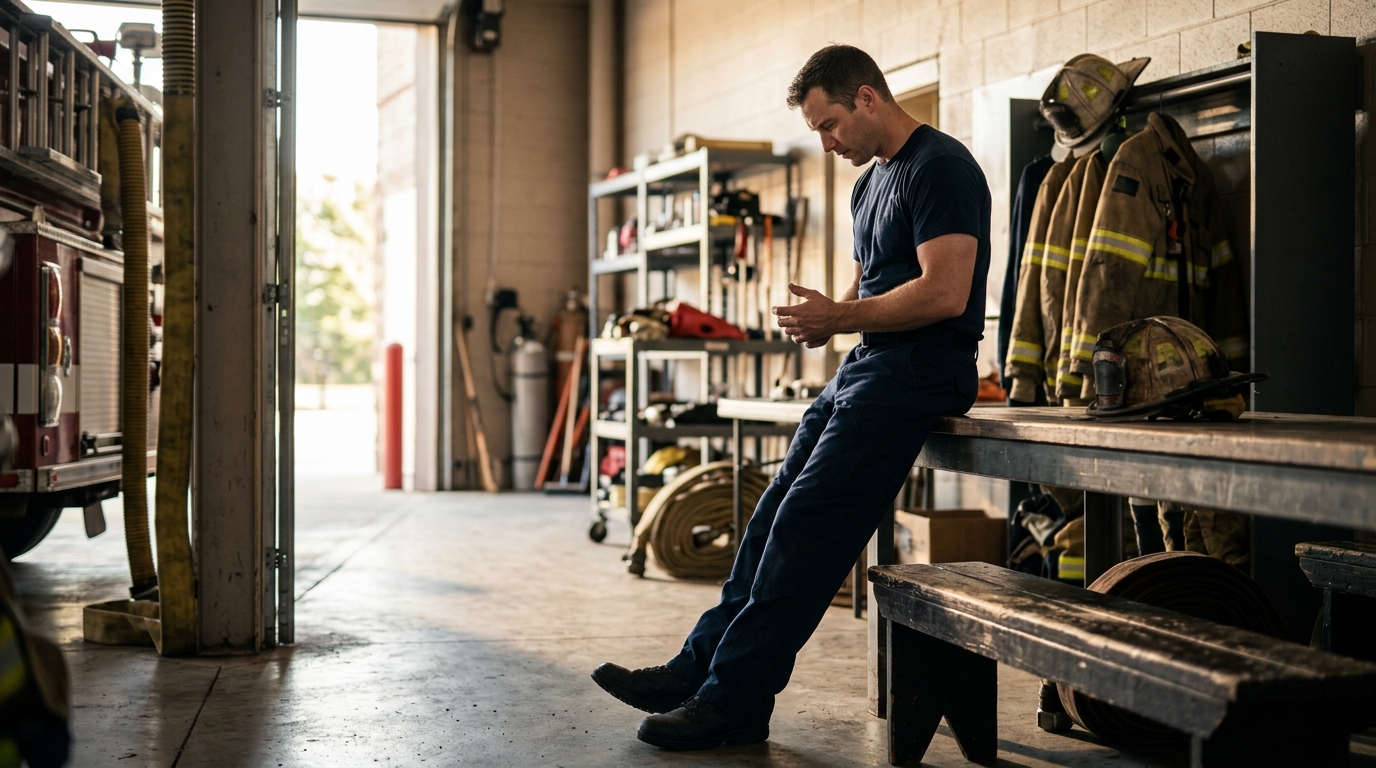
There is a conversation happening in firehouses across the country that rarely makes it outside the bay doors. It sounds like this: "I'm worried I can't pull my weight anymore." The fear of being a liability — of slowing down your crew, failing during a rescue, or suffering a cardiac event on the fireground — eats at firefighters quietly. This article unpacks where that fear comes from and, more importantly, what you can do about it.
The Uncomfortable Gap Between Perception and Reality
The public imagines firefighters in peak physical condition. The data tells a different story. Multiple studies have revealed a significant disconnect between the physical demands of the job and the actual fitness levels of many firefighters. A study by Poston et al. (2011) found that only 30 percent of the firefighters studied met CDC aerobic activity recommendations, and just 40 percent met strength-training guidelines. These numbers matter because fireground performance depends on both cardiovascular fitness and muscular strength.
That gap is where the feeling of being a liability takes root. When you know — in your body — that you are falling short of what the job demands, the psychological toll follows. Every call becomes a private stress test you are not sure you can pass.
Why the Stakes Are Uniquely High
Firefighting is not a desk job where a bad day means missed deadlines. The physical and mental demands are unlike those found in many other professions, requiring a high level of strength, endurance, cardiovascular health, and grit. Firefighters regularly battle extreme heat, carry heavy equipment, advance hoselines, and rescue victims — all while wearing up to 75 pounds of protective gear that reduces physical efficiency by roughly one-third.
The consequences of inadequate fitness are severe. Cardiovascular disease is the leading cause of line-of-duty deaths among firefighters. The injury rate in firefighting is estimated to be four to five times greater than in other occupations. And the most common injuries — sprains, strains, and muscular pain — are caused overwhelmingly by overexertion and falls, the exact scenarios that better conditioning could prevent.
The Psychology of Feeling Like a Liability
Physical deconditioning does not happen overnight. It creeps in over years of shift work, inconsistent training, and the sedentary hours between calls. Some firefighters train sporadically, exercising before an annual assessment and stopping once it is over. But physical fitness must be maintained year-round since the need to perform demanding tasks may arise at any time.
The psychological impact follows a predictable pattern:
- Avoidance — You start dreading calls that require peak output. You hang back during training evolutions.
- Comparison — You watch younger or fitter crew members handle tasks you used to own and feel the distance growing.
- Shame — You know your crew depends on you. The gap between who you are and who you need to be becomes a source of silent guilt.
- Withdrawal — Some firefighters begin counting years to retirement instead of investing in the years they have left.
None of this makes someone a bad firefighter. It makes them a human being experiencing the natural result of a system that, in many departments, lacks structured fitness support. Research from the NFPA in 2021 indicated that 72 percent of fire departments did not have programs to maintain firefighter health and wellness.
The Five Pillars of Regaining Physical Confidence
Rebuilding confidence is not about running a single brutal workout or white-knuckling through a fitness test. It is about building a sustainable system that reconnects your body to the demands of your job. Here are five pillars that work.
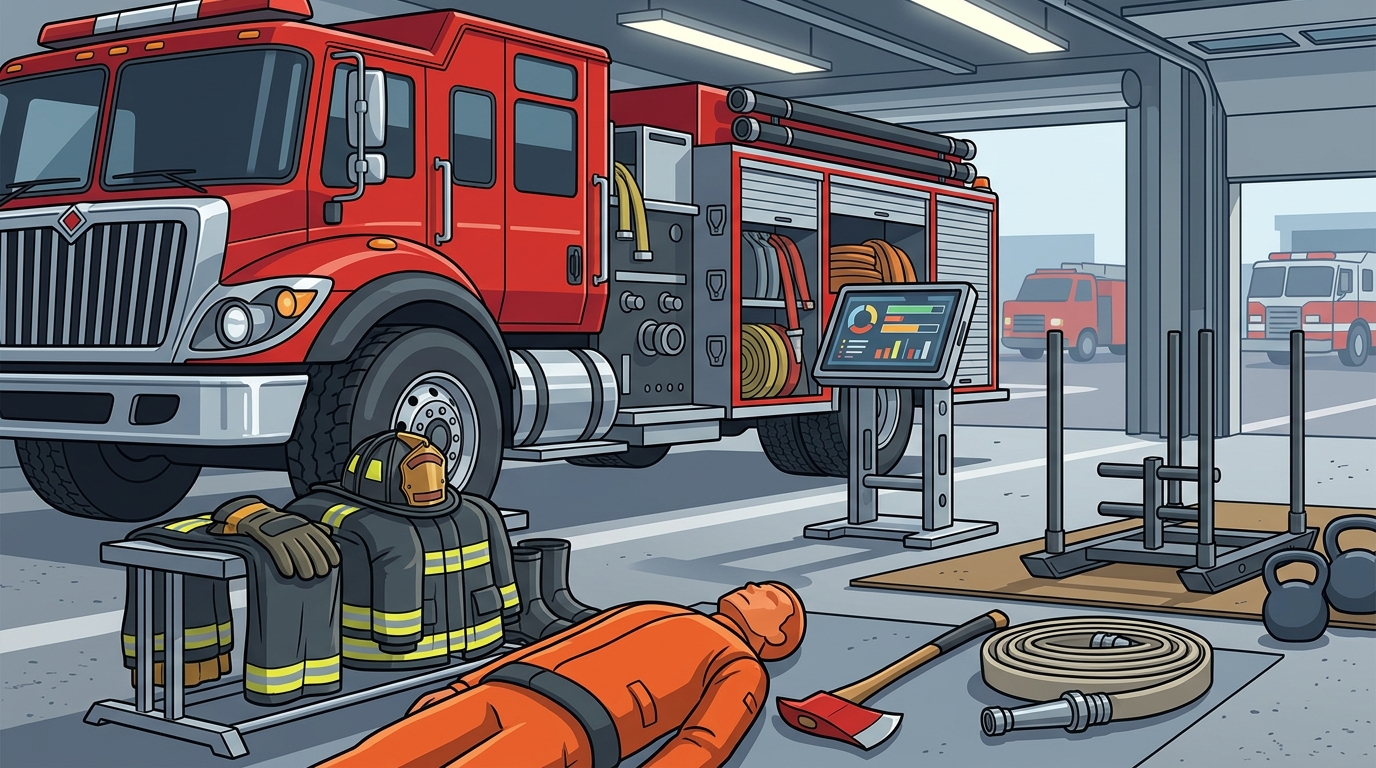
Pillar 1: Establish Your Baseline Honestly
You cannot close a gap you have not measured. Five practical assessments can give you a clear picture of where you stand:
- Plank hold — Tests core endurance, which stabilizes your entire body under load.
- 1.5-mile run — One of the easiest ways to track aerobic capacity, widely considered the best indicator of cardiovascular fitness and aerobic endurance for firefighters.
- Standing broad jump — A pure gauge of raw power, requiring several muscle groups to fire at once. The stronger and more explosive you are, the more force you generate.
- Deadlift or trap-bar deadlift — Measures posterior chain strength critical for lifting and dragging.
- Farmer's carry for distance — Tests grip endurance and loaded locomotion, directly mimicking equipment transport.
Record your numbers. They are your starting point, not your verdict.
Pillar 2: Train Movements, Not Muscles
Firefighting demands functional, multi-joint movements under fatigue. A program built around isolation exercises misses the point. Instead, map your training to actual fireground tasks:
| Exercise | Fireground Application |
|---|---|
| Lunge | Stair and ladder climb, balance, coordination |
| Bench Press | Hoseline operation, forcible entry |
| Overhead Press | Hoseline operation, pulling ceilings |
| Rowing | Heavy power tool operation, roof sawing |
| Deadlift | Equipment carries, victim drags |
| Push-ups | Hoseline operation, hand tool use |
These compound movements build the kind of integrated strength that transfers directly to the job. Shoulder strength and endurance are especially essential in firefighting, as overhead pressing mimics the demands of hoseline work and ceiling pulls.
Pillar 3: Build Your Engine With Purpose
Aerobic capacity is the foundation of fireground performance. The more efficiently you utilize oxygen, the more effective you can be on the fireground. But cardiovascular training for firefighters should not mean endless slow jogging. The job demands both sustained effort and explosive bursts.
A practical weekly cardiovascular template:
- 2 sessions of steady-state cardio (30–45 minutes at a conversational pace) — builds aerobic base and recovery capacity.
- 1–2 sessions of interval work — track sprints, rowing intervals, or stair running with a weight vest simulate the anaerobic demands of an aggressive interior attack.
- 1 session of loaded conditioning — sled drags, sandbag carries, or hose-pull circuits that replicate fireground energy systems.
The goal is to build a cardiovascular system that handles the sudden, intense energy demand required to fight a fire — the exact scenario that puts a deconditioned firefighter in grave danger.
Pillar 4: Prioritize Flexibility and Mobility
This is where many firefighters leave performance on the table. Flexibility and balance are critical factors in achieving peak physical potential, but they are frequently overlooked. A good stretching routine should precede and follow every workout.
The payoff is significant:
- Increased physical efficiency and performance
- Improved neuromuscular coordination
- Better balance and posture under load
- Reduced stress and tension
- Lower risk of the strains and sprains that remain the most prevalent firefighter injury
Firefighters work in restrictive areas, on slippery or uneven surfaces, with awkward and heavy loads, and must move rapidly. Mobility is not a luxury — it is operational insurance.
Pillar 5: Build Accountability Into the Culture
Individual motivation fades. Culture endures. The most successful firehouses integrate fitness into the daily routine rather than treating it as a personal hobby. When fitness is treated as a standard job requirement rather than a personal goal, it becomes integrated into the firehouse's daily routine.
Practical ways to build accountability:
- Structured crew workouts — Train together during shift. Many departments allow 1.5 hours of fitness time built into the workday.
- Peer fitness trainers — Certified crew members who can coach proper form and program design.
- Quarterly benchmark testing — Regular assessments help identify individuals who may need additional support or training, preventing injury and reducing the likelihood of line-of-duty incidents.
- Shared goals — Team challenges like rowing marathons or department fitness competitions build camaraderie alongside conditioning.
A Realistic 12-Week Re-Entry Framework
For the firefighter who has been away from consistent training, here is a phased approach:
Weeks 1–4: Rebuild the Foundation
- 3 days per week of full-body functional training (moderate intensity)
- 2 days of 20–30 minute steady-state cardio (brisk walking, cycling, swimming)
- Daily 10-minute mobility routine targeting hips, shoulders, and thoracic spine
- Focus: Movement quality over load. Re-establish the habit.
Weeks 5–8: Build Capacity
- 4 days per week of training — 2 upper/lower splits with fireground movements
- Add one interval session per week (e.g., 4 x 400m run with 2-minute recovery)
- Begin loaded carries (farmer's walks, sandbag carries) at moderate weight
- Focus: Progressive overload. Add weight or reps systematically each week.
Weeks 9–12: Fireground Simulation
- 4–5 days per week combining strength and conditioning
- Introduce circuit-style sessions mimicking fireground task sequences: stair climb → hose drag → equipment carry → forcible entry simulation
- Retest all five baseline assessments
- Focus: Confidence under fatigue. Train the way you work.
By week 12, the goal is not perfection. It is a measurable, undeniable difference from where you started — and the psychological shift that comes with knowing your body can do what the job demands.
Addressing the Mental Side
Physical confidence and mental health are deeply linked for firefighters. Aerobic exercise performed three to five times a week for 30 to 60 minutes has been shown to provide meaningful mental health benefits. When you trust your body, you approach calls with focus instead of fear. When you know your crew can count on you, the shame cycle breaks.
If the feeling of being a liability has been present for months or years, consider that physical deconditioning may be feeding anxiety, depression, or burnout. Rebuilding fitness is not the only answer — but it is often the first domino.
Key Takeaways
- The gap between firefighter fitness levels and job demands is well-documented and is the root cause of feeling like a liability.
- Cardiovascular disease is the leading killer of firefighters on duty — fitness is literally a life-or-death issue.
- Sprains, strains, and overexertion injuries remain the most common — and most preventable — firefighter injuries.
- Functional, fireground-specific training beats generic gym routines for building occupational confidence.
- Flexibility and mobility are not optional; they reduce injury risk and improve performance in the restrictive, unpredictable environments firefighters face.
- Department culture matters: 72 percent of fire departments lack wellness programs, making personal initiative critical while advocating for systemic change.
- A 12-week progressive framework can create measurable physical improvement and break the cycle of doubt.
Frequently Asked Questions
Why do firefighters feel like a liability on calls?
The feeling stems from a real gap between fitness levels and job demands. When physical conditioning declines — often gradually over years of shift work — firefighters sense they cannot meet the explosive demands of the fireground. This creates a cycle of anxiety, avoidance, and shame that reinforces itself with every call.
What are the most common injuries that sideline firefighters?
Sprains, strains, and muscular pain are the most prevalent injury type among firefighters. They are most commonly caused by overexertion and strain, followed by falls, jumps, and slips during fireground operations.
How often should firefighters train to maintain fireground readiness?
A minimum of three to five sessions per week combining aerobic exercise and strength training is supported by research. Critically, training must be consistent year-round — not just before annual assessments — because emergency demands can arise at any moment.
What does a firefighter-specific workout program look like?
It centers on functional compound movements mapped to fireground tasks: deadlifts for equipment carries, lunges for stair climbing, overhead presses for hoseline work, and rowing for power tool operation. Cardiovascular training should include both steady-state and high-intensity interval work, plus dedicated flexibility sessions.
Can older firefighters regain physical confidence after years of deconditioning?
Yes. While injury data shows that career firefighter injuries peak between ages 40 and 44, a structured progressive program can reverse deconditioning at any age. Starting with mobility and aerobic base work, then layering in occupational-strength movements, is the proven approach. The 12-week framework outlined above is specifically designed for this re-entry scenario.