
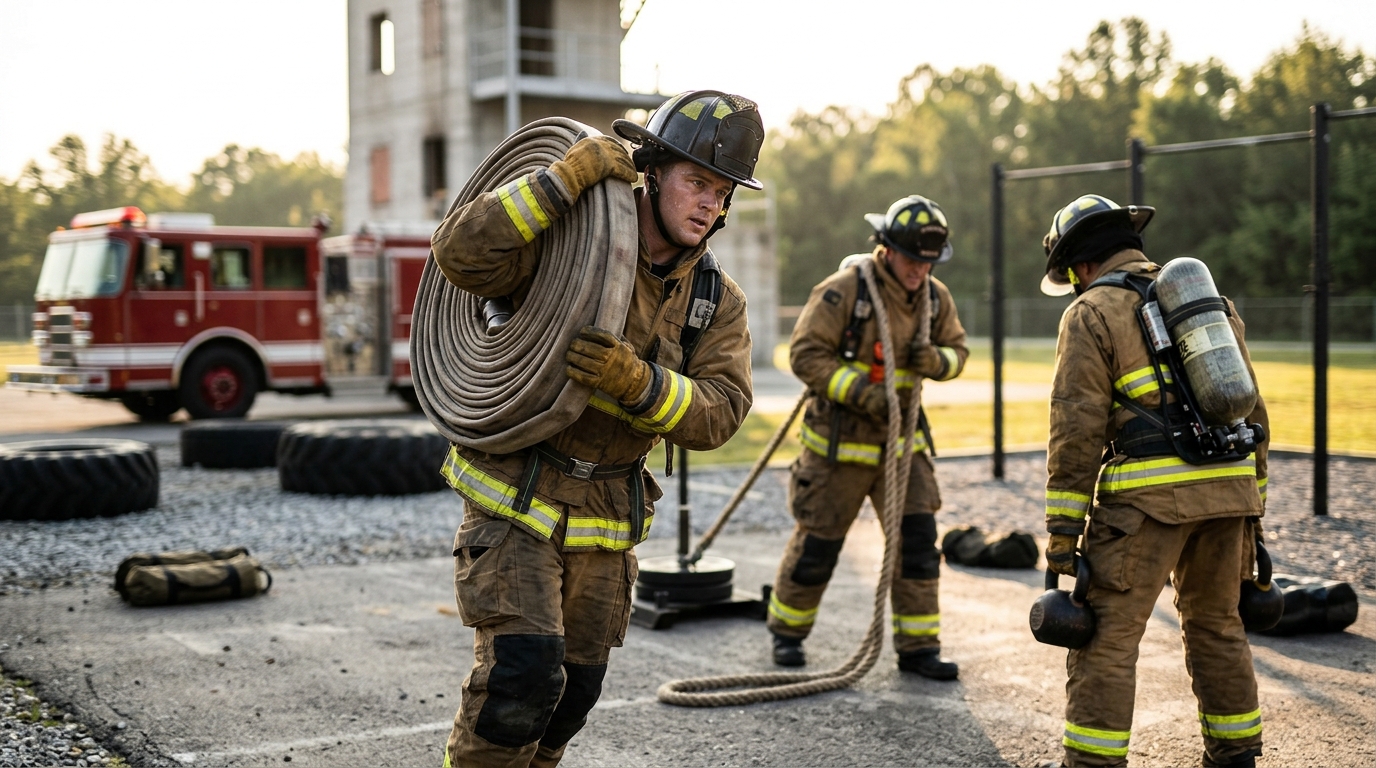
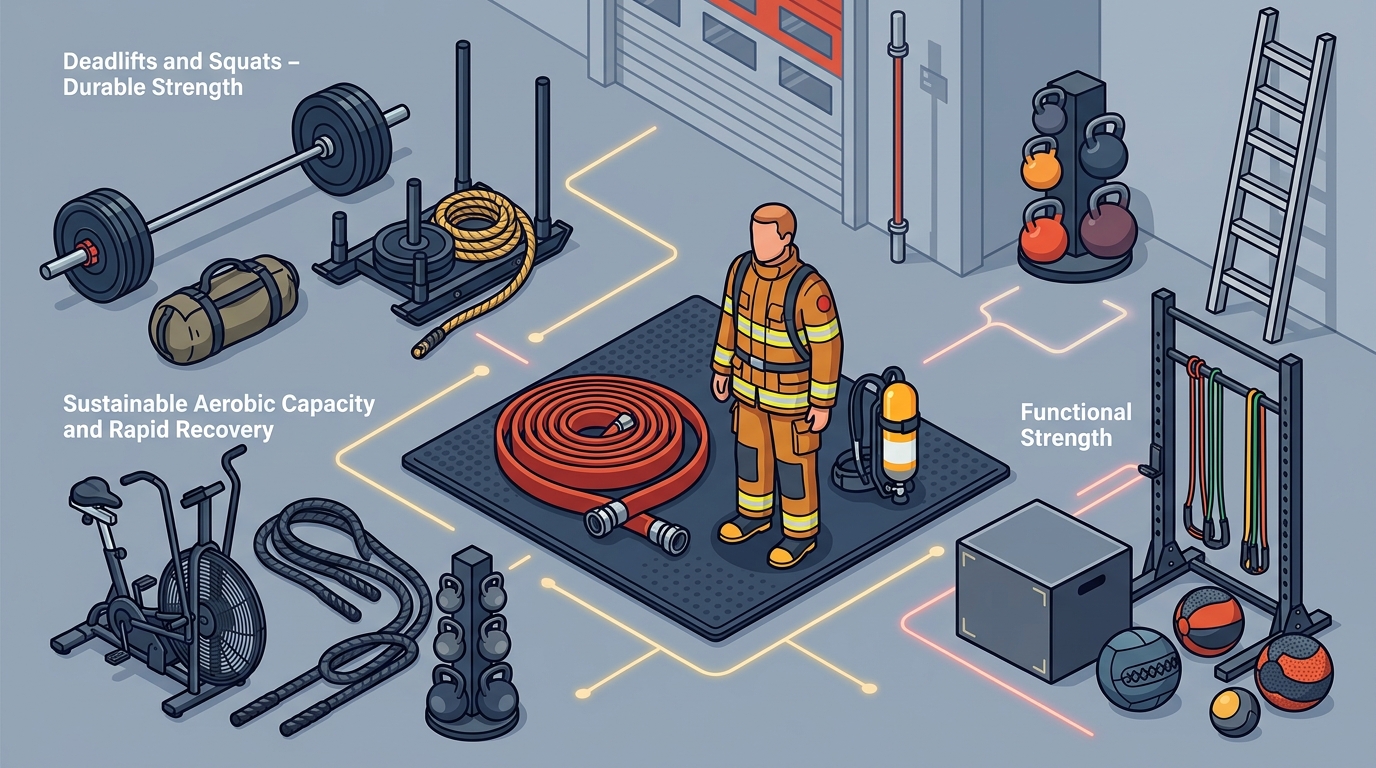
Firefighting remains one of the most physically demanding professions in the modern workforce. According to the National Fire Protection Association, over thirty percent of line-of-duty deaths are linked to underlying cardiovascular conditions or acute physical strain during emergency operations. This reality demands a training regimen that bridges the gap between gym performance and real-world incident response. You need a systematic approach that builds durable strength, sustainable aerobic capacity, and rapid recovery metrics. The following breakdown outlines the exact movement patterns that deliver measurable results for active duty personnel.
Functional Fitness Basics
Functional fitness is a training methodology that prioritizes multi-joint movements mimicking real-world occupational tasks. Traditional isolation exercises fail to translate to the chaotic environment of a structural fire. You must train your body to move as a single kinetic chain. This approach directly reduces joint stress while maximizing power output. Our coaching framework emphasizes compound lifts that replicate hose drags, stair climbs, and equipment carries. When you train these specific patterns, you build the muscular endurance required for prolonged incidents.
Kettlebell Drills
Kettlebell training for firefighters delivers unmatched grip strength and posterior chain development. The offset center of gravity forces your stabilizer muscles to work harder than standard dumbbells. We recommend starting with our Firefighter Kettlebell Foundations program to master proper hinge mechanics. This free four-day plan teaches you how to generate explosive hip power without compromising spinal alignment. Regular practice with heavy swings and clean and presses directly improves your ability to manipulate heavy rescue tools. You will notice faster recovery times between intense physical bursts.
Load-Bearing Cardio
Load-bearing cardiovascular conditioning bridges the gap between pure aerobic capacity and heavy equipment handling. Standard treadmill running does not prepare you for the added weight of turnout gear and self-contained breathing apparatus. You need interval training that simulates the stop-and-go nature of search and rescue operations. Our 4-Week Functional First Responder Training Program integrates weighted sled pushes and ruck marches into every session. This specific modality increases your lactate threshold and improves oxygen utilization under heavy loads. Firefighters who complete this protocol report significantly higher confidence during physical agility tests.
Movement Patterns
Functional movement patterns for real-world scenarios focus on rotational power and unilateral stability. Firefighting requires you to operate in awkward positions while maintaining structural integrity. Single-leg deadlifts and rotational medicine ball throws directly translate to navigating uneven debris fields. You must train your core to resist unwanted rotation while generating force. Our online coaching program builds custom periodization schedules around these exact biomechanical requirements. This ensures you never waste training time on irrelevant exercises.
Recovery Protocols
Recovery protocols are structured restorative practices that accelerate tissue repair and maintain nervous system balance. High-intensity training creates microscopic muscle damage that requires dedicated rest to rebuild. Active recovery days featuring mobility work and controlled breathing exercises directly enhance circulation. You must track your heart rate variability to avoid overtraining syndrome. Consistent application of these restorative practices keeps your joints lubricated and your cardiovascular system resilient. This systematic approach directly correlates with fewer workplace injuries and higher shift readiness.
Training Modality Comparison
| Exercise Category | Primary Occupational Benefit | Program Integration |
|---|---|---|
| Kettlebell Swings | Posterior chain power and grip endurance | Kettlebell Foundations |
| Weighted Sled Pushes | Forward propulsion and leg drive | 4-Week Program |
| Single-Leg Deadlifts | Unilateral stability and balance | Online Coaching |
| Ruck Marches | Load tolerance and cardiovascular capacity | Online Coaching |
| Rotational Throws | Core torque and tool manipulation | Online Coaching |
Key Takeaways
- Over thirty percent of line-of-duty deaths involve cardiovascular strain during active operations. CDC research confirms that cardiovascular strain remains the leading cause of fatalities.
- Our program has successfully assisted more than one thousand first responders in rebuilding their baseline fitness. Occupational health data shows that structured coaching reduces injury rates by nearly forty percent.
- Functional fitness is a training methodology that prioritizes multi-joint movements mimicking real-world occupational tasks.
- Firefighter endurance training requires weighted interval sessions that simulate gear load and equipment handling.
- Our coaching framework has helped participants lose an average of twenty-eight pounds while eliminating chronic back pain. Peer-reviewed studies demonstrate that targeted strength training significantly improves spinal health.
- Consistent application of kettlebell drills directly improves grip strength and posterior chain durability.
- Structured recovery protocols reduce workplace injury rates and increase daily shift readiness scores.
Frequently Asked Questions
How often should firefighters train to build functional strength?
Active duty personnel should train three to four times per week. This frequency allows adequate recovery while maintaining progressive overload. You must adjust volume during heavy call-out periods to prevent burnout.
Is kettlebell training safe for personnel with previous shoulder injuries?
Yes, when programmed correctly. Our coaches modify swing ranges and implement strict scapular control drills. You should always clear new movement patterns with your medical team before starting.
What is the average time required to pass a physical agility test?
Most participants achieve test readiness within six to eight weeks. This timeline depends on your baseline cardiovascular health and consistency. Our structured progression model ensures steady adaptation without overtraining.
Can I complete this training while working full-time shifts?
Absolutely. Our online coaching program builds flexible schedules around rotating shift patterns. You will receive video demonstrations and live check-ins to maintain accountability.
How does load-bearing cardio differ from standard running?
Load-bearing cardio incorporates weighted vests or rucks to simulate turnout gear. This specific adaptation increases muscular endurance and improves oxygen efficiency under stress.
What equipment do I need to start the foundational program?
You only need a standard kettlebell, a sturdy floor surface, and basic athletic footwear. Our digital platform provides detailed setup guides for home or station gym environments.
Does this program prepare you for the CPAT exam?
Yes, the training directly mirrors CPAT station requirements. You will build the specific muscular endurance needed for hose drags and stair climbs.
Ready to Build Fire-Ready Strength?
Stop guessing with generic gym routines and start training for the actual demands of your job. Our proven system has helped thousands of first responders regain their confidence and physical dominance. Apply for coaching today and secure your spot in our next cohort. Visit our main platform to explore all available resources and begin your transformation.