
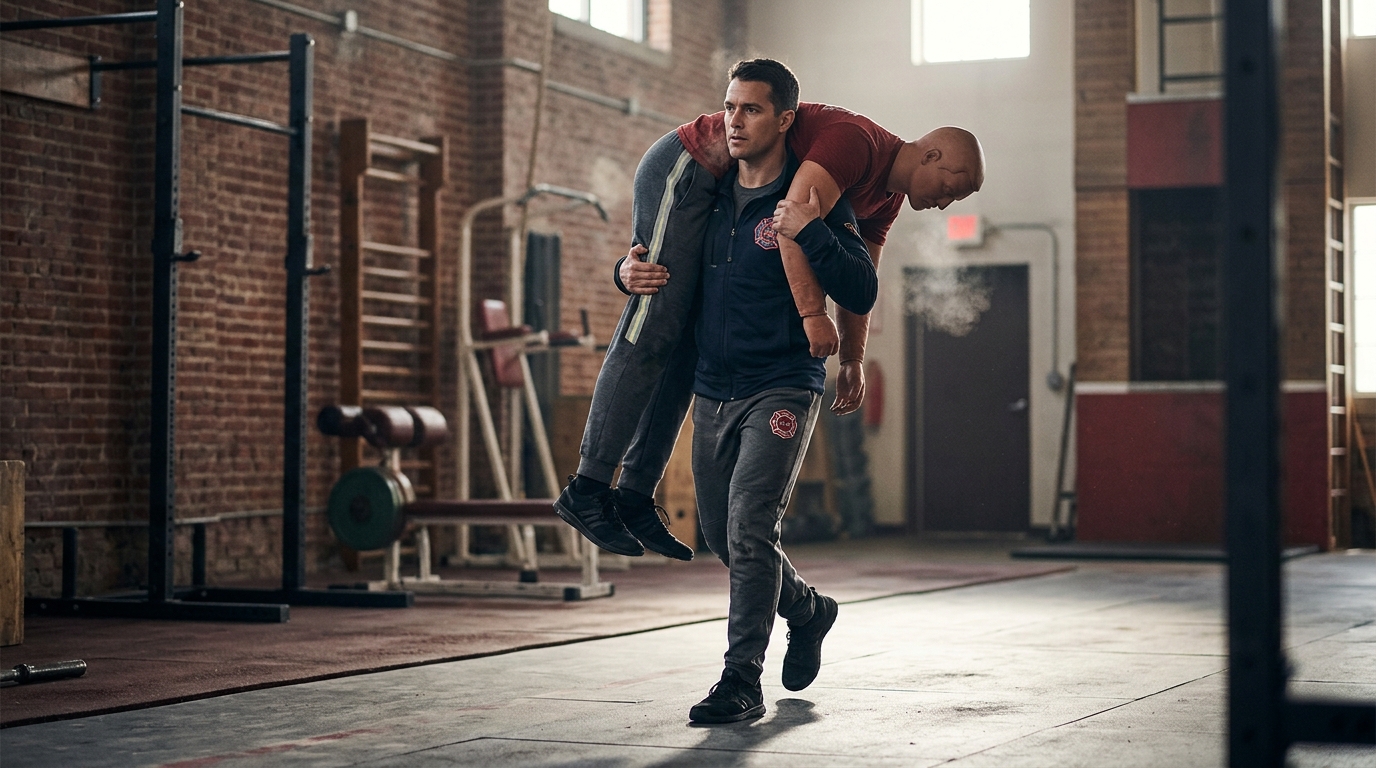
Functional fitness for first responders is not about aesthetic muscle building. It is about building the specific physical capacity required to carry heavy gear, drag victims, and break down doors under extreme stress. According to the National Institute for Occupational Safety and Health, firefighters face significantly higher risks of cardiovascular events during and after emergency operations. This data highlights why generic gym routines fail to protect the line of duty workforce. You need a system designed for the unique biomechanical demands of the job.
Why Generic Training Fails First Responders
Most commercial gyms operate on a model of isolation. They target single muscle groups to create symmetry. This approach ignores the reality of emergency response. Firefighting requires full-body coordination, explosive power, and sustained endurance. When you train in isolation, you build strength that does not transfer to the fireground.
Functional fitness is defined as training that improves your ability to perform real-world tasks efficiently. For a firefighter, this means moving heavy loads while wearing a Self-Contained Breathing Apparatus (SCBA). It means maintaining core stability while climbing ladders. It means having the cardiovascular reserve to push through high-intensity bursts without collapsing.
Generic programs often neglect the posterior chain. Firefighters spend hours in a crouched position during overhaul operations. This shortens the hip flexors and weakens the glutes. A tailored program must prioritize hip mobility and posterior strength to prevent the chronic lower back pain that plagues so many veterans. Without addressing these imbalances, you are setting yourself up for injury rather than performance.
Core Functional Movements for the Job
To find the right program, you must understand the movement patterns it emphasizes. A credible firefighter fitness program will center its curriculum around compound movements that mimic job tasks. These are not abstract exercises. They are practical applications of physics and physiology.
Loaded Carries and Grip Strength
Grip strength is often the first thing to fail under load. Whether you are dragging a hose line or carrying a victim down a stairwell, your hands must hold on. Programs that ignore grip training are incomplete. Look for routines that include farmer carries, suitcase carries, and dead hangs. These exercises build the forearm endurance necessary to maintain control of heavy equipment.
Overhead Pressing and Stability
Breaking down doors or lifting equipment above your head requires immense shoulder stability. However, this must be balanced with thoracic mobility. If your shoulders are tight from poor posture, overhead pressing becomes dangerous. A proper program will integrate mobility work before heavy loading. This ensures that your joints can handle the stress without compromising your spine.
Explosive Power and Plyometrics
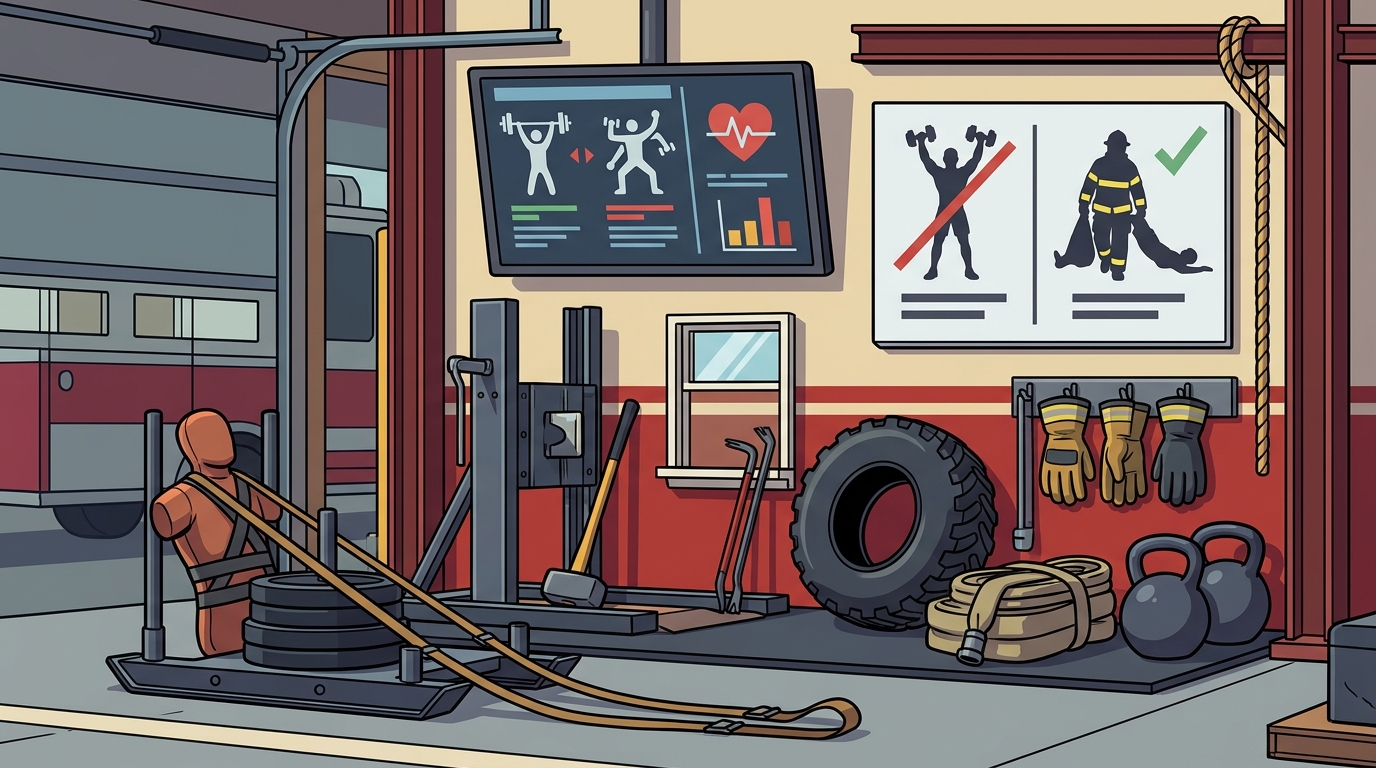
Firefighting is not a steady-state activity. It is a series of explosive bursts followed by brief recovery periods. Plyometric exercises like box jumps, broad jumps, and medicine ball slams train your fast-twitch muscle fibers. This training helps you react quickly when seconds count. It also improves your ability to generate force from a stationary position, which is critical when moving heavy objects.
Evaluating Program Credibility
Not all "firefighter fitness" programs are created equal. Many coaches use the title without understanding the specific physiological demands of the job. You must vet any program you consider joining. Look for coaches who have direct experience with first responders. They should understand the physical demands of the job and the psychological stress that comes with it.
Check for evidence of results. Do they share case studies of firefighters who have improved their physical fitness test scores? Do they have testimonials from clients who have successfully transitioned back to duty after injury? These are signs of a program that delivers on its promises. Avoid programs that rely solely on aesthetic transformations. While weight loss is a benefit, it is not the primary goal.
Another critical factor is the structure of the program. Does it offer flexibility for shift workers? Firefighters often work 24-hour shifts followed by 48 hours off. A rigid program that requires daily gym attendance will fail. Look for programs that offer modular workouts. These allow you to train when you have time, regardless of your shift schedule. Online coaching platforms often excel in this area by providing adaptive programming.
Program Types Comparison
Understanding the different types of available training options helps you make an informed decision. Below is a comparison of the most common approaches found in the industry.
| Program Type | Best For | Key Benefits | Potential Drawbacks |
|---|---|---|---|
| Online Coaching | Busy shift workers needing accountability | Personalized adjustments, flexible scheduling | Requires self-discipline to execute |
| Group Bootcamps | Those who thrive on camaraderie | Team building, high energy environment | Less individual attention, fixed times |
| Self-Guided Digital Plans | Independent learners on a budget | Low cost, immediate access | No feedback loop, higher injury risk |
| Specialized Kettlebell Programs | Building functional strength efficiently | High time efficiency, full-body engagement | Requires proper technique instruction |
Online coaching often provides the best balance of personalization and flexibility. It allows a coach to monitor your progress and adjust your load based on your fatigue levels. This is crucial for firefighters who may be dealing with physical or mental fatigue from recent calls. A digital plan cannot adapt to your daily state. It will give you the same workout regardless of how you feel.
Key Takeaways
- Functional fitness for firefighters focuses on task-specific strength, not just aesthetics.
- Generic gym routines often neglect the posterior chain, leading to chronic back issues.
- Loaded carries and grip strength are essential for handling heavy equipment and victims.
- Explosive power training mimics the burst-and-recover nature of emergency response.
- Vet coaches for direct first responder experience and proven client outcomes.
- Online coaching offers superior flexibility for irregular shift schedules.
- Kettlebell foundations provide a highly efficient path to functional strength.
Frequently Asked Questions
What is the best type of training for firefighter physical fitness?
The best training is functional fitness that combines strength, endurance, and mobility. It should mimic the movements of the job, such as lifting, carrying, and climbing. Programs like the 4-Week Functional First Responder Training Program are designed specifically for this purpose.
How does kettlebell training help firefighters?
Kettlebell training is highly effective for building functional strength. It engages multiple muscle groups simultaneously, improving coordination and power. The Firefighter Kettlebell Foundations program is a free resource that demonstrates how to unlock the full potential of this tool.
Can I train effectively with a busy shift schedule?
Yes. Online coaching programs are designed to fit around your shifts. They offer modular workouts that you can complete in short bursts. This flexibility ensures you stay consistent even when your schedule changes.
What is the difference between generic fitness and firefighter fitness?
Generic fitness often prioritizes muscle isolation and aesthetics. Firefighter fitness prioritizes compound movements, grip strength, and cardiovascular resilience needed for emergency operations. It is about performance under load.
How do I know if a coach is qualified?
Look for coaches who have worked with first responders before. They should understand the specific physical demands of the job. Check for testimonials and case studies that show real results from clients in the industry.
Is weight loss a primary goal of firefighter fitness?
Weight loss is often a secondary benefit. The primary goal is to improve physical capacity and reduce injury risk. However, many firefighters do lose significant weight when they switch to a functional training regimen.
What should I look for in a training program?
Look for programs that emphasize functional movements, offer flexibility for shift workers, and provide accountability. The Online Coaching Program at Everyday Heroes Fitness is built to meet these criteria.
Next Steps
Finding the right fitness program is a critical investment in your career and longevity. Do not settle for generic routines that do not address your specific needs. Take the time to evaluate your options and choose a path that supports your performance on the fireground. If you are ready to transform your physical capacity, apply for coaching today. Visit the Everyday Heroes Fitness homepage to start your journey toward being fit for duty and fit for life.