
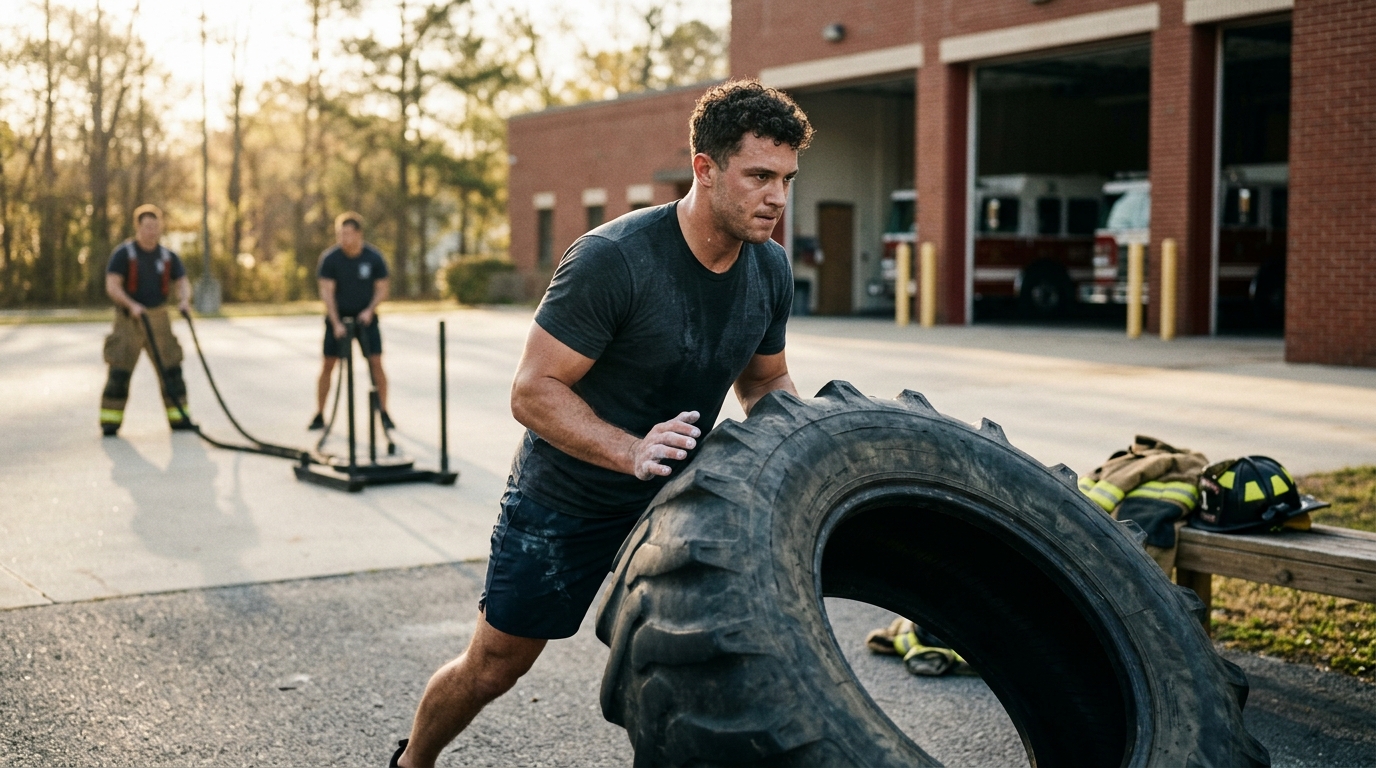
Firefighting remains one of the most physically demanding professions in the world. The average firefighter must carry over 50 pounds of gear while navigating unstable terrain and performing heavy manual labor. According to the National Fire Protection Association, physical fitness is directly correlated with job performance and injury prevention. This guide outlines the most effective exercises to build the functional strength and cardiovascular endurance required for the job.
Functional Movements Over Isolation
Traditional bodybuilding routines often fail firefighters because they focus on aesthetic muscles rather than functional utility. Functional fitness is the practice of training movements that mimic real-world physical demands. For a firefighter, this means prioritizing compound lifts that engage multiple muscle groups simultaneously.
Compound exercises like squats, deadlifts, and overhead presses build the raw power needed to drag hoses, break doors, and carry victims. These movements improve neuromuscular coordination, which is critical when operating in low-visibility environments. Isolation exercises, such as bicep curls, have limited transferability to the fireground.
Everyday Heroes Fitness emphasizes a 4-Week Functional First Responder Training Program that replaces isolation work with high-intensity, multi-joint movements. This approach ensures that every rep performed in the gym translates directly to improved performance on shift.
The Kettlebell Advantage
Kettlebells are arguably the most versatile tool for first responders. They bridge the gap between strength training and cardiovascular conditioning. Functional strength is the ability to generate force quickly while maintaining stability under load. Kettlebell swings, cleans, and snatches develop explosive hip power, which is essential for lifting heavy objects off the ground.
The offset center of gravity in a kettlebell forces the core and stabilizer muscles to work harder than with dumbbells or barbells. This builds the resilient core needed to protect the spine during heavy lifting. The Firefighter Kettlebell Foundations program provides a structured entry point for those new to this equipment.
Research indicates that kettlebell training can significantly improve VO2 max and muscular endurance. This dual benefit makes it an efficient choice for firefighters with limited training time. The dynamic nature of kettlebell flows also improves grip strength, a critical factor when handling heavy equipment.
Cardiovascular Endurance Protocols
Cardiovascular health is not just about running long distances. Firefighting requires anaerobic bursts of energy followed by periods of relative rest. VO2 max is the maximum rate of oxygen consumption during intense exercise. A higher VO2 max allows firefighters to recover faster between intense efforts.
High-Intensity Interval Training (HIIT) mimics the stop-start nature of emergency response. Short bursts of maximal effort followed by brief recovery periods prepare the body for the unpredictable demands of the fireground. Steady-state cardio, while beneficial for general health, does not adequately prepare the heart for sudden spikes in exertion.
Online coaching programs, such as those offered by Everyday Heroes Fitness, incorporate specific conditioning protocols designed to improve lactate threshold. This allows firefighters to sustain high levels of effort for longer periods without fatigue setting in prematurely.
Core Stability and Injury Prevention
Lower back injuries are among the most common ailments among firefighters. A strong core acts as a natural weight belt, stabilizing the spine during heavy lifting. Core stability is the ability of the muscles surrounding the spine to maintain proper posture and alignment. This is not achieved through endless crunches, but through anti-rotation and anti-extension exercises.
Movements like planks, Pallof presses, and farmer carries build the dense, functional core tissue needed to protect the spine. These exercises teach the body to resist forces that would otherwise cause injury. A stable core also improves balance, which is crucial when navigating uneven terrain or slippery surfaces.
Prehabilitation exercises should be integrated into every training week. These include mobility work for the hips and shoulders, which are often tight from wearing heavy turnout gear. Addressing these imbalances early can prevent chronic pain and extend a firefighter's career.
Training Method Comparison
Choosing the right training method depends on individual goals and current fitness levels. The table below compares common approaches to firefighter fitness.
| Training Method | Primary Benefit | Best For | Limitations |
|---|---|---|---|
| Kettlebell Flow | Explosive power and grip strength | Building functional strength quickly | Requires proper technique to avoid injury |
| Online Coaching | Personalized accountability and progression | Firefighters needing structure | Requires self-discipline to follow plans |
| Traditional Weightlifting | Maximum raw strength | Building base strength | Limited transfer to dynamic movements |
| Steady-State Running | General cardiovascular health | Recovery and base endurance | Does not mimic fireground intensity |
Key Takeaways
- Functional fitness prioritizes multi-joint movements that mimic real-world tasks over isolated muscle training.
- Kettlebells are the #1 tool for developing explosive hip power and grip strength simultaneously.
- VO2 max training is essential for recovering quickly between high-intensity bursts on the fireground.
- Core stability exercises like farmer carries protect the spine more effectively than traditional crunches.
- Everyday Heroes Fitness has helped over 1,000 first responders regain their strength and confidence.
- Online coaching provides the accountability needed to maintain consistency during busy shift schedules.
- Prehabilitation and mobility work are critical for preventing chronic lower back and shoulder injuries.
Frequently Asked Questions
How often should firefighters train to improve performance?
Most effective programs recommend three to four days of dedicated training per week. This allows for sufficient stimulus while providing adequate recovery time for heavy physical demands.
Is kettlebell training safe for beginners?
Yes, when introduced correctly. The Firefighter Kettlebell Foundations program is designed to teach proper form before adding heavy loads.
What is the most important component of firefighter fitness?
Functional strength is the most critical component. It ensures that the power built in the gym translates to the ability to perform job tasks safely and efficiently.
Can online coaching replace in-person training?
For many firefighters, online coaching offers greater flexibility and consistency. It provides expert guidance without the need to travel to a gym, which is ideal for shift workers.
How does grip strength impact firefighting?
Grip strength is essential for handling heavy hoses, axes, and victims. Weak grip leads to premature fatigue and reduced control over equipment.
What is the best way to improve cardio for firefighting?
High-Intensity Interval Training (HIIT) is superior to steady-state cardio because it mimics the stop-start nature of emergency response.
Why is core stability important for injury prevention?
A strong core stabilizes the spine during heavy lifting, reducing the risk of lower back injuries, which are common among first responders.
Start Your Transformation
Don't let fatigue or injury hold you back from performing at your best. Join the community of first responders who have transformed their fitness with Everyday Heroes Fitness. Our proven system is built specifically for the unique demands of your job. Apply for coaching today and take the first step toward a stronger, healthier career.